“Old Friends”

Playlist – A curated list of favorite songs, from each album I listen to, updated as I listen.
Map – With a link to each album (if possible) marked in some referential geographical location.
After buying a couple of dozen CDs of Brazilian Music, over the last few months, I decided to immerse myself in them over the month of April.
I am following a semi-chronological listening order and purely dictated by what I bought or already had from the same time period, mostly from the late 60’s to the early 80’s.
I have been searching for Tropicalia, Brazilian Pop and Bossa Nova recordings and happened on some cool finds and some things I have no idea what to expect, but I hope to be transported and transformed.
I have a Jazzer’s view of Brazilian music – a Getzian view. I know the songs to play them more than I know the recordings. I know some Bossa, and Samba, and am pretty familiar with the music of Jobim & Gilberto.
I have become particularly interested in the moments where the Brazilian’s become experimental, mixing culture, traditions with modern artistic concepts in music – thrilling!
Before I leave on a vacation I prepare myself for the visit by immersing myself in the place, the culture or the food. Here I am starting with “old friends” a familiar recording.
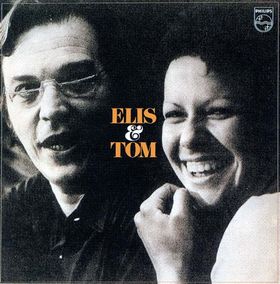
“Aguas De Marco” this version is from a favorite album of mine “Elis & Tom” some consider this to be “the song” of Brazil. I might suggest other Jobim songs for that credit based on their popularity, but this truly is a perfect song. The album led me to Elis Regina and triggered me to learn about the lyrical poetry of the Brazilian songs not just their melodies. I have loved it for decades, used it in my wedding ceremony, and it will christen my voyage.
We also start the trip with more from my favorite, Elis Regina.
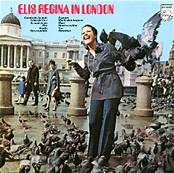
Her 1963 album “Elis Regina in London”.
This is Elis with a full Pop Orchestra. A friend I introduced Elis’s music to described her as a Brazilian Barbara Streisand and that shoe fits here. She is such an incredible musician: experimental, has a fabulous voice and is an even better singer – she is of my top artists and I go to her music to heal. The collection of songs on this album feature many composers who will appear later on in this voyage.
Elis is a Miles Davis level chooser of songs. There is range, beauty and contrast throughout this set. The Orchestra is very versatile. The horns crackle, the strings glide and the rhythm section sounds tight in an early 60’s Rocker way.
Elis can burn! Few singers sing well fast. Elis does. She articulates perfectly and conveys rhythms like a drummer. Betty Carter and Ella certainly could, but many singers lose the presence of their voices at fast tempos, not Elis.
The track here for me is “Se Voce Pensa”, composed by Roberto Carlos, a song I have delved into because Elis’s voice totally blows me away. I fell into a Song Hole on this one, and we will hear some of the other versions at other points during this little trip – cool song!
There is an ascending quality to the melody that conveys a sense of desperation. Elis’s version just keeps building in intensity. Her voice keeps making the stakes higher and higher.
In Elis’s hands these lyrics feel different than in the composer’s version, possibly from the gender difference.
“If you think you’re doing to me, What you do to all that love you,
I want you to know to be with me, You’ll have to change yourself
From now on, It all will be different,You must learn being a normal person
Your pride means nothing, nothing, nothing”
First verses of “Sa Voce Pensa”
“Upa Neguinha” this is written by Edu Lobo. Edu Lobo and Roberto “The King of Latin Music” Carlos are both significant popular Brazilian composers that I do not know much about. On this album their songs are featured along with songs by Jobim, Jorge Ben and others. It is clear that Elis is trying to highlight the spectrum of Brazilian musicians in this London performance.
I love the instrumental arrangement in this song: Cylindrical, clattering and well woven – but then a few moments sound like Santana but not electrified. Then the strings interrupt everything and Elis, again, soars over everything.
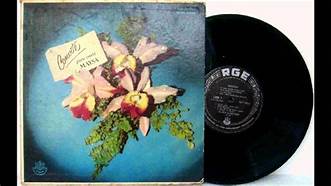
Maysa – “Convite Para Ouvir” (1956) & “Maysa”(1957) – A twofer. Maysa rewinds the timeline here, these are her earliest albums. Both are orchestral pop albums with a “featuring the voice of” quality. The nice surprise is many of these are her own songs which usually “featuring” albums are not representative of. She has the same problem as Caetano Veloso & Peter Gabriel with several albums with their name as the title.

These are “fossa’ or Torch Songs though she is connected with Bossa Nova too. Maysa was described as “The Janis Joplin of Bossa Nova”. That is not because of her vocal timbre but instead her dramatic personal life and certainly was not her moniker in 1957 – in fact maybe Janis Joplin was the Maysa Matarazzo of Rock Music. These are nice albums, the first of the two recordings has stronger arrangements + loads of Harp!

Elis Regina – “Elis” (1966) – Come to think of it there are also at least 3 “Elis” albums. Very confusing. This is early Elis, featuring Samba & Bossa Nova songs. Which also means a little more predictable, later on her choices get more and more adventurous. I bet her creative control was yet to be established as well.
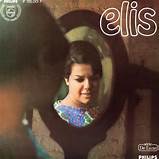
The third song “Pra Dizer Adeus” is very “fossa” and comparable to the Maysa recordings. Elis can carry that well too and I imagine they were following a similar career path.
“Veleiro” is my song tho, what a glorious arrangement. Epic enough to equal her voice and match her ability to tell a story. The second half of this album really reveals the orchestra more, Elis commands those moments.
“Carinhoso” I had to include this based on the sound of her voice and the guitar. Love.
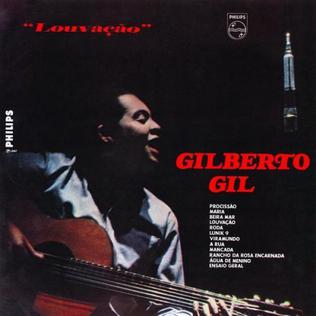
Gilberto Gil – “Louvacao” (1967) – His debut album. A bold choice to start with the brass introduction. Already wonderful arrangement decisions are present. It sounds kind of similar to the “Elis” ’66 album, presenting a singer in a Pop orchestral setting with their songs (or great songs of others). This album is a great introduction and offers that look into his musical roots with a glimpse of the future possibilities.
“Ensaio Geral” – Gil’s voice is really beautiful and bare here. Again I love the instrumentation, it’s space and openness. It leaves room to really hear his story telling ability.
“Viramundo” is an example of a wonderful arrangement featuring accordion, metal cups?, flutes, traditional instruments. It’s like a little trance.
“Roda” is a classic song and Gil, like Elis, can burn as a vocalist.
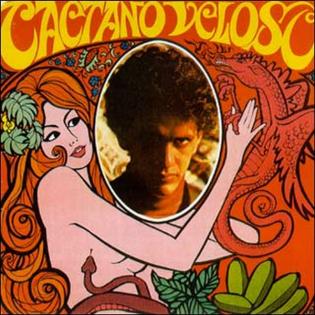
Caetano Veloso – “Caetano Veloso” (1968) – I actually discovered a second CD also titled “Caetano Veloso”(1986) inside this case. Caetano has the same problem as Peter Gabriel in having 4 different self titled albums. This one is his debut release as a leader. Caetano is going to be heavily featured throughout April, he may have inspired the entire Sound Tour itself when I picked up a dozen of his classic albums at The Princeton Record Exchange.
Caetano will always remind me of my old friend, roommate and all around great Trumpet player Patrick Hughes. Patrick always recommended Caetano tho I wasn’t in hearing space to receive those recommendations at the time.
The first song is titled “Tropicalia” which feels important to include in this Sound Tour. It’s a statement song and here it definitely has a Beatles feeling in the arrangement. I guess one thing I am looking for on this trip is the horns, strings, orchestra, traditional instruments arrangements mixed with the Singer Songwriter thing that I love from 70’s Pop/Rock. That way of mixing sounds, but not always fitting. And beautiful songs.
“Eles” shows some evidence of electronics, psychedelics and Blues.
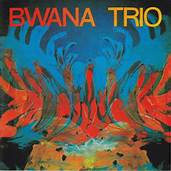
Bwana Trio – “Bwana Trio” (1967) – I’ve been unable to discover much out about these folks- though incredible snare sound! “Bwana” could mean (in East Africa) a boss or master. Often used as a title or form of address. But in Portuguese? I think it was also used incorrectly in old Tarzan films?
This is a very cool, Jazz piano trio from the Brazilian perspective (they could have an esoteric reference like The “Master” trio?). The sound of the drums is masterful, a cymbal sound on the first track shimmers like heat on a road. They cover several Jazz standards in their repertoire. All clean, all grooving, it’s a wonderful change of pace piano trio album, familiar but different feeling. There is no real explosive improvising but it is sweetly melodic, well recorded and joyously rhythmic throughout. The pianist has an Errol Garner thing going on. “Dreamsville” by Henry Mancini.

 Found Sounds
4 thoughts on “April in Brazil – A Sound Tour pt. 1”