Rubinho e Mauro Assumpcao – Perfeitamente, Justamente Quando Cheguei – Mr. Bongo, 1972.
🇧🇷📹 👁️🎧🪨🫧 🐠🗣️⎄ ⌘:
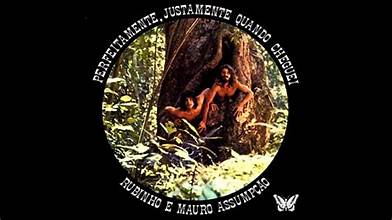
A wonderful mix of Brazilian Psychedelic Pop and Rock. It’s really fresh and was an obscure release unearthed by Mr. Bongo. I will purchase any Mr. Bongo reissue, they are usually rarities and always follow a certain aesthetic despite drawing from a wide range of Brazilian, Disco, Funk, Afro-Pop musics and even new music too, like Instrumental Hip Hop Soundtracks to Films that Don’t Exist. One of the things I like to do with this era of Brazilian Music is deciphering the US/Euro Pop influences on Brazil, what we they hearing there and how did it influence the musicians in other countries. The guitar work here is an example, clearly showing some Pop influences. The melodies, and sometimes the harmonies, take strange, unexpected turns while still following Pop sensibilities. The rhythm is always on point and usually more intricate than one finds in typical Rock and Pop music. The brothers only released this one album, with a crazy cover! “Quero Companheira”
Overall = 7.3 (10) – Great, fun listen, occasionally too dated and Hippy sounding but its a fresh to my ears version of that.Get it!
Leonard Bernstein – The Original Jacket Collection: Limited Edition 10 CD set – Sony Classical, 2001. (Includes: A lot of stuff, go look over there for yourself! 1958-66)
⏺️🎼❤️🔮⎄✪🗝️🎬🆑📀🎗️:
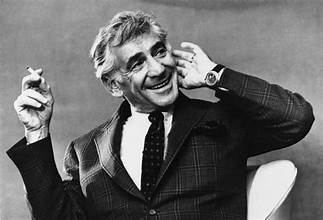
The great champion of music. Here on some of his most celebrated recordings primarily as the conductor. I am pretty particular about what Classical music I am interested in, yet I have a pretty expansive collection and am appreciative of the music generally. I just don’t listen to it frequently. Bernstein should be considered equally as important as an educator and popularizer of Music as he is consider so for his conducting and composing. This collection demonstrates his magic. And it is my favorite type of box set with little album sleeves featuring the original art and a companion booklet with all the nonsense you could want. “Somewhere” from the West Side Story Symphonic Dances disc. If I had to choose favorites it would be the Stravinsky, and maybe the Sibelius Symphony No. 5 – after that.
Overall = 9.2 (10) – A historic collection of recordings, I think it is a good way to delve into Bernstein, or to be an introduction to a variety of Classical music .Get it!
Albert Ayler – Live in Greenwich Village: The Complete Impulse! Recordings – Impulse, 1965-67.
I!🎷🎺⏺🧫🔭🪄🎟️:
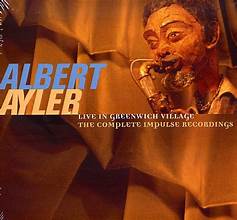
A shit-kicker! Ayler is always high energy, this is energy music and it is live. Many of his songs have the feeling of anthems, Spirituals, Marching Band music over a tumultuous rhythm cacophony. The strong, but simple, themes balance the unhinged qualities of the collective improvisation (that some listeners find tiresome). I am usually more into creating this kind of music, or seeing it live, than listening to recordings. This music feels different in the presence of the performers. Ayler was sort of the embodiment of Free-Jazz with a Punk energy, not accepted by the community and indifferent towards the norms of Jazz Society, yet primal and vital in a way that you can’t prepare to be – you just need to accept yourself. “Change Has Come”
Overall = 6.8 (10) – I think this is a lot more accessible than Ayler is given credit for. People are looking for the excitement he can bring. Get it!
Roy Ayers Ubiquity – Change Up the Groove – Polydor/Verve, 1974.
🔌 ⑉🎺 ⏺✊🏿 🧀:
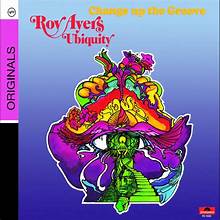
This isn’t the greatest Ubiquity recording but it has all the vibes you can want. Groovy, cheesy, a large ensemble with strings and vocals accompanying the basic combo. In Soul Jazz, and Organ Combos of the time, you can usually hear some intriguing Pop covers. Those cover songs are one of the features that will evolve into Smooth Jazz (or Instrumental R&B if you like that term). On this recording there is still a lot of tension in the Groove and improvisational focus, one of those missing link recordings connecting the 2 styles. “Mash Theme”
Overall = 4.3 (10) – Good listen, but a little bloated with extra bells & whistles.Get it!
Ray Barretto – Tomorrow Barretto Live – Koch, 1976.
🌶️💃🏽🪘🪩🎨🗝️✪ 🎟️🧴⚒️:
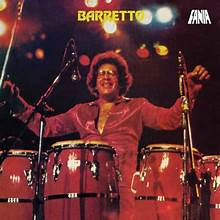
Barretto’s excellence has already been confirmed on earlier In the Stacks, so typically with prolific recording artists we get a Live album (or 2 albums on 1 CD?). Live albums are supposed to offer fans an alternative to the studio recordings, but feature songs the fan already own. Often aimed at capturing the excitement the live performance can bring, this happens on this recording. Though the fan is familiar with the songs played the live recording offer a different collection of songs (usually including the most popular hits), a cohesive well rehearsed group and expansive versions of the songs (alternately some groups strive to recreate the originals faithfully, more Pop artists do this). Excitement is one of the features Barretto offers, live Barretto is turned up to 11. “Guarare”
Overall = 6.3 (10) – I prefer the studio albums, but this is hot, get your stuff done music! Get it!
Earl Anderza – Outa Sight – Pacific Jazz, 1962.
🎺 ⏺ ♫𝍍🎶🎷:
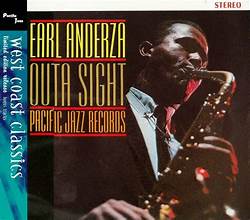
Anderza is a really skillful and intense post-Bird 🐓alto player. It is also one of the only chances to hear him as a leader. The recording is a West Coast Hot 🔥 style Hard Bop quartet recording, a few contrafact originals, some Standards and Blues. He has the Bop language, a bright, scintillating alto tone, can double up gracefully and occasionally pops some modern technique with Free-sh/Bluesy tonal outbursts. He can ride a scream and it is an enjoyable album. His tone can read a little harsh on some of the tenderer moments. “Outa Sight”
Overall = 6.1 (10) – West Coast Hot is a sort of rare side-genre and deserving more recognition. Get it!
John Abercrombie – Gateway – ECM, 1975.
🎺 🎸 🔌 🎸⌛️🎗️ 🪄:
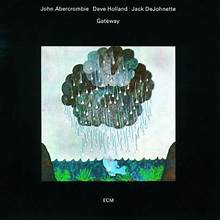
A seminal ECM recording. ECM has a twisty history, beginning with a focus on some iconic, but obscure, Avant Garde recordings. Then it built a unique label sound, emphasizing the compositional while retaining some really profound improvisers. Sometimes the label favors a subtle electric fusion sound, but then also equally features chamber-like projects (eventually ECM records a lot of new Classical music). They become a home to some important recordings by iconic masters and feature a wide range of artists (& perspectives) from around the World – most strongly representing the Nordic regions of Europe, (the label is based in Germany🇩🇪). I’m an ECM fan, though the label can get to into itself. ECM has created one of THE distinctive studio recording Timbres. They offer an incredible sense of space, silence, openness and clarity
This album is one of Abercrombie’s most legendary, with a perfect band. I performed the opening track (a “sort of” Jazz standard) “Backwoods Song” in college, before hearing the recording. This album is a good representation of one face of the ECM label. I’d use it as an intro album to either ECM, or Abercrombie. He is one of the influential guitarists in the 70’s who helped develop the modern sounds of guitar in Jazz. The post-Rock influence on guitar sound is Jazz is a very interesting thread – everyone had to reconcile the distortion and effects Rock Guitar brought to the party. “Sorcery I”
Overall = 7.6 (10) – Groovy and often explosive. Get it!
& John Abercrombie/Ralph Towner – Sargasso Sea – ECM, 1976.
🎺 🎸 🌊 🌃 🛁🎧:
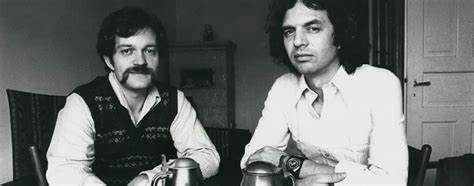
A more typical, contemporary ECM release. There is a quietude, a focus on beauty and a sort of stark, spacious recording. In my mind these recordings are heard as if the venue is an empty, festival concert hall, or in a great field or a lake of ice – no one but the band and the listener, no reflective surfaces, probably at night and letting the sounds unfurl to the stars. It’s an recording achievement, but it can get static and stale occasionally. “Romantic Dissension”
Overall = 5.1 (10) – Beautiful, somewhat un-engaging. Get it!
& John Abercrombie/Marc Johnson/Peter Erskine – ECM, 1989.
🎺 🎸 🪄 🎟️:
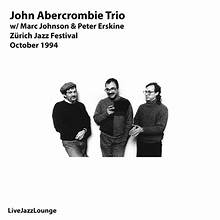
This is a co-billing album of what is both a group of ECM “house” musicians and also a trio of collaborators/friends who have a history on record. It is also somewhat of a Super Group, though Super Groups aren’t exactly the same in Jazz music (There is generally less of a fixed ensemble, more interactive recording opportunities than in most other styles and only the biggest names tend to maintain steady line ups of musicians in a band sense.) than in other musics. This recording is Live and of an 80’s Post Fusion guitar trio. Abercrombie’s guitar can often sound like a Synthesizer. This music doesn’t warm me and the approach to improvisation is in the “as for as I can take it” territory, which often feels empty & neutral to me, it doesn’t engage me deeply. I enjoy some of the Ambient textural moments most. It is a group of superior musicians and is always very skillful. “Samurai Hee Haw” a Marc Johnson song.
Overall = 4.2 (10) – Good, but I don’t need to return here often. Get it!
Bennie Green – Mosaic Select #3 – Mosaic, 2003. (Includes: Back on the Scene, Soul Stirrin’, The 45 Session, Walkin’ and Talkin’ & Congo Lament – Blue Note, 1958-62)
🎺⏺️ ⏺ ♛🫂:
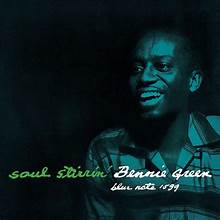
An excellent collection, with rarities probably because the trombone often comes in late terms on the list of popular lead instruments (not for me, but generally so). Green put together very satisfying albums, with a remarkable one in Soul Stirrin’. These recordings all Swing hard, feature a few Standards,some Latin pieces, fine collaborators and simple, but personal, arrangements of the songs. Blowing sessions mostly, but on Blue Note that wasn’t a throw away situation, they would pay for rehearsals so the music usually sounds more together to me. This is an excellent portrait of Bennie, one of the finest Post-Bop Trombonists and he is so listenable. Soul Stirrin’ has a beefy, 2 tenor front line, is insanely swinging and has a few tracks with the strange, and wonderful, vocalist Babs Gonzales. “Lullaby of the Doomed” strange tune!
Overall = 7.8 (10) – I think the collection can appeal to anyone, hard swinging throughout, but also really meant for Green fans.Get it!
Sathima Bea Benjamin – A Morning in Paris – Enja, 1997(1963).
🎺🗣️ 🫂⌛️🇿🇦:
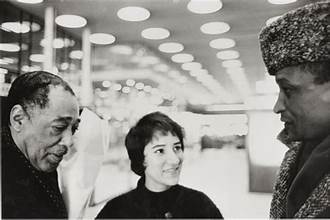
Somewhat of a curiosity, where the music is overshadowed a bit by the story of this recording. Sathima was both “almost” the first South African artist to release a Jazz album (it never was released) and Abdullah Ibrahim/Dollar Brand’s wife. They are both South African Jazz musician expats who moved to Europe during Apartheid in the 60’s. This album was a one of a pair, with her husband’s debut album, both of which Duke Ellington produced for Reprise records.
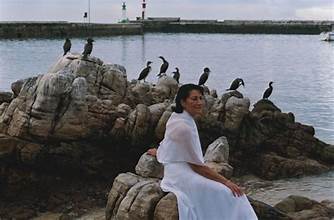
Story was: in Paris, Sathima waited for an Ellington concert to finish and requested Ellington come hear Ibrahim’s trio perform. Ellington did, but also demanded Sathima sing for him, and the resulting pair of albums were the documentation of the efforts of that night.
Benjamin was a social activist too and created her own record label. The music has a wonderful airiness and a lot of pizzicato violin by Svend Assmussen. Ellington and Billy Strayhorn sit in for a few tracks, but otherwise it featured her husband’s group. The music, and her voice, do not profoundly move me – the people do and the story is what dreams are made of. “A Nightingale Sang In Berkeley Square”
Overall = 4.9 (10) – Good music, not necessarily a fair recording to review, because I’m not sure this was really planned as an album. A lot of the same vibe and tempo in the tracks, but still a solid vocalist album. It just has more importance based on its history more than the music itself.Get it!
Joseph Arthur – Our Shadows Will Remain – Vector, 2004.
🪨🫧🗣️⎄ 📝:
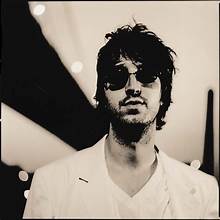
Arthur is not on Real World anymore. I’m a fan of Arthur’s song writing, here the songs are bigger, seem more aimed at getting hit than being focused on his inner creative approach. The songs are more dressed up with extra instruments and arrangements. At the same time these songs are less personal, they have more familiar sounds that feel borrowed from the Pop palate. They are still intimate songs, but the added layers suffocate the environment for immersion. I’m less connected to it than the previously reviewed Arthur album.
Overall = 3.8 (10) – I think I enjoy it more than when I purchased it, but I don’t return too it much.Get it!
Lee Allen – “Walking’ With Mr. Lee” Golden Classics – Collectables, 1989.
🔈🎷:
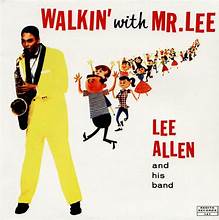
Classic R&B saxophone. Early Instrumental R&B, big toned and honking – though still sweet in enough places. Some pulsing organs, electric guitar and the Blues, but featuring the saxophone. I definitely bought this for the “Pied Saxophone Player” cover and then I stayed for the brute artistry. There is something valuable to be discovered in his use of rhythm and tone instead of busy, note-y solos. Its simple in a way, but people went physically crazy for music like this and that is in itself a complex feat. “Bee Hive” a sick shuffle!
Overall = 6.2 (10) – Nothing profound, but it delivers exactly what it advertises.Get it!

 Found Sounds