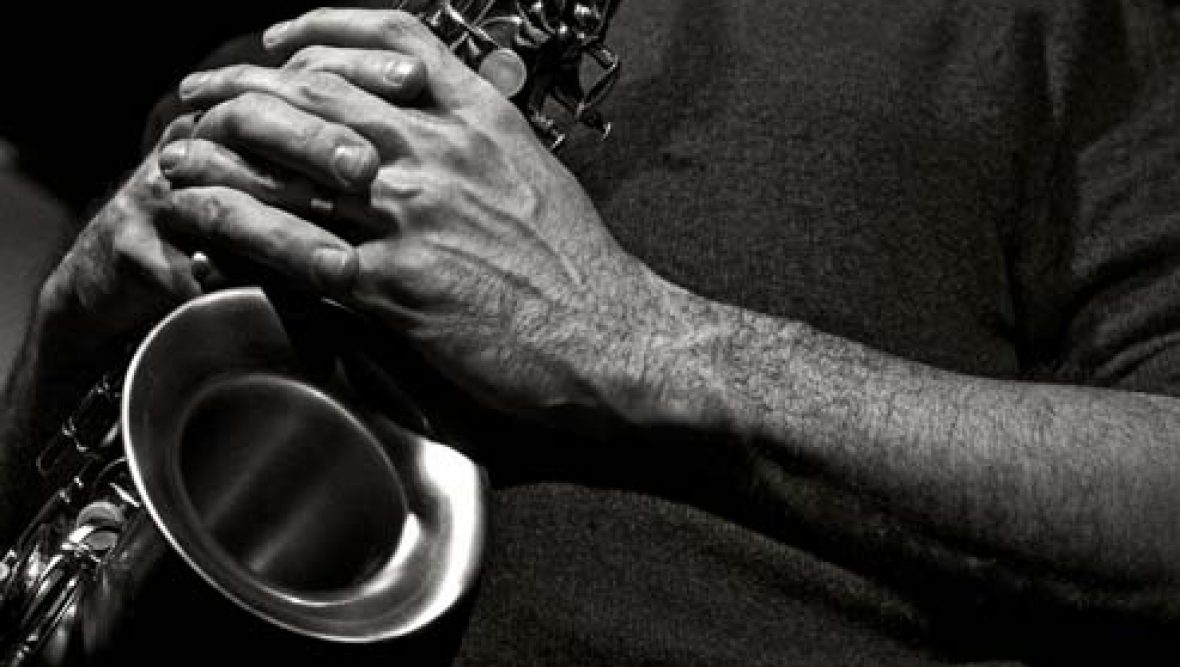
Jorge Ben – Forca Bruta – Phillips, 1970.
🇧🇷 🆑🎗️🚘⚖️ ⚙︎:
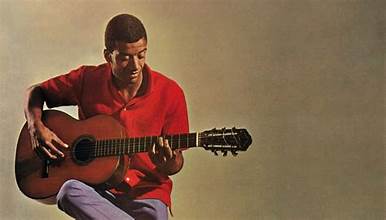
A Brazilian classic. Its not exactly Bossa more like relaxed Samba, with Rock influences and not as Psychedelic as some Tropicalia. Regardless of where you want to categorize this music, it is one of the great Brazilian artists of the post-Bossa Nova period and one of his finest albums. Eventually he will electricify, but this album still grooves and is funky acoustically. On some songs there are “personality” type band arrangements backing him up, but overall it feels aurally sparse, guitar & voice centric and has an intimate quality that often gets overwhelmed by arrangements. There are some really beautiful, modern songs about identity, race and politics (Brazilian issues, at the time it was a volatile political environment in Brazil.). “O Telefone Tocou Novamente l”
Overall = 9.2 (10) – Love. Get it!
Gato Barbieri – Chapter 1-3 – Impulse/GRP, 1973-1974. (1: Latin America, 2: Hasta Siempre & 3: Emiliano Zapata)
🎺 ⏺I! :
There is a Chapter 4 of this series of recordings, a live one, that I never knew about and have yet to acquire. They albums are all of a high quality. I’m not certain if we are supposed to consider the 4 albums a larger piece, chronological titles or if there is a conceptual link between the albums. There is a suite as part of the Chapter One, so that suggests more a conceptual link (or marketing one?). I love early Gato, fiery and free, later on his material can get too sweet. Here he is screaming away above everything, Chapter One is still leaning into the freer aspects of improvisation, but by Chapter 3 it’s more like his sound soaring above various styles and moods of Latin music. “El Sublime”.
Overall = 7.7, 8, 8.3 (10) – All are good bets!Get it 1, 2 & 3!
Kenny Barron – Spirit Song – Verve, 2000.
🎺 ⏺ :

21st Century Jazz! The production is really pristine. Modern production is often too clean for me – the recording sounds as if it is occurring within the band’s performance space and not how I as an audience member could actually hear it. Here I am complaining about aural fidelity, but it becomes a general issue I have with a lot of contemporary Jazz. That said, Kenny Barron’s newer albums are very enjoyable. This has a Quintet with 2 guest artists (+ a percussionist on one track) who appear on 5 tracks (half of the album tracks) and never together on the same track. This gives the cohesion of the album a bit of erraticism, individually each track is excellent, but they do not blend into an ensemble sound for the recording. “And Then Again”
Overall = 5.2 – (10) – Solid Modern Jazz record. Get it!
Lou Blackburn – The Complete Imperial Sessions – Blue Note/Imperial, 1963.
🎺 ⏺ ♫:
Really clean, popping, brassy, Hard Bop from the West Coast. I had 2 interests for picking this recording up, a Blue Note release and an early Horace Tapscott appearance. Interestingly both Blackburn and Tapscott transformed their approaches later on in their careers. Tapscott into Free Jazz and community based large ensembles, Blackburn into AfroPopJazz. Here they are taking care of business, playing mostly standards with personal takes on the songs, but nothing really experimental. It is not really Tapscott’s bag, he has a rangy swing and his solos can be a little stiff, and angular, for the style. Overall though a great fresh feeling recording of lots of classic songs and the band has a clearly defined sound. “Perception”
Overall = 6.5 – (10) – Underrated and difficult to find, but worthy. Get it!
Joe Bataan – Mr. New York And The East Side Kids – Fania, 1971.
🌶️💃🏽🪘 🧀:
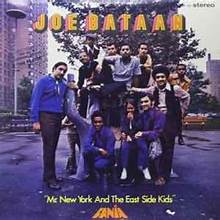
This is a really erratic album, that I wish was more recommendable. Thematically it is an appeal to a younger audience, but the results of the various crossover attempts in the songs is debatable. There are 3 Salsa tunes that are exquisite and 2 Salsa tunes that are blended with a little Rock and Soul (this is really achieved by emphasizing electric guitar in the ensemble). The rest are Soul, or Pop, tunes, possibly some covers – though it feels more like appropriated sections of Popular songs. Musically pretty dull and derivative. Lyrically basic and it sounds very dated with a layer of thick cheese. I don’t love Bataan’s voice as a crooner. The sense from reading about the album is it was very much Bataan’s choice of material and he arranged/composed the music. Yet the vibe feels like it was endorsed by label, Bataan being an appealing face for the label, their feature artist making an intentional stab at crossover success. An attempt to increase his public appeal, and who doesn’t want to be a Star(?), so I’m sure Mr. Bataan was onboard. “Aguanta la Lengua”
Overall = 4.2 – (10) – I like half of this album a lot. Yikes, don’t get it here!
Randy Weston – Mosaic Select #4 – United Artists, Jubilee, Roulette & Colpix, 1957-1963. (Little Niles, Live at the Five Spot, Piano-A-La-Mode, Uhuru Afrika & Highlife)
🎺⏺️ ⏺ 📀👣 🎟️🎹🌍 🎨 ✪🗣️𝍍🎶:
Underrated! Randy Weston sits at the Legends table, but rarely is lauded as such. He has a vast recording history with many excellent moments over 60 years of recordings. These albums, and maybe one reason for his lesser acknowledgement, are consistently great, but on labels with less distribution and also less frequent reissue. Mosaic Select collections generally capture those types of recordings, a handful of difficult to find recordings on each collection with a thematic link. Weston sounds great, Monk-ish at times, but also writing pieces in odd meters and exploring World influences at a very early time for that. These are devices that other artists have received wide acclaim for (and Weston has not to the same degree) and each recording has a fantastic ensemble. These all feature Melba Liston arranging the pieces. There is nothing weak on the 3 discs/5 albums and Weston has a knack for writing a catchy melody. I am not saying Weston isn’t popular, but I think he hasn’t been given the revival that recordings like these deserve.
The most revered of these albums is probably Uhuru Africa which is a suite and the “Second Movement: African Lady” sounds very similar to a later James Newton album “African Flower” which is a tribute to Ellington, someone Weston also admires. Melba Liston is the orchestrator of this work and she even arranges the smaller groups on the other recordings. The collection offers multiple aspects of mastery (that’s not even touting the guest mastery in the bands: Hawk, Clark Terry, Kenny Dorham, Booker Ervin many, many luminaries). Watch out! There is a nasty, minor vamp, groove tune on every album. Simple tunes, but moody, angular and fun to solo on. “Little Niles”, “Congolese Children” & “Blues to Africa”
Overall = 8.5 (10) – These are classic recordings, from a master, recordings which deserve to be heard more widely.Get it!
Ahmed Abdul-Malik – Four Classic Albums – Avid Jazz (Riverside/RCA Victor/Prestige New Jazz), 1958-1962. (Jazz Sahara, East Meets West, The Music of…, Sounds of Africa).
🎺🌍 👣 ⏺️:
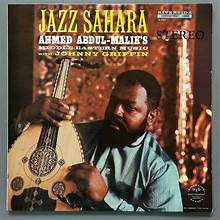
Another example of World Music influencing Jazz in the 50’s/60’s. Jazz is a Global music, its creation is from a mix of cultures and it unfailingly assimilates into other cultures and absorbs qualities of those musics. When these recordings came out that blending was exotic and original. However there are some historiographical issues, Mr. Abdul-Malik claimed Sudaneses ancestry, but some Jazz artists at this time would identify/claim ancestry with Caribbean and African cultures, in search of fairer treatment in the America. Research since has found Abdul-Malik’s ancestry is not Sudanese. We can see this as a conscious decision by an artist to try to navigate a racist world and/or see that families lose their history when enslaved and family mysteries/histories often come from inaccurate remembrances. Often inaccurate historical details are passed down generationally and perpetuated as authentic history.
This music is a satisfying blend of Jazz and North African Music, Mr. Abdul-Malik plays both Bass and Oud. It is unusual, for the time period, for Bass players to receive many leader recording opportunities, these recordings are rare in that sense too. I can’t comment on the authenticity of the music from an African perspective. Often times the World influenced music of this time is more an impression of the culture than actually someone presenting learned musical traditions. Improvisation functions well as a way to interpret traditions within one’s own technique. But it all sounds great! “Takseem (Solo)” & “Nights on Saturn”
Overall = 7.2 (10) – Great collection of important, under heard albums. OoP!
John Abercrombie – Animato – ECM, 1990.
🎺 👁️🎧 🎸🔌 🫀 🧀:
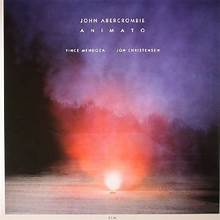
The palate here is up my alley, but this album doesn’t completely absorb me. The ensemble is heavy with organ and a post-fusion array of electronic sounds. There isn’t really a “post-fusion” style, the music that follows the initially popular period of fusion in the 70’s explores a more digitalized collection of sounds and softens in the 80’s. Both the keys and guitar hit on these tonal choices, and sometimes hit on some cheese – not musically, just in the tone of the sounds choices. I could imagine certain sounds here to also be found in video games and advertisements. “Agitato”
Overall = 5.2 (10) – Pretty good, but occasionally interrupts the mood with certain sound choices.Also don’t get it here!
Andy & the Bey Sisters – ‘Round Midnight – Prestige, 1965.
🗣️:
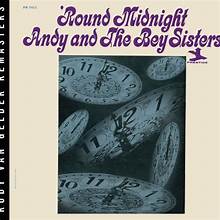
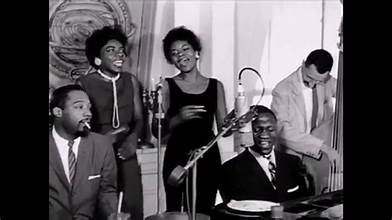
Andy Bey never released a bad recording that I have discovered, and this is one of the earliest recordings he made. It’s a different affair partially because it is a singing group. His sisters have beautiful voices, but Mr. Bey sounds like he already has his own unique singing style, possibly delivered from the future. Singing group’s arrangements are influenced by the approaches of other vocal groups like Gospel Quartets or Doo Wop. It is pretty Straight Ahead, with Interesting song curation and but rarely has any improvisation. “Feelin’ Good” & “Solitude”
Overall = 5.8 – (10) – Solid, fun recording for certain times and places – Sunday mornings are good. Get it!
Azteca – Pyramid of the Moon – BBR/Columbia, 1973.
🪨🫧 🪩 💃🏽🪘:
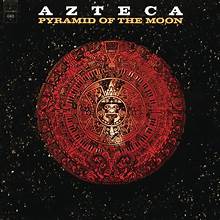
A Latin Rock orchestra by Sheila E’s Dad! It’s interesting to compare this with the Joe Bataan crossover attempts in the previous recordings. And maybe also comparing them to the Bar-Kays in the following recordings. Many of the songs on this album are instrumentals and both bands seemed to be hunting for crossover hits into the Hippy market (at least during some of the parts of their careers). Another comparison is to Santana (whom Pete Escovido was performing with prior to this band) and whom was “the” popularizer of Latin Classic Rock is interesting. I don’t think this recording hits any equivalent high points compared to Santana’s most successful music, but I generally think Azteca compares favorable to all of those other band comparisons, but were not as successful or well known. It’s fun hearing a large ensemble, with horns, really rip into it and play with so much power. The lyrical content is not that interesting, but the music has very creative arrangements and features some fun soloists. “Mazatlan”.
Overall = 5.5 (10) – Solid album with some fun mixtures, even some vaguely theater like touches. Youch! 3 not to get here!
The Bar-kays – Soul Finger – Atlantic & Atco, 1967.
🔈💰:
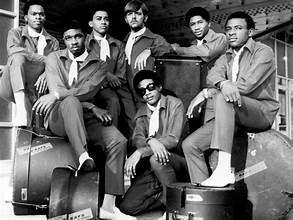
Otis Redding’s back up band and the Stax records house band on their signature early album. This album is instrumentals (mostly) and is really missing a galvanizing lead force to bring it all together. The music is fun, light and grooving, but it’s also not totally immersive, I’m thinking when I listen to it more than I should. Many of the members of the first incarnation of this group passed, along with Otis Redding, in a plane crash. “Soul Finger”
Overall = 4.3 – (10) – It’s good, but the first song takes the prize and the rest never rises to similar highs. Get it!
& Do You See What I See? – Stax, 1968 & 1972.
🔈 📔 🔭 ⚒️:
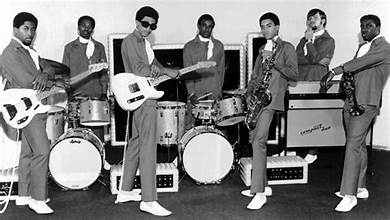
This is a post-airplane tragedy recording with essentially a new band. The two surviving members rebuilt the group and continued their path, though with a Funkier agenda and in this case there is singing and the songs have lyrics. The Bar-Kays would still back up many bands for Stax and continue to release their own albums as well. I find this a more complete listen than the earlier album. Also, the band is clearly taking a more direct approach towards voicing their Political discontent and writing about Social issues. “Do You See What I See?” these lyrics seem pretty relevant today!
Overall = 5.2 (10) – The lyrics and harder edge to the sound make this a better listen for me. Make it 4 not to get here!!!!

 Found Sounds