The Allman Brothers – Dreams – Polygram, 1989.
🪨🫧 🪩 ⏺️ ✪💰 🎸 ⚒️🚘:
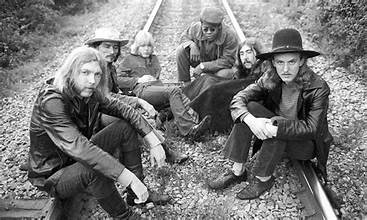
This Box Set was in the first batch of CDs I ever purchased, when I got my first stereo style CD player, in 1989! And that is also why it was stripped of its “box” in my collection, because I was moving around the country with a lot of saxophones and music, the boxes were taking up to much space, but that is a regretful decision now and why it is filed randomly. The others purchases that day were: Tom Waits Closing Time, Van Morrison His Band & the Street Choir, Massive Attack Blue Lines and Jimi Hendrix: Life Lines (which is a radio documentary and not what I thought it was…). That purchase was made at the Coolidge Corner Soundsmith, now long gone, (tho its sibling Booksmith may still exist?). I tend to favor the original albums, or complete collections, now, this collection is more of a greatest hits retrospective. Recently I have been picking up the original Allman Brothers’ albums and will find this collection redundant at some point. The music is an orgy of Electric Blues and Southern Rock ( two styles which are not very far apart) with some classic hit songs and some “This is Your Life” formative recordings and later post- Brothers solo recordings by various members. “Revival”.
Overall = 6.5 (10) – Great music which I would rate higher if on the original albums rather than this expansive greatest hits, which includes some later, and solo, works that are less interesting to me.Get it!
Robbie Basho – The Seal of the Blue Lotus – Fantasy/Ace, 1965/1996.
🇺🇸📣🌾 🎸:
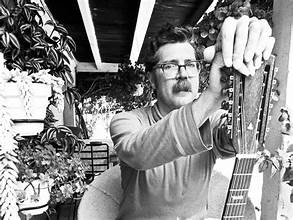
Basho is from the American Primitive school of guitar, but with a certain child-like awe of the World and its many cultures. This style of playing can be related to Americana and Roots music, but the artists are usually creating their own improvisational songs which are inspired by older music rather than performing the actual songs (they do that sometimes to). Basho was an expansive personality and explored a variety of Spiritual beliefs which he crafted into his music. These forays ride the line of appropriation, because it is unclear how deeply Basho immersed himself in the religions and philosophies he invested himself in, but if you consider the music his impressions of these cultures it avoids the uncomfortable feeling that he is a tourist claiming mastery over the conceptual. He also creates some longer form pieces and adopts a more compositional approach, improvising but at the service of the song. There is a documentary Voice of the Eagle, which I recommend. He is a nearly forgotten performer and much of his music is unreleased on CD. His guitar playing is the draw, but his singing is haunting and odd – in a way I very much enjoy. “Bardo Blues”
Overall = 5.7 (10) – The Basho experience is a worthy investment of discovery.Get it!
&
Bouquet – Lost Lagoon, 1983/2020.
🇺🇸📣🌾 🎸:
A lot more singing on this recording and somewhat more Pop-like in style, without actually ever being Pop music. There are some piano pieces and also a song with a choir. Also the variety of cultures inspiring the songs is very diverse, where usually Basho albums seem to have a more specific album focus (Country, Native American, Indian etc.) but here the influences are blended. This album does not focus on his guitar playing as much as the other album. “The White Swallow” (alternate version)
Overall = 5.7 (10) – I think this is as good as the other album, but has a different focus. Basho seekers might be less interested in this recording if his guitar work is the primary interest. Get it!
Danny Barker – Save the Bones – Orleans, 1988.
🇺🇸📣🏙️🦐:
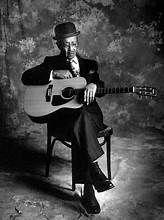
An artist who is also a living history, with many decades in music and a variety of contexts, styles and collaborator. On this album Mr. Barker is singing a variety of tunes and playing guitar. He also played banjo, ukulele and wrote some popular songs. I love this collection of songs because of the humor and character he imbues everything with. He was 79 at the time of this recording and offers the listener a life well lived and an important first person account of musical history. “Ham & Eggs”
Overall = 8 (10) – Good time music! Get it!
Harold Budd – The Room – Atlantic, 2000.
🌌⚡️✆ 🌃 🛁 🤿🔌🎹 🎗️:
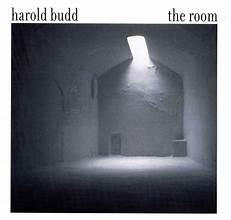
Easy to drift away into. Budd pops up in interesting collaborative moments like with John Tchicai and the Cocteau Twins, but he is probably most known for his ambient works. This music is of the study of shadows (as depicted in the cover image) – gentle, moments of darkness, shadows moving where they fall, slowly fleeing as the sunlight edges through the day. It’s perfect to sooth and a frequent choice for any deep soak I take. Budd drops sweet little melodies here and there in his compositions, which is not so common in ambient pieces. “The Room Alight” & “The Room of Forgotten Children”
Overall = 8.2 (10) – Time to disappear. Get it!
The Dixie Hummingbirds – We Love You Like A Rock & Every Day And Every Hour – MCA/Peacock Spiritual Series, 1964/1973.
🇺🇸📣🌳🗣️⛪️ 👁️🗨️ 🔭📔:
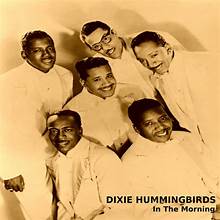
This was a critical purchase in my early collecting years. I’m sure it was based on the cover and I recall my introduction to Gospel was through the Blues and Popular R&B singers like Otis Redding. In any case it was for those voices that raise your hair and the four, or five, part harmonies. I have continued to collect Gospel, and more specifically Gospel Vocal Group albums, that hit the perfect blend of cover + original album (not greatest hits). The music here is influenced by the Civil Rights Movement and Popular RB, but still mixes in the Gospel messages. “Somebody” & “Jesus Children of America”
Overall = 9 (10) – One of my personal classics from my collection. Get it!
Fontella Bass – Free – Paula/Fuel, 1972/2000.
🪨🫧 🪩 ✊🏿:
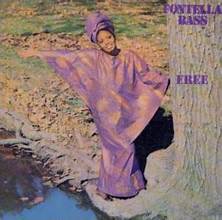
Hard one to figure, it’s a really good album, but hard to pin a clear identity on. My reaction to listening to it was that the producer(s) were fishing for hits and every song sounds similar to some other Popular song of the day. Brilliant voice, but Bass changes her delivery from song to song, as if imitating other singing styles and singers. Additionally, there is some very Gospel inspired songs (in an Aretha-like vein) followed by plenty of Pop love songs and some very not-Gospel influenced songs like “Homewrecker”. Add that to a remake version of her hit “Rescue Me” (from 6 years earlier) and you got a bit of a Hodge Podge. I like everything on the album though, it never gets a feeling like the music is flowing together from song to song. All good songs though, so a somewhat perplexing lack of mix. I’m suggesting it maybe was overly conceived in the production room, but performed by fabulous musicians so the results are pretty positive. “Now That I’ve Found a Good Thing” – I kept waiting for “THE” song, and most were close, but none really crushed me. The remake of “Rescue Me” is missing something that the original has.
Overall = 5.1 (10) – Good, but doesn’t always feel whole to me.Get it!
Luiz Bonfa – Solo in Rio 1959 – Smithsonian, 2005.
🍏🌾🇧🇷 🎸 ⎄ 🎭⌛️ 🎟️:
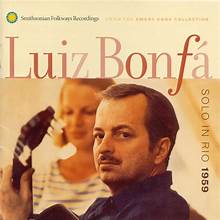
Yes! 2 topics of interest on one disc: Brazilian Music and Guitar Music = Brazilian Guitar Music! This a really great and varied collection, featuring many of Bonfa’s compositions, which are all very memorable. The guitar work is fabulous and deciphering his process for performing as a soloist – particularly how he contrasts techniques from song to song and how accompanies himself, many times it sounds like several performers. His bass lines are impeccable and distracting because you realize he’s just thumbing around over there and it is not an actual other player performing with him. The liner notes proclaim the historical significance of this recording, but the music speaks for itself. “Murder”
Overall = 8.3 (10) – Special.Get it!
Orchestre Poly-Rythmo de Cotonou – Analog Africa No. 4: The Voudon Effect (1972-1975) – Analog Africa, 2008.
🌍🫧🇧🇯 ⚒️ 𖫪 🎸🔌 🏋🏽🧴 ⚙︎:
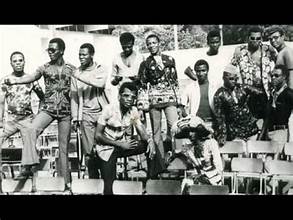
All Bangers! I have other recordings of this band and they are also great and different sounding. This album is raw, electrified, African Funk, with riffs and grooves to spare. The Analog Africa series is of a consistently of a high quality. I’m a fan of the guitar work, the synth solos and the saxophone playing, all good players, but the rhythm section is tops. “Iya Me Dji Ki Bi Ni”
Overall = 9.3 (10) – For a party, or a pick me up, this’ll do! Get it!
VA – The Art of the Japanese Flute – Legacy International, 1950/2012.
🇯🇵🪈 🌃 👁️ 📹 🤿👣:
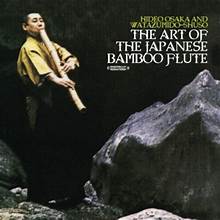
Hideo Osaka and Watazumido-Shuso (? I think this is an incorrect spelling for a type of flute, not a person) I found incredibly confusing documentation about both of these Japanese Flute recordings – including that they are possibly the same recordings(?)… They are both released by the same label, and I think the dubious “rights” to this music are probably being exploited here. Each search I tried lead to more confusion…. Sometimes the cover picture for the 2 albums is switched, the label is also listed as “California Legacy” in the Teruhisa Fukuda bio and the other “name” on this cover seems to be the name of the instrument not a person.
Based on my ear test, they are not the same recording.
This one was probably negatively reviewed because the mastering quality is poor, it is hard to hear – which being a music of dynamic contrast is a problem.
Legacy International is a small California label that seemed to release Smithsonian style documented traditional musics, but also recycling music that is in the public domain and wouldn’t need to be procured. Additionally they may not have cared about the sound quality at all.
If the liners for the two recordings are to be trusted, these recordings feature different flutes, here the Shino-Bue. There are limited notes that explain the instrument, not the performer or the music itself. This is vivid and dramatic music. Great for reading comic books to! “Inaka-Bue”
Overall = 5.2 (10) – Musically it is all good, lesser sound quality on this reissue. Get it!
&
Teruhisa Fukuda – The Mysterious Sounds of the Japanese Bamboo Flute – Legacy International, ?.
🇯🇵🪈 🌃 👁️ 📹 🤿👣:
Watazumi Doso This recording features the more famous Shakuhachi flute. The album has the same track listing as Fukuda’s Shakuhachi Banquet. I could only find the same version of the songs listed under an album called Ensemble Nipponia – but it is the same Fukudarecording from 1976. “Kumoi Jishi”. It’s pretty crazy how recordings can be appropriated and I think the mire I have encountered is more the result of lack of care verse any type of money making. This batch of recordings has better sound, but I am more concerned that the recordings were appropriated.
Overall = 5.7 (10) – Better listening on this disc. Get it! (*Ominous “comment”, on the Prime listing, of getting this CD out of production because it was a poor quality reissue. And maybe rights violations?)
VA – L’Accordeon En Auvergne – Auvidis, 1996.
🇫🇷🪗 ✺ ❂:

A deep accordion collection. It is French traditional accordion and from a specific region. It kind of needs to be your thing if you want to listen to it. Not for every occasion, but raucous and dance based songs mostly. I enjoy the musicians shouting things in the background, especially rousing. “‘Un Soir” by Marcel Plane
Overall = 4.6 (10) – Really for accordion enthusiasts and of it’s own historic interest. Get it!
Johnny Cash – Cash Unearthed – American, 2003.
⏺️🐴🌳🇺🇸📣📔 ✪💰⚰️🫂⛪️ 👁️🗨️:
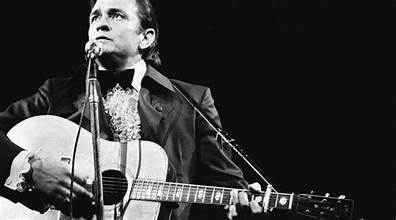
This box set compiles many songs that were recorded during Johnny Cash & Rick Rubin’s American Recordings series, but most songs did not make it onto those 4 albums. There is also a disc of Spirituals that Cash dreamt of recording, wish fulfilled (!) and a greatest hits of the American recordings on the 5th disc.
Iconic artists, like Johnny Cash, have multiple peaks in their career and endured over time with a steady fanbase that consistently connects with their music. However, they do go through new iterations of their career to be relevant in the 1950’s, 60’s, 70’s and 90’s etc. This was an amazing, legacy building, collaboration that tapped into Johnny Cash as an iconic stylist. He performs many cover songs from across the spectrum of Popular music. Some off these covers became hits, “Hurt” being probably the most popular example. It is an incredible finale to his career. Eight albums worth of songs and stories, mostly featuring just the Man in Black and a guitar. It rarely works so successfully, but an iconic artist + visionary producer can = magic. That they documented history of the American Songbook, as performed by Johnny Cash, is a compelling accomplishment. “Pocahontas” by Neil Young. Interesting to hear this song in a more spare, not so epic style.“
Overall = 8.7 (10) – This is really a 4 CD collection of outtakes that could easily have been released as individual albums themselves (they are strong enough for that) + a disc of American “hits”. Get it!

 Found Sounds