Allman Brothers – Brothers & Sisters – Polygram, 1973.
🪨🫧 🪩✪ 🎸 🔈🏙️🐴🌳 🗝️💰🎗️⚒️:
The Seventies were a remarkable decade for music. Between the technological advances and the post-Beatles record executive talking a more hands off approach and letting artists plot their own course, it is a really potent mix. When you go beyond an artist’s hits you will discover repertoire which embraces many styles, in the Seventies everyone was hip to everything and taking what they could. The Seventies are also a vital record of Fusion with examples from everywhere in the World, not only in the named Jazz Fusion. It is why I prefer to own the original albums and hear them as they were planned. The contrasts, the storytelling is always preserved in those.
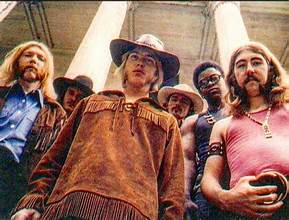
The Allman Brothers are commonly cited as Southern Rock, but their earliest recordings are full of Blues (Most early Southern Rock does incorporate heavy Blues influences). They also have some Country Rock, R&B and Jam Band elements. They are a very Guitardulgent band and I hear influences of their harmonized guitar parts in Prog Rock & Metal (And The Eagles – boo! hiss!). They regularly incorporate instrumentals, with fertile improvisations and a wall of Rhythm carrying it all. Maybe that improv aspect is the similarities I hear with Frank Zappa in their music. Then their is the beauty of Duane’s slide guitar, a truly unique voice on his instrument, but Dickey Betts might actually be the better guitarist?! This album shows all of those sides. “Jessica”
Overall = 8.4 (10) – A very complete album, showing all their faces, but with cohesion Get it!
& Eat a Peach – Polygram, 1972.
🪨🫧 🪩 ✪ 🎸 🔈🏙️🐴🌳 🗝️⚒️:
Another Allman Brothers revelation is that they are a Jam Band, and an early example of one where their live shows are expected to have long jams. There is a 30 minute live instrumental and it sustains interest throughout its length. I’m also much more into these albums than The Dreams boxset I reviewed previously. I’d always prefer a collection of albums + rarities as an added bonus, rather than the storytelling, or retrospective, approach on a collection. Prior to Lp records that preference matters less and the chronological formats just fine, though in some cases too detailed. I think these albums are greater on their own, and curated for song contrast and progression. “Les Brers in A Minor”
Overall = 6.7 (10) – A couple of hits and a couple expansive jams! Get it!
Steffen Basho-Junghans – Late Summer Morning – Strange Attractors Audio House, 2006.
🇺🇸📣🌾 🎸 🛁 👁️ 📹:

Related by inspiration to Robbie Basho, Mr. Basho-Junghans provides a similar feeling of well played simplicity, open spaces and expanding one’s purview of the World. It isn’t derivative of Robbie’s music, but it fills the same spaces; improvised solo guitar fantasies, Folk-like and traditional songs. Steffan is probably more self-editing than Robbie Basho was and therefore the music less ponderous. Nor does the music fly excitedly off the rails as some of Robbie’s music does, but Steffan gets caught in some really hypnotic loops and embraces them. “Azure No. 3”
Overall = 4 (10) – Good, but I might arrive it last when I am hunting for guitar music. Suitably dreamy though.Get it!
Big Maybelle – The Last of Big Maybelle – Paramount/Muse, 1973/1996.
🇺🇸📣🏙️🗣️ 𖫪:
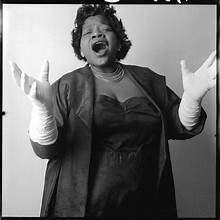
It seems this is Big Maybelle’s last recording, but it and many others were released after her death. It is electrified and Funky Blues, maybe a little far away from the sound her music is usually known for, a time period re-conception of her sound. The studio is propping up an artist with a “new” contemporary sound, but revisiting a retrospective-like collection of hit songs. A newly performed “greatest hits” that is leaning on the wall, hoping for a new audience to ask them to dance. The “With Strings” parts of the recording don’t really work out, but there are moments of excellence. “Old Love Never Dies”
Overall = 3.7 (10) – Nothing wrong with this, but maybe not the Big Maybelle to go for. Get it!
Harold Budd – Lovely Thunder – EG, 1986.
🌌⚡️✆ ⎄ 🛁 🤿 🌃 ⌘:

Glacially paced slow throws of shimmering synthesizer and thunderous crashes. These melodies arch their backs, stretch towards ambiguity. The sound evolves naturally, bathing bodies bask in its spread. Cold but not crystalline, it thaws. “Ice Floes in Eden”
Overall = 6.3 (10) – Dream worlds. Get it!
& The White Arcades – Warner Bros., 1988.
🌌⚡️✆ ⎄ 🛁 🤿 🌃 ⌘🫂:
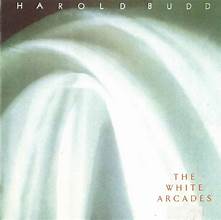
Slower paced, and it feels composed as a whole, but features songs I think Mr. Budd recorded elsewhere. Re-contextualizing your songs and composing longer works does not need to be mutually exclusive, I’ve reinterpreted old pieces for larger new works and Ellington did this too, particularly in parts of his Sacred Concerts. Borrowing from yourself is a wonderful feeling. Realizing that a creation can become multi-purposed is exciting. This occurrence is all happening in a dream world and I can’t decide if I “recognize” the pieces from other recordings or because I love, and re-listen to, this one. “Algebra of Darkness”. Robin Guthrie of the Cocteau Twins produced some of the tracks on the album and it was recorded in their studio.
Overall = 8.6 (10) – A classic, more cohesive than the previous, but similarly beautiful and Alien. Get it!
The Fairfield Four – Wreckin’ the House (Live at Mt.Hope) – Dead Reckoning, 1998
🇺🇸📣🌳🗣️⛪️ 🎟️:
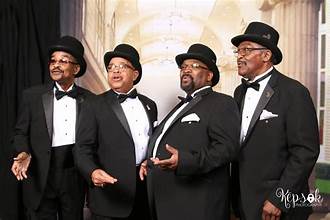
The deep voice here fogs over you, All the voices do it, but the deep voiced resonance is a feature in and of itself. The Four’s earliest recording seems to be from 1962, and many photos featured five not four members, so I do think the group (like many Gospel groups) changes personnel over time. A sort of “Dread Pirate Roberts” scenario where the group’s name is positioned above the individual names. This is live which (for Gospel, Salsa and Jazz) is usually a positive element and here it seems very lively and an exciting, personal performance was captured. It is late for this group, but I think the recording is very positive, the sound honest.“Crying in the Chapel”
Overall = 5.2 (10) – I like immersing in deep voices, it’s a thing (You’ll hear, next time!).Get it!
Atoms For Peace – AMOK – XL, 2013.
🪨🫧 🪩⚡️ ✪⚒️🏋🏽👁️ :

I’m a huge Radiohead fan. Even more when they become more experimental and more electronic (This is similar to how I feel about the Beatles). Atoms for Peace is not Radiohead, but it is a side project that maintains a natural evolution to their sound. I love it! Thom Yorke’s following albums are less Radiohead-like and more electronic. I’m always interested in his work, but I miss some of the strong writing found on these earlier solo/side project albums. There are many good tracks on this recording and Flea too! “Ingenue”
Overall = 8.1 (10) – I think there was more to do with this group. That, at least so far, has not manifested, but this was a strong effort.Get it!
VA – Classic Appalachian Blues – Smithsonian, 2010.
🍏🌾 🎸🏙️ ✺:
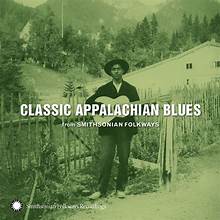
Another great Smithsonian regional collection of The Blues. These are really important documents and I think you can glean the stylistic differences by region. Appalachian Blues has a driving beat and features: fiddle, piano, banjo and plenty of harmonica scattered about these recordings. Most of the recordings are from the late 50’s through the 70’s with a few tracks from the 80’s & 90’s (probably added to the CD version as this considered a “Classic” Folkways recording dating from pre-Smithsonian guardianship). “One Dime Blues” by Etta Baker & “”Wine Blues (Drinkin’ Wine Spo-Dee-O-Dee)” by Sticks McGhee
Overall = 6.5 (10) – Great, listenable collection.Get it!
Orchestre Poly-Rythmo de Cotonou – Analog Africa No. 6: Orchestre Poly-Rythmo de Cotonou “Echos Hypnotiques” 1969 – 1979 – Analog Africa, 2009.
🌍🫧🇧🇯 𖫪 ✺ ⚙︎:
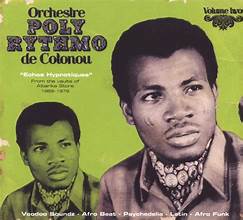
Non-stop grooves! The Funk was in the water in Benin. This collection ends with a short interview, the only words I could understand were = James Brown. But that is maybe all that is needed to explain the inspiration behind a lot of this music. Party Jams throughout! “Azon De Ma Gnin Kpevi”
Overall = 7.8 (10) – An easy choice.Get it!
Fong Naam – The Sleeping Angel’ Thai Classical Music – Nimbus, 1991.
🇹🇭📀 ꧂:
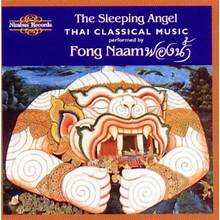
Thai Gamelan, traditional and the music is connected to various myths and legends. Though the liner notes do a good job with explanations of the stories, the storytelling aspect of this music is missed. aIt should be seen and heard accompanying dance or shadow theater. I find this Thai strain of Gamelan to have cleaner, fast, Melodic lines and offers some added variety with other non-percussive instruments and voices. It does not have the shimmering, out of phase, rhythmic transformations that I love in other regional strains of Gamelan. Comparing the regional styles is maybe not the point, if you think about all the regional strains of the Blues or Country, Folk, Rock and Jazz (let alone Classical) you can let go of the comparisons and appreciate its artistry, like you would food from a region. “Ma Ram (The Dancing Horse)”
Overall = 5.5 (10) – Nice to be able to experience Gamelan styles from around the World. Get it!
Larbi Akrim & El Arab Serghini – Musica Andalusi de Laud: La Belleza Contemplada – Pneuma, 2000.
🌎📣 🇲🇦🇪🇸؎:
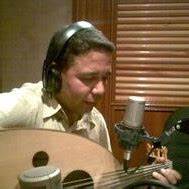
Oud/Lute and oud + voice. Some music from the Middle East evokes an expanse of openness. My feeling is that space relates to the expanse of the desert and the natural surroundings influencing the sound. This music features Moroccan musicians and focuses on songs from the region Al Andalusi, it was the Muslim controlled areas of the Iberian Peninsula. It is interesting to delineate between Spain and Morocco influences here, it’s so long ago that I’m not sure we can truly separate the influences in their musics. But listen to how this Lute is used and how a Flamenco guitar sounds and there are clear relationships in the styles. “Zirga. Mewl “¡Camina altivo! ¡Lo mereces!” The opening moments of this song had me asking when Leonard Cohen got into my mix!
Overall = 5.9 (10) – The sounds of wide open spaces.Get it!
John Lennon – Lennon – Parlophone, 1990.
⏺️ ✪ 📝 🗝️🗣️⎄💰👁️⚖️:

Lennon was my Mom’s Beatle and I followed suit. I vividly recall my Mother’s reaction to his death, a historic moment of my awareness about the greater World in my youth. I am a fan of his raw emotional vocal approach & his lyrical qualities. I am also a fan of the contrast of personalities found in the Beatles, they were complimentary forces that created something unique. I prefer Lennon’s post-Beatles career mores than the other Beatles solo projects. It’s hard to choose songs from this collection, because there are many.
I do feel similarly dubious (as I did w/ the Allman Brothers Dreams set) concerning the nature of this collection. I’d prefer to own the albums individually, but at the time of this purchase I did not have this philosophy about collections yet. There are now other retrospective Lennon Box Sets available, both newer mastering and more comprehensive too.
Lennon’s solo career included 6 albums and 2 co-led albums with Yoko Ono. I think this 4 disc format almost covers everything in those 6 albums, but the songs are shuffled up and there is something that annoys me about that. I most likely will continue to grab the original albums until there isn’t a reason to hold onto this collection. “Hold On”
Overall = 6.7 (10) – Great music, but I want to hear the sequencing of the original albums and I’m bothered by that – it’s like an itch, just outside of my memory. Get it! That’s a bargain!!

 Found Sounds