Tori Amos – Little Earthquakes – Atlantic, 1991.
🪨🫧 🪩🎹💰:

I’m surprised at how much I enjoy this album now. My interest in Mrs. Amos’ music waned as she became more popular and the popularity seemed to feed her musical ego. One of my dear friends recommended this album in ‘91and I quickly recognized some similarities to Kate Bush – in her songwriting, not her voice or style particularly, but how she designs her songs has some similarities to ho Mrs. Bush’s designs songs. I appreciated it then, but liked other artists more, hearing it now it holds up better than I remembered. “Precious Things”
Overall = 6.3 (10) – Better than I remember.Get it!
Black Lodge Singers – Pow-Wow Highway Songs – S.O.A.R., 1991.
🇺🇸📣🌾🪶🤿⏳:
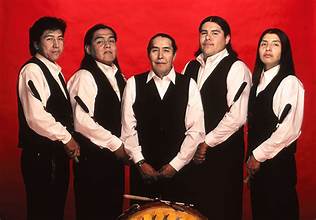
I purchased this long ago, not realizing that it was a very “independent” release of Indigenous American music and has since become a little rare. I long had an interest in Native American music, and I recorded hours of Native radio on cassette tape when I lived in Albuquerque in 1994. Initially that interest was in a belief that I was part Native American. I am descended from early immigrants, people who arrived on the Mayflower and there was a family photo which included a Native relative, but did not apparently include his DNA. So what began as a search for musical ancestry became my contemporary interest in learning about traditional musics generally. This music arrives as anticipated, incessant drums and keening vocals, but with little information on the song meanings. “Eagle Plume Dancer”
Overall = 6.5 (10) – I think this recording was sold on the Pow Wow Highways it draws its title from. Get it!$$$
Bobby Bland – Two Steps From the Blues – MCA, 1973.
🇺🇸📣🏙️🎹🔈:
A hot, late night with the Blues in the Rhythm & Blues. The album sounds different than I expected from Mr. Bland, at the time I thought it was getting Blues piano in a Charles Brown vein. That was my misconception, what’s here is great though, I’m happy with the find. It features a bigger group, with horns, and highlights Mr. Bland’s raw voice. “Cry Cry Cry”
Overall = 7.2 (10) – Misconceptions aside this is a raw, soulful joy. Get it!
Harold Budd/Brian Eno – The Pearl – EG Records, 1984.
🌌⚡️✆🎗️🎹 🤿:
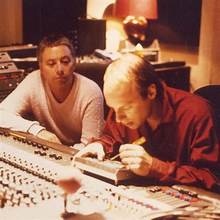
Lush and languid, featuring two of the prime innovators of Ambient music. Also one of my favorite Ambient recordings. Budd has a subtle, mastery of slow melodies that do not get lost in repetition. So much Ambient music is meant to recede from focus and draw our mind with it. Recently I went to a live Ambient performance, in a church, with about 300 audience members and it was not the same listening experience. For me listening to Ambient music is usually a solo, occasionally duo, encounter. Ambient music by design includes the space you are in, both mentally and physically. And it is surprising to me, as it is with a lot of conceptualized creation, how each composer has their own personal sound, despite drawing from similar methodologies. “Foreshadowed”
Overall = 9 (10) – Get lost in that dream! Get it!
The Five Blind Boys of Alabama – Deep River: Featuring Clarence Fountain – Elektra Nonesuch, 1992.
🇺🇸📣🌳🗣️⛪️ 🫂:
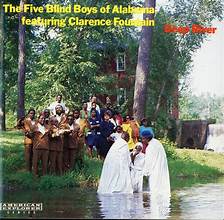
Newer Gospel from a legendary, iconic Gospel group. Again the deep voices take a certain supremacy in these recordings for me. Musically, Gospel from the last 50 years usually gets a little too much polish for my tastes. It can venture into a kind of religious cheese that I am not down for. Here the band is definitely in that style, but performed by musicians (including Booker T.!) who dig deep into the Funk, and rawness, enough to keep it balanced. Generally, when I want to listen to Gospel I want to feel inspired, but also not feel that I am in an aural recreation of a service – which many recordings do seem to strive for. This one rides the edge of that. “Deep River (part 2)”
Overall = 5.3 (10) – This album delivers on the voices and occasionally some borderline cheese.Get it!
Robbie Basho – The Voice of the Eagle – Vanguard Masters, 1972/2014.
🪨🫧 🇺🇸📣🌾:
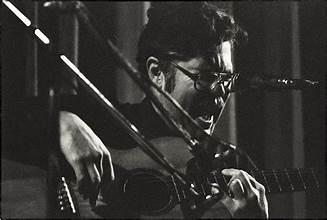
Basho at some of his wild and wooliest, with a lot of vocal pieces, which I do enjoy despite his lyrical strangeness and wide vibrato. He is committed and authentic, even though the actual music he is making is of self invention. Apparently he performed music like this for a group Native Americans and they were appreciative despite the language being his own impression of a native tongue. But Basho is not making fun of anyone. He investigated many religions and cultures, creating his impressions of them. This kind of performance can veer into the “in poor taste” category easily, but it wasn’t something he really reaped benefit from and it was very much a picture of parts of his inner self, which maybe absolves him of disdain. “Omaha Tribal Prayer”
Overall = 6.7 (10) – A pretty unique document, something really that could only be created by this artist. Get it!
VA – Vocal Music in Crete – Smithsonian Folkways, 1977-1982.
🍏🌾🇬🇷🗣️⏳:
I am a fan of vocal music and am interested to here what that means in each culture. I also enjoy trying to connect my perceptions of the place and culture to the music. It is great to immerse oneself in other arts, literature or images from that culture while listening to music of the same place of origin. In this case my experience with Crete is from Greek myths and I know what I imagine it to be like, but a lot of this music sends me to other parts of the Mediterranean and North Africa. I believe that the people of the Mediterranean share some culture with each other beyond their borders. Some culture relates art and some to having the same Birds, waves, flavors and sounds around them. “Ta Vasana Mou Kherome” (I Enjoy My Troubles).
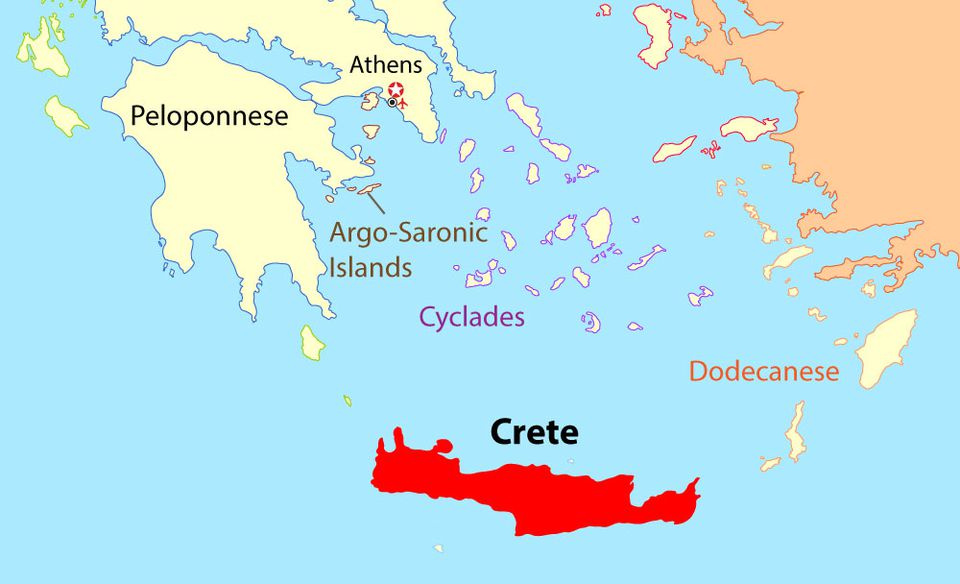
Overall = 6.4 (10) – It can bring you to another time & place.Get it!
Hallelujah Chicken Run Band – Analog Africa: Volume 2: Take One – Alula Records, 1974-1979.
🌍🇿🇼⏳:
I picked this up recently, and it is earlier in the Analog Africa collection than the ones found in the previous In the Stacks reviews. It is less Funky, but features a lot of wonderful guitar work. The dueling melodies that appear in a lot of Afro-Pop are another compelling aspect for me. I like how they subtly change the rhythmic patterns and alter the balance of the groove. The singer Thomas Mapfumo will have popular World Music success in the 80’s. “Manheru Changamire”
Overall = 6.1 (10) – You feel the positivity and brightness in this music, it isn’t for all occasions, but is great for a lift. Get it!
The Gyuto Monks – Freedom Chants From the Roof of the World – Ryko, 1989.
🇮🇳🗣️ 🫂 🤿:
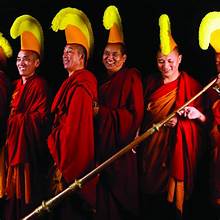
Primal, primordial sounds. Throat singing often feels like it is welling up from the deepest places in time, a choir of throat singers amplifies that sense of eternity. There is a short piece at the end with Kitaro, Philip Glass and Mickey Hart, but it ventures into the Cheeselands. The 2 other long meditations, featuring only the Monks, are the reason to fall into the timeless qualities of this recording. “Yamantaka” some of the natural reverb occurring in the middle (around the 17 minute mark) is astounding.
Overall = 4.6 (10) – The meditation aspects are a great space to visit, probably not making it to the player every weekend though. Get it!
La Chakachas – Discoteca Sudamericana – Right Tempo/CBS, 1974.
🌎🫧🇧🇪🕺🏿:
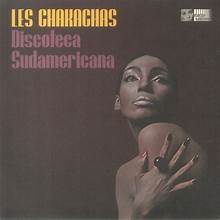
Described as a Latin band from Belgium, La Chakachas should be described as impressions of Latin music by a band with a Conga drum who seemed to flit after hits, but instead created some decent Sound Design, was Sample Popular, adequately performed music which was marred by terrible vocals that seem to recreate swinger parties!!! In several cases the music is offensive, as is the band members taking on personalities and names of Latin people to claim authenticity. Truly there is almost nothing Latin about this music, it is high cheese and hunting for grooves, but never completing any. It is probably best as background music (for a Swinger Party) and even the stunning cover has me questioning if it is a model who has been blackened, rather than a striking Black model?A lot of early International music features artists from outside the culture, maybe because people knew no better? Or is it really just that they were inspired by those styles? Claiming authenticity is about the most inauthentic thing ever. This band was chasing styles for their personal success, to seem exotic, and probably not based on actually learning the music they professed to play. My question is: What was the 70’s Latin Music scene in Belgium? “The Beggar”, nasty horns, shitass vocals. This band was Sample popular, meaning they have been sampled frequently.
Overall = 2.1 (10) – If it were advertised appropriately, and wordlessly, I might have more love for it. Get it!
Scott Joplin/John Arpin – The Complete Piano Music of Scott Joplin – Classical Heritage, 1896-1917.
⏺️🎹⌛️🗝️ ⎄:
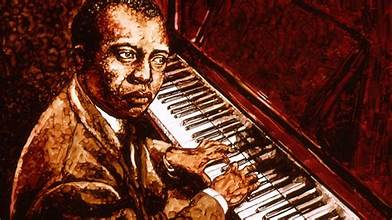
I have composed a Rag for saxophone and arranged a few for saxophone groups, I have an interest in the style, but it is kind of a style that has a very specific window of creation and popularity. That window is in part framed by technology, meaning we have mostly written and mechanical piano rolls as documents for most of Ragtime’s popular time period. Ragtime, being primarily piano music, is influenced by Classical Piano and the popular Marching Bands of its day. Ragtime is usually notated music and the composers often had a formal Classical piano education, but it also had elements of improvisation and early Jazz connections. John Arpin is a Classical interpreter of this material, maybe the most important modern interpreter of the music, but as I listen to this collection I do wonder if these impressions are colored by a particular perspective. I am trying to imagine a Classical Guitarist interpreting a Blues guitarist – if their music was written out, and how would that sound? What would the written notation leave out? How much does a sound changed when its being looked back upon retrospectively? How much does a style reflect its time? And what research could’ve been done to decide how performers actually performed Ragtime in the 20’s? What would the style really have sounded like at the turn of the previous century? I feel these recordings are only a part of the true perspective of what this music was and Scott Joplin was the most important of the Rag composers, so he received the most attention. It is clear that some of his work wasn’t performed properly in his life, should we imagine that it is being interpreted correctly almost a century after his death? “Heliotrope Bouquet”

Overall = 6.5 (10) Qualms and big picture questions withstanding, I needed these recordings for research, many listeners would only need a few choice Rags, but this fills the whole bag. Get it!

 Found Sounds