Luiz Bonfá – IAmor! The Fabulous Guitar of Luiz Bonfá – Atlantic/Collectibles, 1958.
🇧🇷🎸 ⎄:
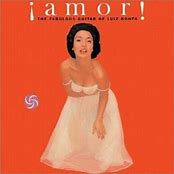
Lovely guitar playing by a master, who performs Sambas, Bossas, Jazz Standards and mostly originals. There are many solo pieces, but also wonderful tracks featuring bleary vibraphone and mellophone. If anything the album is too short, but it is a wonderful feature for Mr. Bonfa’s gifts of guitar and composition. Many of his songs draw from classical guitar playing, others feel like Brazilian Pop with traditional roots, its a nice mix with some Jazzy highlights. “Lonely Lament”
Overall = 7.6 (10) – This delivers on a light, breezy listen, treat it with sunny beverages.Get it!$$
Marion Brown – Three For Shepp – Impulse, 1966.
🎺 ⏺I! I🧫🪄 ⎄🎷:
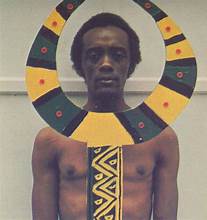
I was attracted to Marion Brown’s music because he was a second wave Avant Gard saxophone player who was fiery and intense. A searing alto in a small group of mainly tenors like Pharaoh Sanders and Archie Shepp. I would discover other players later, but I started on Alto so Mr. Brown was an important voice for me. I would later on find that Mr. Brown was that fiery alto, but he also had a distinct compositional language. Back then I wasn’t concerned with the less explosive sides of his artistry. This type of music was a desired pinnacle of playing for me. I had the sense that the performers were in communion with the moment, creating purely from connection to that moment and the people involved. “West India”
Overall = 6.2 (10) – Pretty out. Fab band. I do think Mr. Brown’s clarity of conception is more realized in his future recordings. Get it!
Geri Allen – The Gathering – Verve, 1994.
🎺 ⏺🪄🎹 ⎄:
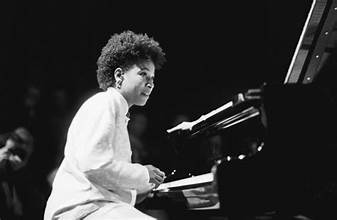
A later Geri Allen recording, one which has the produced, featured artist treatment so frequent in 90’s Jazz releases. There are lots of guests, often creating a loss of continuity in overall sound. And the artistic decisions are based on how to present an artist to be the most successful. The music is good, the production is too pristine for my tastes and it is also music I fail to remember. None of that feels actually related to Mrs. Allen’s music, just how it is presented. Even the album cover presents her in a manner which feels unlike the personalty conveyed by her earlier albums. That said I like this more than most music from this time period and the playing makes it worth listening to. It just blends into the background more than I’d like. “Gabriel’s Royal Blue Reals”
Overall = 4.1 (10) – I may be biased against most Jazz from the 80’s forward! It is something I contemplate frequently. Get it!
George Braith – The Complete Blue Note Sessions – Blue Note, 1963-1964. (Two Souls In One; Soul Stream & Extensions)
🎺 ⏺ ♫ ⏺️🧫🪄👣🎷🎸:
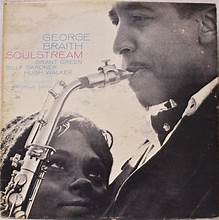
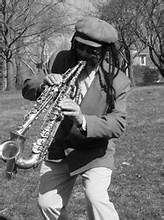
George Braith, or previously Braithwaite, was a reed player who invented his own double saxophone The Braithophone – which is actually an alto and soprano welded together. Making it not so much of a new instrument, but a new hybrid. It’s design seemed to facilitate techniques derived from Rahsaan Roland Kirk’s ability to play two (+) horns simultaneously. Mr. Braith is a visionary and one of those Jazz Musician/Inventors that appear consistently through Jazz history. He also plays some Stritch, another odd reed instrument that is somewhat like a straight Alto Saxophone.
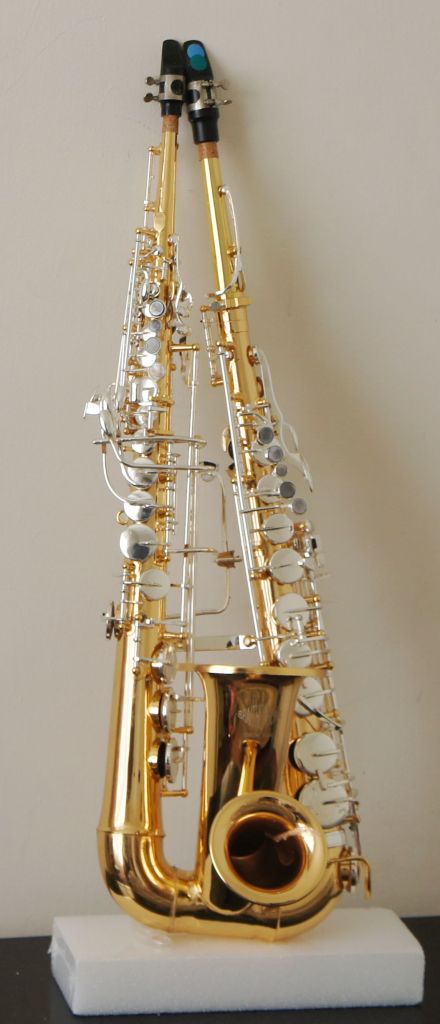
The albums here are a collection of Blue Note rarities and I was interested in them for that, his unusual creation and they are also a closet collection of Grant Green albums. The music is mostly in a Soul Jazz Organ combo vein with a little freeness here and there. To my ears, Mr. Braith’s best playing is on his tenor. The double horn playing, and the Braithophone generally, is somewhat limited. He arranges a few simple folk melodies to feature it and based on my reckoning, playing this instrument you would have difficulty negotiating any faster, Bop-like melodies. Also the natural harmonies created by it are close and harsh, so ballad playing isn’t really a viable alternative. The nature of playing the top 3+ keys of 2 saxophones (that’s what I think happens in this design) is that they are similar in range. This creates the close harmonies and though the full scale of chromatic pitches would be distributed between the 2 horns (with some crossover of pitches) it would have a difficult gap, or break, between the instruments. It probably has a natural 2-2.5 octave range. I enjoy the sound of the Braithophone most in the weird accompaniment figures he plays behind other soloists (which happens infrequently). Mr. Brown is a decent soloist, but a little choppy and stiff (at this early point of his career). “Mary had A Little Lamb”
Overall = 5.7 (10) – Lot’s of good stuff, here but maybe experimental in the not quite fully realized way. Get it!$$$
Ray Barretto – Hard Hands – Fania, 1968.
🌶️💃🏽🪘:
Ray Barretto has to be one of the most recorded musicians, I don’t think he did much studio work, but he appears on dozens of recordings as a sideman and leader. He was one of the most significant Congo players on a multitude of classic Jazz recordings, Salsa recordings and here as a leader he is featuring a healthy blend of songs that switch between Salsa, Latin Soul and Boogaloo. I like the Salsa songs best, but on this recording the late sixties Pop music is not an embarrassment, as it can be on other Fania recordings. “Mi Ritmo Te Llama”
Overall = 6.5 (10) – Pretty great, but every other song pales in comparison to the excellent Salsa pieces.Get it!$$
Muhal Richard Abrams – View From Within – Black Saint, 1985.
🎺🧫🪄 ⎄🎹:
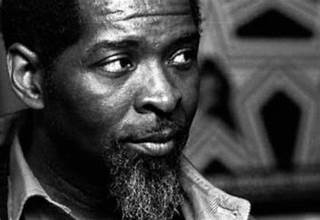
I had an opportunity to perform Muhal’s piece “Sound Piece” in 2012 with Bobby Zankel’s Warriors of the Wonderful Sound, which I was a founding member of, and performer with, for about a decade. Working with your heroes is challenging, Muhal was a sweet spirit with a mischievous presence, happy and laughing throughout the creation of the piece. I struggled learning the alto duet at the beginning of the piece, mostly because it was twice as fast as I had prepared for and then also extremely fast generally. At that time I had begun to step back from a rigorous performance schedule, began attending the Rutger’s Jazz Research Masters program (sadly gone now) and I felt a lot of judgement, and agitation, as I struggled with my part. The music then was challenging and this work features a similar language.
I view Muhal as a conceptual composer, he writes for the ensemble and offers settings for a variety of improvisational explorations. He wasn’t playing piano with us, it was a few years before his passing, and he only conducted the music. Here he sounds pretty great on his solos and he evokes the distinctive tone colors you can find in all of his works.
Listening to this recording now gives me insight now into what the piece was then, I wish I had done more investigation of this work when I prepared for that one. “Positrane” (Sound Piece WRTI Interview with Muhal)
Overall = 6.1 (10) – Pretty out there, but with accessible sound design.Get it!
& Song For All, 1997.
🎺🧫🪄 ⎄🎹:
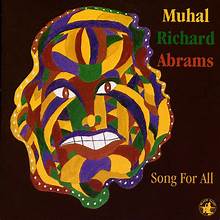
This recording is both a joyous and a somber journey. It feels very present, in this moment, though it’s nearly 30 years old. It features Muhal’s conceptual brilliance and wildly contrasting songs. His ability to compose a balance between poised direction and personal freedom, is aptly realized here. The outness never intrudes on the story telling and it holds lots of grooves. The cover art feels similar to the AEC Third Decade album (reviewed below), but apparently the intense face was painted by Muhal himself. There are also some really cool synthesizer parts, performed by Muhal, that make me want to hear more of that kind of thing. “Marching with Honor” & “Imagine” this is not your mom’s John Lennon.
Overall = 7.5 (10) – Really visceral & romping! Get it!
Dizzy Reece – Mosaic Select #11 – Blue Note/Mosaic, 1958-60/2004. (Blues In Trinity, Star Bright, Soundin’ Off, Comin’ On)
🎺⏺️ ⏺ 𝍍🎶🪄🇯🇲:
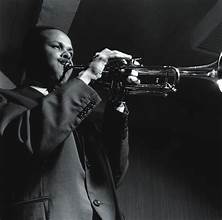
A collection of Dizzy Reece’s Blue Note recordings. Mr. Reece is a fine trumpet player and composer, from Jamaica, with a natural Hard Bop style. Most of these recordings were difficult to find. Usually after a Mosaic release there are a fleet of reissues covering the material on these collections, but I’m not sure these discs are that available individually. I’m a fan of Mr. Reece’s songs and playing, the 4 albums feature fine ensembles , usually mixtures of the members of the Miles and Blakey bands of the time. The guests are tall op quality foils: Donald Byrd, Mobley, Turrentine. All the recordings are great (possibly his best?) examples of Mr. Reece’s playing and Hard Bop generally. Mr. Reece has a warm sound, and if you consider regionality and whom a player had a chance to hear as they developed, Reece sounds very comfortable and compatible performing next to Byrd. He is an inventive improvisor and sounds individual despite not being from the states. “Blues in Trinity” & “The Story of Love”
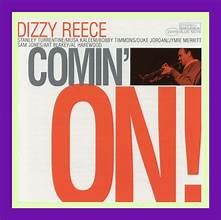
Overall = 7.2 (10) – If you are looking for late 50’s Hard Bop these are some fresh examples.Get it!
Rabih Abou-Khalil – Odd Times – Enja, 1997.
🌍🎺🪄👣🎟️ ⎄:
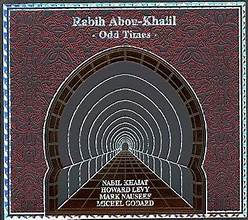
When Rabih Abou-Khalil added tuba to his core ensemble it really transformed his conception. Though some of the bass players on earlier albums sounded good I think the Oud paired with another string instrument didn’t create the proper contrast. The tuba has that contrast, and Michel Godard is an insane tubist. The musicianship and ensemble playing is through the roof and the added harmonica is a strange, butwondrous timbre. “Dr. Gieler´s Prescription”
Overall = 7.4 (10) – Excitingly challenging music! Get it!
Alice Babs – Serenading Duke Ellington – Prophone, 1975/1977/1994.
🗣️🎺🥁📔🇸🇪:
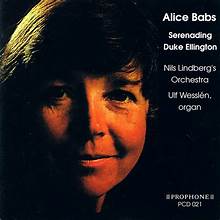
One of Ellington’s important vocal collaborators, here with a Swedish Big Band and organist, playing all Ellington pieces. I bought this for all those reasons and the vibe of her face on the cover, such benevolent energy! I’m glad I did, hearing the organ with Big Band playing Ellington is exciting for me. There is a rare appearance of the song Ellington wrote for Mrs. Babs “There Is Something About Me Without You”. Cool song, but it is not easy to discover anything about it because he never himself recorded it. “I Like the Sunrise”
Overall = 4.5 (10) – Some unusual Ellington moments on here.Get it!
Blonde Redhead – In An Expression of the Inexpressible – Touch And Go, 1998.
🪨🫧 🪩 :
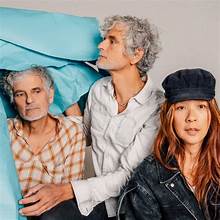
This is a later and heavier sounding album from Blonde Redhead. They still have interesting song writing, but more guitar, bigger beats and less synths. Sometimes this doesn’t work for me and I can’t decide if it is an artistic direction choice by the band or working with a different producer, who has a different sound concept. It seems like a lurch in the direction of whatever sound was popular in 1998, but it doesn’t evoke the passions I feel for their earlier music.“Distilled”
Overall = 3.2 (10) – I am more of a fan of their earlier sound. Get it!
The Brand New Heavies – Heavy Rhyme Experience: Vol. 1 – Delicious Vinyl, 1992.
🔈🎤🎟️:
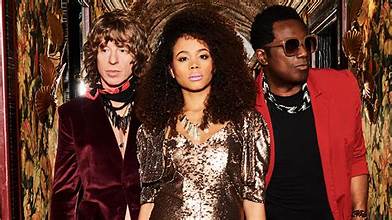
This album is a nostalgic High School Graduation year recording for me. At the time I think I was mostly excited by the live musicianship with an interesting collection of Rappers and Dancehall Reggae artists. It was a little before the Roots became known and before I had heard The Goats, so it was unusual to hear live instruments with Rappers. Becoming a musician, it gave me some hope for the collision of those worlds. It still holds up pretty well, but again the Brand New Heavies level of funkiness doesn’t hold up in comparison to the artists I’ve become familiar with since initially hearing them and the collection of Rappers feels less esteemed today than maybe I thought they were then. There are some solid high points and I forgot it was a live recording, which gives it an event-like feel. “Whatgabouthat” w/ Tiger.
Overall = 5.4 (10) – Nostalgia trip, but there are other rappers I wished had gotten in some rhymes from those times. Get it!
Art Ensemble of Chicago – The Third Decade – ECM, 1984.
🎺🌌🎑🧫🪄 ⎄:
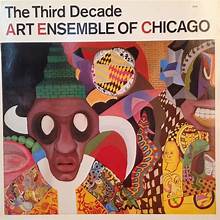
One trait of the Art Ensemble is there shared involvement in both compositional and improvisational creation. Usually each member contributes a piece to their recordings and there is distinction in their different conceptual voices. Additionally they treat style as a palate, changing genres as a device of contrast. It gives their recordings a lot of variety and yet it involves familiar touchstones in their different languages, then they surprise with toy instrument interjections, mirth and electronica. The eclecticism becomes a characteristic, but they are always authentically and inside the song too. “Prayer For Jimbo Kwesi” This starts with some electronics that remind me of a Prince song and then leads to a gentle “bagpipe” vibe?!
Overall = 6.7 (10) – A fine example from their later middle period. Get It!$$$$

 Found Sounds