Laurie Anderson – Big Science – Warner Bros., 1982.
🪨🫧 🪩 🕳️🔌 ⚡️:
Groundbreaking Pop music. Mrs. Anderson has an innate ability to pull strange, avant-garde threads and make them evocative and fascinating to audiences that wouldn’t normally seek those tastes. She is also an artist I feel receives almost unanimous appreciation, for being herself. It is not the easiest music to appreciate, but she tosses many lines to her listeners and drags them into her forces. This album really felt new when it arrived. I usually consider “Modern” or “Ahead of it’s time” as being assessed to if it continues to sound that way after its inception. Mrs. Anderson’s music sounds fresh still and the other music around us has gravitated to her sounds.“Big Science”
Overall = 7.6 (10) – Seminal, early 80’s experimental music.Get it!
& Bright Red – Warner Bros., 1994.
🪨🫧 🪩🕳️🔌 ⚡️⚰️:
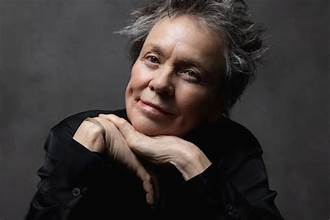
A lot of what I hear in Mrs. Anderson’s music shouldn’t work in a popular sense. There is more narration than singing, she creates a variety of alien sounds, she experiments with song forms and though the rhythms are repetitive, most of the rest is not. There is a lot of music that pushes me past my boundaries, but it isn’t often that it as listenable as her music is. I can put this album on and it soundtracks to my life. Often the lyrics feel mundane, or grounded in reality, but then smeared with the abstract or the unknowable. Most experimental music I respect for the attempt and have only specific occasions where I would actually put them on to listen to. Anderson’s music has a wide range of listening settings, it doesn’t require specific opportunities. “World Without End”
Overall = 7.9 (10) – Somewhat smoother fair a dozen years later, but not less adventuresome.Get it!
Greg Brown – Dream Cafe – Red House,1992.
🇺🇸📣🌾:
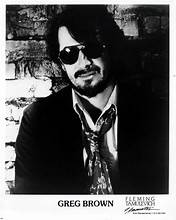
I consider Mr. Brown’s music to be that of a Folk, Singer Songwriter, but that means (to me) that he writes songs from a variety of perspectives in a Folk style. They usually aren’t traditional songs, or the protest songs expressed in Folk traditions, but they do often have a “songs of the country” feel. Mr. Brown has a deep Baritone voice which has a little wiggle to it, like a low Orbison. I think in the 90’s there was a side road somewhere, where artists like Mr. Brown had a touring circuit that catered to an Off-Nashville type of audience. I think now artists like this have more mainstream success. One difference to what I hear as similar artists of today, is that the music is entirely the vehicle of the lyrics, you are meant to understand every word and the music is the vessel carrying the lyric. Another would be that today’s artists are recording this music in their home and with more digital manipulation, than here which is based in live performance. “Just By Myself”
Overall = 5.4 (10) – These are good songs that I enjoy peeling apart as I listen to them and beginning to understand their narrative. Get it!
& The Live One – Red House,1995.
🇺🇸📣🌾🎟️📔:
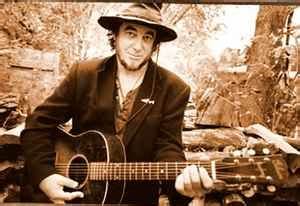
Many of the songs from Dream Cafe appear on this live album. I’m not sure if they were considered “hits”, but these would fall into the “hits performed with audience” category.
I think “Live” albums can fall into a few categories:
– Improvised – which present different versions of songs you know (Jazz for this!);
- Incredible musicians freed of a studio environment and opening up the songs and stretching them out;
- Opportunities to feel the performer’s personality in person – bringing the songs to life, but not really changing them.
- Greatest hits collections presented as live albums that resell successful material in a seemingly new format.
- Historically important moments captured.
- Commemorative recordings meant to preserve an audience’s experience, like people who attended a specific tour.
This recording I would say is the performer’s personality on display, the songs don’t change a lot from the studio recordings (nor should they) and their are stories and banter with the audience. It’s good, the stories do add an element, particularly to the intimacy feelings of being at a show. “Spring Wind”
Overall = 5.6 (10) – Probably the best of his songs at this time, which makes for a stronger album. Get it!
Blind Blake – Ragtime Guitar’s Foremost Fingerpicker – Yazoo, 1990.
🇺🇸📣🏙️🎸:
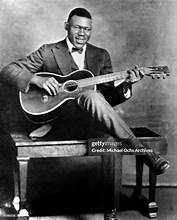
I’m a fan of Ragtime guitar, but I mostly discovered post-Ragtime era revivalist performers, this features a contemporary of the Ragtime era. There are a group of guitar fingerpicker artists in the 70’s that work in this style and often performed some Scott Joplin material. The guitar is a two handed instrument, but it has a fundamentally different approach to performing with 2 hands than a piano has. The lead and accompaniment figures found in Ragtime have to merge in the guitar player’s technique, rather than have separate functions. These techniques create the same driving tempo, but the coordination of covering multiple roles mystifies me. I think that during the time period of these recordings, the mid-1920s, the walls that separated Jazz, Blues and Ragtime were thinner, if I simply heard this recording, without the liner information, I would’ve thought it was a Blues player – in part because of the lyrics. “Diddie Wa Diddie”
Overall = 7.8 (10) – Excellent guitar work, hard, driving songs.Get it!
Loren MazzaCane Connors – Hell! Hell! Hell! Hell! Hell! – The Lotus Sound, 1997.
🌌⚡️✆🎸🪄:
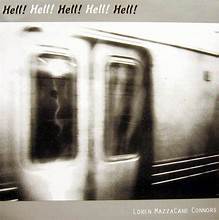
Loud Ambient? It could be called Noise too. Mr. Connors can quiet too, but there are loads of distortion and rippling vibrations here, which I still find dreamy and trance inducing. It is also Guitar music and just a facet of Mr. Connors style and approach. I like the places his music take me, unhurriedly. Fans of certain albums by Neil Young would dig this. “Guitar #7” & “#8” The album starts with a roar of feedback and progresses to more delicate meanderings. One problem too short.
Overall = 6.7 (10) – Space out. Get it!
& w/ Alan Licht – Mercury – Road Cone, 1997.
🌌⚡️✆🎸🪄:
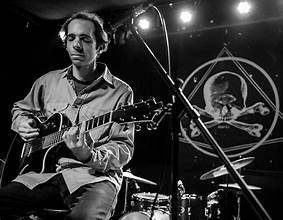
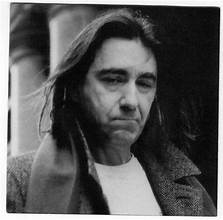
Similar to the one above, but a collaborative performance of like minds. It seems to be a collection of recordings from different places where they performed together, but I’m uncertain if they are “Live w/ audience” or just moments they recorded together. It is interesting to hear 2 musicians with similar concepts of Space and Time, respectfully contour each other in improvisational contexts. Duet improvising might be the most challenging context. It is a very open and intense/exposed scenario, I usually question myself relentlessly in those situations. Like, “Is this the right thing to do here?” or “What will they think?”. I think these gentlemen have experience in each other’s worlds and are comfortable letting sounds hang without resolution.“Toronto (track 5)”
Overall = 6.7 (10) – More electric dreams.Get it!
Bessie Griffin & The Gospel Pearls – Live at “The Bear” in Chicago – epic/Legacy, 1963/1998.
🇺🇸📣🌳🗣️⛪️🎟️ 👁️🗨️⌛️:
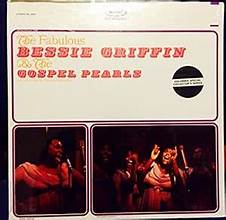
Exciting and vibrant Gospel from an artist I’m unfamiliar with. A totally worth it cover purchase I made and was rewarded by some classic Gospel music. “Live” Gospel recordings consistently offer something greater than studio recordings. The energy created by a totally committed audience becomes evident as the spirit in a recording. In religious settings there is a duple effect: the audience is both there as a familiar fan of the music and also as an affirmation of their faith. People know the songs, they imbue the performance with collective prayer and being moved. This music arrived at a time when religious music, Pop, Folk and Protest music were merging iwith the Civil Rights movement and in so became something new. I don’t think the group is playing to the time period specifically, but the sounds feel familiar. “Same Train”
Overall = 6.5 (10) – Live, wake up your spirit sounds.Get it!$$
Beach House – Devotion – Carpark, 2008.
🪨🫧 🪩 🌃 🤿🌳 ❤️🔥 🦋🎑🌊 📝 ⎄ 🛁⚖️♛:
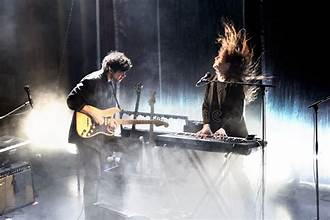
This Beach House album, their second, really puts their sensibilities forward and I considered it the Folk, or Roots, version of their sound. From this album forward their song writing, her voice and his subtle touch, are fully realized on their recordings. I love all their albums, but this and the next 3 albums, I consider all-time favorites. I listened to them daily from 2020-2022! Their music is Dream Pop, or Shoe Gaze, but these songs have great depth to them and I have been swooned into becoming a life-long fan of their music. I consider it essential music for surviving the hardest break-up of my life. I suggest setting yourself adrift into their pools of imagination. “Astronaut”
Overall = 9.5 (10) – Sad beauty, but hopeful.Get it!$$
Woody Guthrie – Ballads of Sacco & Vanzetti – Smithsonian Folkways, 1996.
🍏🌾 ⚖️⚰️📀⌛️ 📝🌳🇺🇸📣:
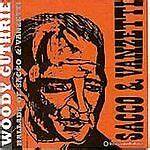
Woody Guthrie’s fame comes from his Folk songs and community based music. People are mostly familiar with his inclusive material like “This Land is Your Land”. This album is a story book using ballads to describe real historic events and Mr. Guthrie’s championship of Political causes. Mr. Guthrie was commissioned by Moses Asch, owner of the original Folkways Records, an active communist and integrationist in the 20th Century. Sacco & Vanzetti was a famous American court case, with a notorious public profile, where two Italian Immigrants were executed in 1927, in Massachusetts. They were posthumously pardoned in 1977 by Michael Dukakis. This sensational case tied the two Anarchist immigrants with the US Labor Movement and the liner notes to the CD compare the case to the O.J. Simpson case. Saying they resemble the News piranha elements that contemporary audience would have found witnessing that case. Historically relevant, musically simple, it is about the words. Protest music! “Old Judge Thayer”
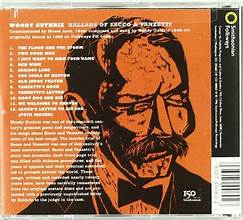
Overall = 7.7 (10) – The true Political Folk Grandfather at work here.Get it!
Stella Chiweshe – Double Check – Piranha, 2006.
🌍🫧🇿🇼🕳️ ❂📣:
A greatest “hits” collection of a seminal, groundbreaking artist from Zimbabwe. Mrs. Chiweshe is legendary on the Mbira. The “hits” part is a little misleading, I’m not sure what criteria they are using for the term hits, but I don’t think these are charting singles. What it is, is a curated collection of her Classic Piranha recordings with a newly recorded disc of “Trance” recordings.
Mrs. Chiwese broke ground as a female player of the Mbira, and again by electronically amplifying the instrument and she dig again by mixing the traditional music of her culture with Popular styles that the youth of Zimbabwe were listening to. Many of the tracks have political statements. Also this collection is only of her Piranha records material, though she has been on that label for many recordings, much of her music is on other labels.
The Classics are mostly enjoyable, but few flood me enough with the luminous and percussive Mbira. The songs mostly sound like a variety of Afro Pop songs with a touch of Mbira. That can be enjoyable enough, but the Trance disc is more immersive to me. “Vana Vako Vopera” & “Mazorodze” Though the Mbira is suggested as a primary feature in the liner notes instead it is her lyrics and the desire to stretch her traditional music, mixing it with other Popular musics, as the key to her importance.
Overall = 5.3 (10) – I wonder what her non-Piranha releases are like? She is still recording for them now, but I’d like to find a collection of her pre-Piranha music.Get it!
Idjah Hadidjah – Tonggeret – Elektra, 1987.
🌎🇮🇩 ꧂ 🦋🎑 ❤️🔥⚖️ 🤿 ♛ ⌘📣🫧 𖫪 🃁:
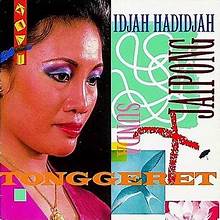
Rhythms and sounds that resonate so deeply, from a Golek Wayang singer in a Jaipongan (a Javanese version of Sudanese dance), that mixes Gamelan with Popular and Muslim influences. It is also one of my favorite recording discoveries ever. The music is lush, saturated with desire and trance-forming. The metallophones shimmer and reverberate, echoing across unfamiliar rhythmic patterns and long meters. Her voice is deeply sensuous, and the (what sounds like) choruses of cheering children interject like crashing waves across these patterns that ripple below, Rhythmic Undertow. The music here has influenced my desire of what i wish to create, how I want music to connect with listeners. And so, so Funky. “Mahoni”
Overall = 10 (10) – An all-time favorite! Get it!$
VA – Fado’s Archives vol. III – Lisbon Women (1928-1931) – EMI, 1994.
🌍🇵🇹📣 ❂:
Guitarra and the women of Lisbon singing traditional Fado. It’s a nice collection and sounds pretty great for music almost a hundred years old. Fado music lives with an ache of sad beauty that I am always here for. The collection is an international release and was a little hard to track down online. I’ve also never found the other volumes of the collection, but I would scoop them up if I did. The clarity of the recordings surprises me, I’m not sure if it is great remastering work or just better preserved recordings from that time. Listening to Jazz or Blues from the same time often share significant popcorn-like crackles. The songs themselves are transportive. “Fado da Meia Noite” by Madalena de Melo.
Overall = 6.4 (10) – Time travel. Get it!$$
Jimi Hendrix – Stages – Reprise, 1991.
⏺️🪨🎸🪄 ➕ ❂ ✪ ⎄ 🗝️🏙️⌛️💰 🏋🏽🕳️👜📔🎟️ :
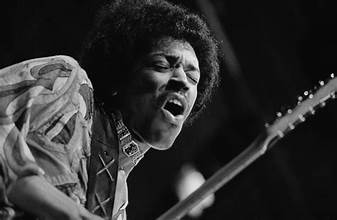
Hendrix was one of the all-time great live performers and this Box Set collects (& completes) four concert recordings from between 1967-1970, basically outlining his Popular recording career as a leader year by year. These performances have had some form of previous release, but usually were incomplete or of bootleg quality, before this collections was designed. It delivers on everything, includes a few surprises of rarely played material and the guitar lights things up constantly. I’m not sure if I recommend it generally because non-Hendrix fans would probably stick with a couple of other famous live recordings if they wanted such: like Woodstock or Monterey Pop for example. But for those who are Hendrix fans then these are the Ish! There is only 4-5 years of Hendrix material and his performances add something significant to his legacy. “Foxy Lady” Atlanta Pop Festival 1970.
Overall = 7.6 (10) – Probably a specialty item for most, and though the guitar sings his live singing does not arrive as much as in the studio, but there is plenty of brilliance here for Hendrix fans. Get it!

 Found Sounds