- 🦴- Ancient to the Future (The Old New!) – New Icon
Boogie Down Productions – Ghetto Music: The Blueprint Of Hip Hop – Zomba, 1989.
🎤⚰️🏋🏽 ⚒️:
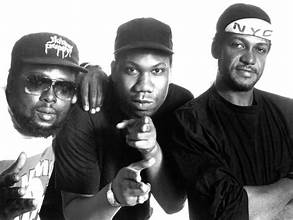
Education. These songs all focus on teaching something: the history of Hip Hop; rewritten/overwritten Black History; the history of Boogie Down Productions; police violence – without overtly saying police, and it is hard, but not as hard as “Fuck the Police” was (still in 1989 though!). GM: TBOHH was a pretty iconic High School Sophomore year album for me, but also maybe the last B.D.P. album. I thing B.D.P. just morphed into KRS-One creations
“The Style You Haven’t Done Yet”
Overall = 4.8 (10) – I liked it more then, than I do now, but it is still solid. Get it!
Super Cat, Nicodemus, Junior Demus & Junior Cat – The Good, The Bad, The Ugly & The Crazy – Columbia, 1993/1994.
🇯🇲 🎤:
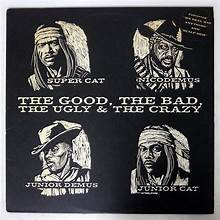
My preference for Dancehall Reggae is the vocal timbre over the flow, beats and production. The music is often the same, or similar, in nearly every album and lacks a little care. Often featuring small percussion style drum machine sounds or, occasionally, Rap style drum beats and then its all about the MC, but I don’t think its their flow as much as the rich voices themselves. The collaborative approach on this album creates variety, but it is pretty typical fare and none of the tracks really stick out much. “Mercelina”
Overall = 3.7 – Maybe better actually in the dancehall?Get it!
Joe Carroll – Man With A Happy Sound – Charlie Parker Records/Collectibles Jazz Classics, 1962/1997.
🎺🗣️🫀🎸:
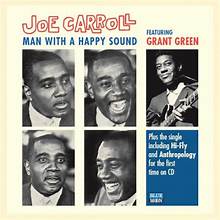
Bop Vocals, but with an Organ combo – a less common pairing. Also featuring Grant Green always a good thing. Joe Carroll performed with Dizzy Gillespie frequently and this is a chance to here him in a different element. Mr. Carroll has an effusive personality which comes through in his song choices and style. It’s fun music, sweet and tipping along, with shots of humor. “Wha Wha Blues” – Match the vocal techniques of this song with the ones on the Ellington song which follows on the Play/Mix.
Overall = 4.9 (10) – Good party or for a light atmosphere. Get it!
VA – Golden Classics: Bela Bartok & Franz Liszt – Pilz, 1992.
🎼🇭🇺🎹 🎸❂ ⎄🌾 ⎄:
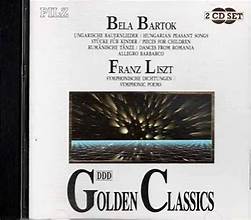
This a budget two-fer of Hungarian composers that I think should be filed under “Classical Greatest Hits” which really means, featuring some of the composer’s most well-known compositions. I believe I picked this disc up for the Bartok pieces for children, which I already had the sheet music for. I think the recording is okay, but maybe the collection is for people who don’t really care about music. There is no info about who is performing and the packaging screams “what should we put on the cover?” then coming up with a sort of Tron image. The liner notes have adds for other composer, not any information. The Bartok features different instrumentation: piano, string orchestra or guitar pieces (also many short pieces grouped in 15-20 song, long, collected tracks). The Liszt features orchestral pieces. “For Children, Sz. 42, Book I: No. 6, Study (Arr. for Guitar)” this is the same piece, but not the actual recording, I can’t find this specific recording – because the CD does not claim a performer. I would assume these are reissues of other recordings, the Bartok is a far better recorded. Many of the pieces, for both composers, are orchestrated Hungarian Folk songs.
Overall = 3.7 (10) – Ostensibly great music, the Liszt is a little sleepy and unmemorable, the Bartok I enjoy.Get it!
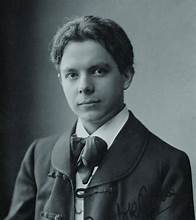
O.S.R. – Deliverance: Performed by Eric Weissberg & Steve Mandell – WB, 1973.
🎥🪕:
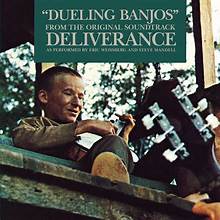
I bought this soundtrack very early on in my collecting days and it probably was my first attraction to Banjos, despite my Father having loads of Folk, Blues and Americana in his record collection and even a banjo in the house. Regardless it is something of a pet study for me now (I have MANY of those) and I collect Banjo music these days.
The popularity of “Dueling Banjos”, the lead piece on the soundtrack and a significant diegetic moment in the film, has some scandal because (like many Folk Songs) the performers were given credit for the song, but others had recorded the song earlier. The composer, Arthur “Guitar Boogie” Smith, had recorded it in 1955 and won a landmark copyright infringement case against the film’s use. To me it is surprising that this instrumental music became popular enough that the money was worth suing for, but Film music can deliver some styles of music to fame in a way that traditional popularity rules don’t govern.
Also, great film, ever read the book? Entirely different tone and hook, yet equally powerful. I recommended it, a dream-like reverie of the wild that I don’t think reads like anything else I have read before. In retrospect, I pair the tone with, or maybe I mean the way it feels to read them, Sylvia Plath’s The Bell Jar. The actual stories told in the book and film are the same, but the energy is vibrantly different. “Earl’s Breakdown”
Overall = 6.7 (10) – It is a soundtrack, but actually a collection of songs that you can put on when you want a hoedown – I’m not sure that most of the songs are actually in the film.Get it!
Hamza El Din – Escalay (The Water Wheel) – Nonesuch Explorer Series, 1971.
🌎🇪🇬🇸🇩 🌊 👁️🎑 🦋⚖️ 🤿 🌃⌛️🦴:
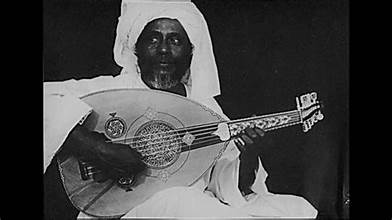
Hamza El Din, a premier Oud player from Nubia, the former kingdom along the Nile that is now considered parts of Egypt and the Sudan. This is an early recording that sounds like it is ancient. The space evoked, the resonance and the loping beat all recall my mind’s eye to a vastness, existing both in time and space. I am not versed in Nubian music, but my ears tell me this is music with an element of improvisation. There are melodies, but they feel free and work more inside a tonality. It reminds me a little of an Indian Raga, but features different forms of technique. The sound is immersive and the notes (the rhythms) seem more critical than tones (the pitches). I am a huge fan Hamza El Din’s later recordings, this recording is an important early example of his work. “I Remember”
Overall = 6.2 (10) – Important documents. Get it!
Claúdia – Você, Claúdia, Você – EMI, 1971.
🌎🇧🇷 🗣️🎧🫧 🧀:
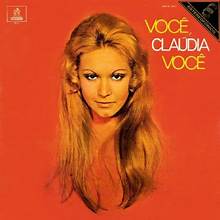
A Brazilian Pop Vocal personality. Mostly this recording features a Bossa Nova vibe, but other songs sound like a Pop Orchestra with fun arrangements. Claúdia, sometimes Claudya, has a strong voice and sings well and the arrangements are strong and varied. Nothing on the album is too surprising, but also no cookie cutting tracks either, they are written for this voice and these songs. Claudia recorded almost yearly for several decades, but seems more popular in Brazil and didn’t really cross over in the U.S. as other Brazilian artists did. “Mundo Maravilhoso”
Overall = 6.5 (10) – Pretty and light, but vibrant and with depth. Get it!
Nikhil Banerjee – Sitar Recital – EMI/Gramophone of India, 1989.
🌎🇮🇳🪷🎟️ 🦋:
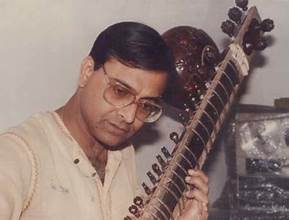
I pick up any traditional Indian Music that I find at Princeton Record Exchange. They are cheap, always feature incredible musicianship and the music is really great for atmospheric conversion. Put on these long improvisations on Ragas and drift into contemplation. The raga are usually purposeful, meant for specific times, or occurrences, and they transform my mood, bringing me back to center. “Raga – Mishra Gara-thumri Style”
Overall = 6.2 (10) – I’m not sure I can grade this, but I like it. Get it!
Jose de la Tomasa, Maria la Butra, Maria Solea, Paco del Gastor & Juan del Gastor – Cante Gitano: Gypsy Flamenco From Andalusia – Nimbus, 1988.
🌎🇪🇸🎸🎟️👣👏🏽:
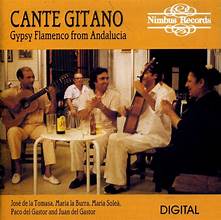
There is some kinship here with the Hamza El Din recording and the music offers another example of musical improvising traditions. I have a critical interest in improvisation and its various forms. Here the improvisation is more forged in accompaniment and instrumental flourish. There are moments in life, when you are with the people you are most comfortable with, your family and friends – those moments feature a form of life improvisation. These moments when you gather with your people and the strange culmination of the roles you are born to fulfill paired with the immediacy of a moment, court and cast spells. Everyone acts out their part influenced by the surroundings, the plots of Life and the setting. We become characters, conversations becoming public declamations of our inner selves poured into those interactions. The music and improvising here sounds like that, as if a group of family, or friends, were capturing a moment, proclaiming their hearts, imbuing their souls and exclaiming empathy through comment and accompaniment. Vibrant! “Tientos”
Overall = 8.2 (10) – Lively! Get it!
Duke Ellington – Jubilee Stomp: 1928 – Membran International, 2004.
Beyond Category 🎺⎄🎹🗝️ ⏺️ 🎨✪🥁 🕳️🎗️💰⌛️🆑👜 🕸️🦴:
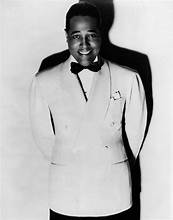
Great early Ellington, recordings that I reviewed before, but also check out the vocals here against the vocals in the previous Rabih Abou-Khalil recording from the In The Stacks 2/27/26 Play/Mix. “Hot And Bothered” There are some hard vibrato similarities going on! Then check out the “Wah Wah” vocals on the Joe Carroll above, there is a thread.
Overall = 6.9 (10) – It’s that massive Ellington set I got, you can find this music on its own if you look.
Miles Davis & John Coltrane – The Complete Columbia Recordings: 1955-1961 – Columbia, 2000. (‘Round About Midnight; Milestones; Kind of Blue, Someday My Prince Will Come; Miles Davis at Newport 1958 & Jazz at the Plaza)
Selim Sivad 🎺⎄🗝️🗝️ ♛⌛️🎗️ 🎨 ✪🆒🇧🇷 ➕ ⏺️ 🥁 🆑🕳️🃁🦴 🫂 🫂 🫂 🫂:
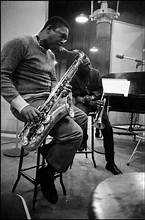
I hope you don’t get tired of me saying this – some of the greatest music ever recorded! Currently there are many centennial celebrations of Miles & Trane’s recording history. And Jazz Music in education has one firm foot in this music as a foundational pillar of how traditional/Modern/Hard Bop etc. Music is supposed to sound. Also it is some of the first Jazz music I pursued and I am still deep into Miles’ music.
The collection is, as Miles predicted, Colombia unloading their vaults after his death comprehensively. Here that means mostly the addition of alternate takes. With the calibre of music this is valuable, but I dislike the chronological listening order and would prefer the curated, original albums followed by the alternate takes. I remember the song orders from having the original recordings and an alternate take, or two, disrupts my memory flow. There are some complete live recordings in the collection as well. “Au Leu Cha”
“‘Round Midnight” This is one of “the” versions of the Thelonious Monk Standard. It is one of the songs I would include as a necessity to teaching someone, or an alien, what Jazz is. It encompasses all the romanticism of Jazz music, provokes nostalgia and gives that effect of something Ancient, yet also contemporary and profound. Something interesting about the song is that everyone probably has a version that is their favorite. I personally have several, but this version is up there and was also probably my first time hearing the song. What I didn’t know back then was the history that it took to reach this modern rendition, which (because Miles!) is refined from other earlier versions and a study in exploiting the contrast within one of the greatest bands to exist!
“‘Round Midnight”’s song history is wild. Similar to the term “Rolling Stone” the title has a variety of deployments: songs, albums, films, quoted in other songs – edifying a sensibility and meaning for the audience. Monk’s popular success was not achieved until later in his life. “Round Midnight” was recorded by The Cootie Williams Orchestra in 1944, Cootie was Ellington’s renowned high note trumpet player and led several of his own bands at his peak popularity. Cootie is included as a “Round Midnight” co-composer because he added a trumpet break to the arrangement (and possibly also to earn some royalties). No one plays this part of the song anymore. Monk records his own first version in 1947. A lyricist added their own lyrics around this time too and Dizzy Gillespie arranged it for his Big Band adding an introduction – which is still commonly played. This recording is an example of Miles’ ability to edit and refine songs. He reduced this arrangement from the Gillespie Big Band version into a quintet version, which really brings all the key content into focus. It is really evident in the iconic break, harkening Coltrane’s entrance. Miles sets everything up with the loneliness and desolation of the deep night, then Trane bursts forth, offering a call. It’s masterfully achieved to play the audiences strings.
My favorite Monk version is probably the two tenor version from Live At The Blackhawk. There are thousands of recordings of this iconic song, what’s your favorite? (please post in the comments) What other songs would you include, on a list of songs, to introduce people to Jazz music?
I haven’t even mentioned Kind of Blue yet. All I can say is it is a masterpiece. It captures the most important musicians, in a sustained peak moment. I would also play this album for an alien to learn to love Jazz. It’s a gateway Jazz album, and a reason for who I am today. I have 5 copies of it, in various formats. I didn’t even include a song on the Play/Mix because it would be taking it out of context, lol.
Overall = 10 (10) – Some of the greatest music, performers and songs on record! Get it!
Prince – Around The World In A Day – WB, 1985.
The Purple Patch Ƥ𖫪 🫧🦄🫦⎄🇲🇦🗝️✪ ⚙︎ 🫂:
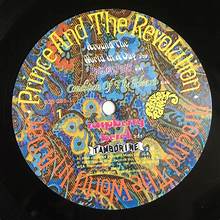
What do you do after the success of Purple Rain? There are a lot of changes that occurred on this album, it introduces Prince’s Psychedelic Pop faze, it introduces Paisley Park (the studio) as a creative mecca, Prince becomes more explorative, he begins a long collaboration with orchestrator/Jazz pianist/Composer Clare Fischer and Prince generally seems to be embracing his success (later on maybe not so much). It is big & beautiful. The album features one of his greatest hits “Raspberry Beret”, a few bangers, a few face in pillow jams, a spiritually contemplative piece and an “album hit” (not a hit, but everyone who likes the album considers it a favorite song). “Pop Life”
Overall = 8.5 (10) – It’s a good follow up.Get it!

 Found Sounds