- New Icon – 😵💫 – Psychedelic
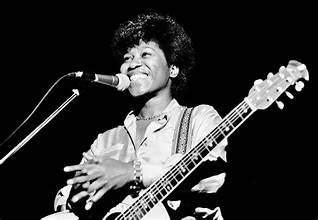
Joan Armatrading – Show Some Emotion – A&M, 1977.
🪨🫧 🪩🗣️⎄ :
I recall Mrs. Armatrading’s cassettes being in my parent’s, and their friend’s, collections and thus avoided her work. Listening now I’m impressed by her songs, her versatility and her distinctive voice. She features excellent bands on them and the songs range from sweet little ditties, to Jazzy/Bluesy touched moments and the occasional Power Ovary Rock! I think I would have enjoyed this earlier than now if I had tried to listened, she is a great singer-songwriter, experiments freely, takes chances and delivers on most. “Woncha Come On Home”
Overall = 5.9 (10) – Solid Seventies Singer Songwriting! Get it!
Sandy Bull – E Plurubus Unum – Vanguard, 1969/1988.
🇺🇸📣🌾 🐠 🤿 🪄 😵💫🎸🪨:
Another artist I was familiar with from my Father’s record collection. Mr. Bull who mixed modern guitar styles with traditional musics, creating long guitar ragas blended with extended bluesy trips. By “raga” I mean he created extended, ruminative improvisation explorations in a given key, not actual Indian Ragas. These improvisations touched on something philosophical (though not very deeply) and were popular in a psychedelic way. Music of this ilk was not often popular, but his was, somewhat. Mr. Bull is included in the American Primitive guitar style which grew throughout the sixties. The 2 songs are easy to listen to, a bit noodle-some and this recording involves a band, other recordings I’ve heard are solo recordings, so there is more interaction here. I think his conceptual approach, with its extended jam format, is more important than his actual guitar playing. “Electric Blend”
Overall = 4.1 (10) – Immerse in the noodle world.Get it!
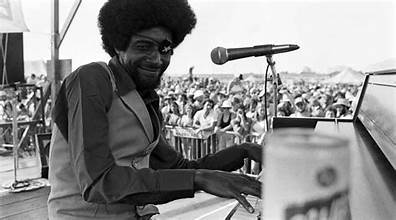
James Booker – Spiders On The Keys – Rounder, 1993.
🇺🇸📣🏙️ ❂🦐🎹 🎟️ 🕸️👣 🥃 🪄:
One of the great New Orleans piano players, but also a lesser known artist, because the challenges of his life style affected his opportunities. New Orleans Piano is part of a lineage: from Ragtime to Jazz, to Stride and Boogie Woogie piano arriving at its own special, regional flare. Mr. Booker had flare to spare. The song choices here reimagine some popular hits, feature some NOLA Standards and there are a few signature compositions of his own. This set of live recordings is culled from a private collection, captured at The Maple Leaf Bar. There is no singing on the album, which is a disappointment for me, but it is great piano playing. “Piano Salad”
Overall = 6.2 (10) – Great stuff, I love hearing him sing though! Get it!
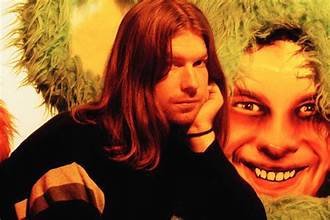
Aphex Twin – Selected Ambient Works 85-92 – [Pias] America, 1992.
🌌⚡️✆❂ 🗝️ 🪩🎗️ :
I’m not sure if EDM has a shelf life, but this sounds pretty dull to me in 2026. It reminds me of the background music at the dentist (Though I do go to the Sexy Dentist! Who plays soft Acid Jazz in the background and I consider it “sexy” there). I believe creating dance music is a different compositional process. Listening here the compositions feel self involved and I guess its ambience is to be a more chill version of dance music, but its really not Ambient Music to me, except in its repetitiousness. I picked it up the CD for $2 at the thrift shop, because I heard it was an iconic collection, but I only rarely am a fan of this type of dance music and I couldn’t estimate whatever the intentions are, or their success. I do think dance music ages with its technology and I wonder what an AI version of this would sound like now.“Schottkey 7th Path”
Overall = 3.2 (10) – Imagining people dancing to it, while I listened, did not really thrill me.Get it!
The Harlem Gospel Travelers – He’s On Time – Colemine, ?/2019.
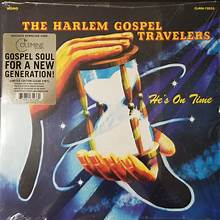
🇺🇸📣🌳🗣️⛪️ 🪦⨻✊🏿:
Retro Gospel? I was definitely tricked by the cover, which conspicuously lacks any dates, but the interiors deliver with Gospel steeped in Classic Sixties Soul, presented in a Gospel Quartet style (I think they are a trio now?). When I hear this type of sound design in contemporary Soul music I usually question if I have a need to own it, if I already have the original goods? Usually that is a no, I have no need for this retro music. With songs re-designed using already perfect creations the listening process continually tickles my mind with evidence of influences. Here, in a less common event in Gospel(?), I don’t mind it. However, it is still the last album I would visit when i need to hear Spiritual music. And I feel distress that one of contemporary music’s stylistic devices is to sound perfectly like another era’s stylistic devices. I question wether that is to appeal to that era’s audience or deliver the feeling of that era to a new audience (and why can’t they go to the river for those recordings anyway?). It feels deceptive and none of the songs, voices or music compel me to look beyond that feeling. This happens with films a lot too, nostalgia redux.“He’s On Time”
Overall = 3.8 (10) – A good album, that I continually wonder where I’ve heard every song before?Get it!
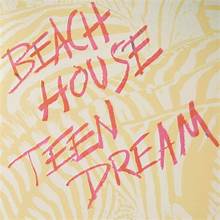
Beach House – Teen Dream – SubPop, 2010.
🪨🫧 🪩 🗣️📝 ⎄ ♛💰 🏋🏽🚘 🃁 🕸️ 🤿🌊 📹 ❤️🔥🎑 🦋 :
My Beach House affair started with a search for dreamy music, leading me to Dream Pop, which I don’t always like as much as I thought I would, but with them it has become a deep, abiding passion. The Play/Mix song I chose was my hook and it lead to this album, one I consider an all time great Rock album. Victoria LeGrande’s sour, voice of wonder and Alex Scully’s perfectly tasteful, complimentary guitar work have won me over. The album came to me at a point of crisis and accompanied me through my first two years of separation, that eventually led to divorce, in my relationship. For 2018 and 2019 I listened to a Beach House album everyday, sometimes twice a day, and all of their albums felt integral to my healing. Mrs. LeGrande has stated she thinks people who get into her band often get deeply into them and I am one of those. Wonderful iconic music. “Lover Of Mine”
Overall = 10 (10) – A great album of the 21st Century!Get it!
VA – Music of New Mexico: Hispanic Traditions – Smithsonian Folkways, 1992.
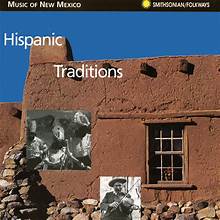
🍏🌾❂🇺🇸📣 ⌛️ ⌘👣:
This collection is Americana and also entirely in Spanish. Documents like these are part of the Folkways mission for preserving cultural traditions and unfortunately in our current political climate that is considered (by some) un-American. We are in a climate where a Puerto Rican artist can receive incredible push back for their Super Bowl performance being in Spanish, despite Puerto Rico being an American territory. Discouraging. Additionally, New Mexico has only been consider a part of the U.S.A. since 1912. For only 114 years and over about 4-6 generations. To ignore the Spanish history of our country is deceptive and divisive.
The musical traditions featured here are both Hispanic and American traditions. When we recognize how our territory was acquired we should also make space to preserve the traditions that form our communities and include different perspectives. This approach to community makes us stronger. Imagine if America, as the most diverse country in the World, embraced all of the cultures here and in response was embraced by all the origin cultures. We are a nation of immigrants, and treat our yet indigenous as if they are immigrants, which defies logic. We could be the center for representing the World through inclusivity and instead are power centered and ideologically blinded – which breeds opposition around the World. This music tells an older story of our country and is historically valuable for it. “Mañanitas Tapatias” by Coro Cristo Rey
Overall = 5.3 (10) – Music of the folk. Get it!
VA – Dark And Light In Spanish New Mexico – New World, 1978/1995.
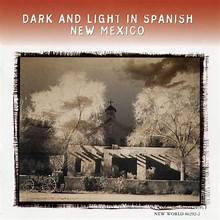
🌾❂🇺🇸📣 ⌛️ ⌘👣:
The first half of this disc, featuring Spanish Hymns, goes beyond haunting into somewhat scary, despite the spiritual content of the songs. Faith and loneliness. The second half features instrumental music, dance music that feels bouncy and celebratory. Thus the dark and light described in the title. I think the two styles lay somewhat unevenly, but both parts are compelling in their own way. And I feel similarly to the Smithsonian collection above that these are tracks of our shared American musical history. Where else do we get that but in our own yard. “Venir, Almas Devotas”
Overall = 4.7 (10) – More music of the folk. Get it!
VA – Roots of OK Jazz – Crammed Discs, 1955/1993/2010.
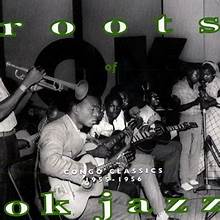
🌍🇨🇩❂👣 ⌛️🫧🎸🦴 ⚙︎:
“OK Jazz” was a band from the Congo, but they recorded in a variety of configurations, leading to the various artists feeling of this recording. This Congolese group, uses “Jazz” in their name, but it is not a reference to Jazz Music, it reminds me of a lot of traditional Cuban music that we have heard together on In The Stacks and will hear more of.
The idea of globalization is not really a nefarious plot, but the natural occurring result of communities coming into contact with each other and transforming because of it. These social events, cultures meeting, seem completely natural to me. This music reflecting the African part of the “Afro-Cuban” music traditions, makes total sense. It commonly occurs throughout the ideas we have of World Music, it happens faster now (based on our technology) and it is one of my favorite things to experience – familiarity, influence, fusion. “Viclong Julie” & “Tika Kondima Na Zolo” @ 1:38 the clarinet player quotes “The Peanut Vendor” by Don Azpiazu & His Havana Casino Orchestra – this quote closes the circle, from Africa to Cuba and back again.
Overall = 6.5 (10) – Artifacts of human relationships. Get it!
VA – Indonesia –Wayang Golek: The Sound And Celebration of Sudanese Puppet Theater – Multicultural Media, 2001.
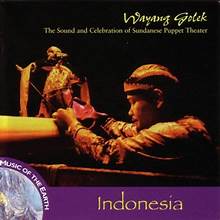
🇮🇩⏺️❂ ꧂🎟️ 👁️ 🤿⌛️👜:
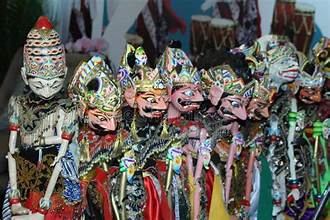
This is a difficult collection to assess, musically beautiful and extensively documented, but also the score to a theater performance that we cannot witness. This would make more sense as a DVD, presented like an Opera. Regardless the experiences can be listened to and enjoyed separately, but the visual elements are missing and so it becomes a different experience. I really bought it for the gamelan and have other recordings which are more easily thrown on and grooved to. There are long sections of dialogue which sound like an auctioneer (& audience) in Sudanese. It has all the fractured melodies, shifting tempos, laughter throughout and glimmering timbres you can want though! “Sorog Pelog Degung” It’s also 6 discs! So listening to the entirety, at a seating, is unlikely.
Overall = 4.5/9.5 (10) – One score for the casual listener, one for the Gamelan enthusiast. Get it!
Renaud Garcia-Fons – Alborea – Enya, 1995.
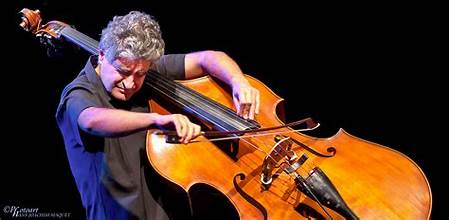
🌎🎺🇫🇷🪗 🪄:
I hedge to consider this Jazz, but it is Jazz influenced, involves improvisation, but in an ambiguous modern way where it is drawing from many influences and becomes difficult to discern what language is being spoken. It’s beautiful, clearly incorporates a lot of European cultural elements and features a quartet of fine musicians. Mr. Garcia-Fons plays a 5 string double bass, which is unusual, but doesn’t really sound unusual. The instrumentation is more unusual featuring 2 bass players + drums and accordion. The music often slides into the background for me, it rarely achieves excitement within the improvisations or distinction in the melodies. I enjoy it, but it may reach into too many directions (Gypsy, French accordion, Modern jazz, Film Music, Spanish guitar without arriving at something new) at once for me to fall in love with it. “Amadu”
Overall = 3.9 (10) – For certain dinner-ish atmospheres. Get it!
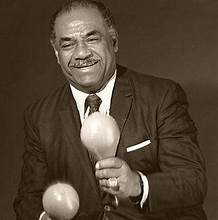
Machito – Ritmo Caliente: Machito and His Afro-Cubans – Proper, 1941-1951/2005.
⏺️🇨🇺❂ 🎶🥁✪ I 🗝️⌛️🫂 🫂🫂🫂🎟️🕳️ ⚙︎🪇💃🏽:
This collection focuses on a legendary figure of Latin Music, but it focuses on only a decade of Machito’s career. It is half Cuban Society Dance Band type music and half Afro-Cuban/Bop. It is probably a sort of a discount collection, but it documents the decade where Cuban music and Jazz mixed together and became something new. A valuable document indeed! The recordings feature a variety of critical collaborators like Dizzy Gillespie, Charlie Parker, Mario Bauza & Chico O’Farrill and it captures the fusion of Cuban percussion with Jazz Big Bands and Bop musicians. In this type of music the maraca player can be a critical leader of an ensemble, which feels surprising to me. It’s a great, historic set of music preserving the origins of of cross cultural pollinations. I have some of these recordings within other collections. “Bucabu”
Overall = 8.3 (10) – If your thing, a must buy. Get it!

 Found Sounds