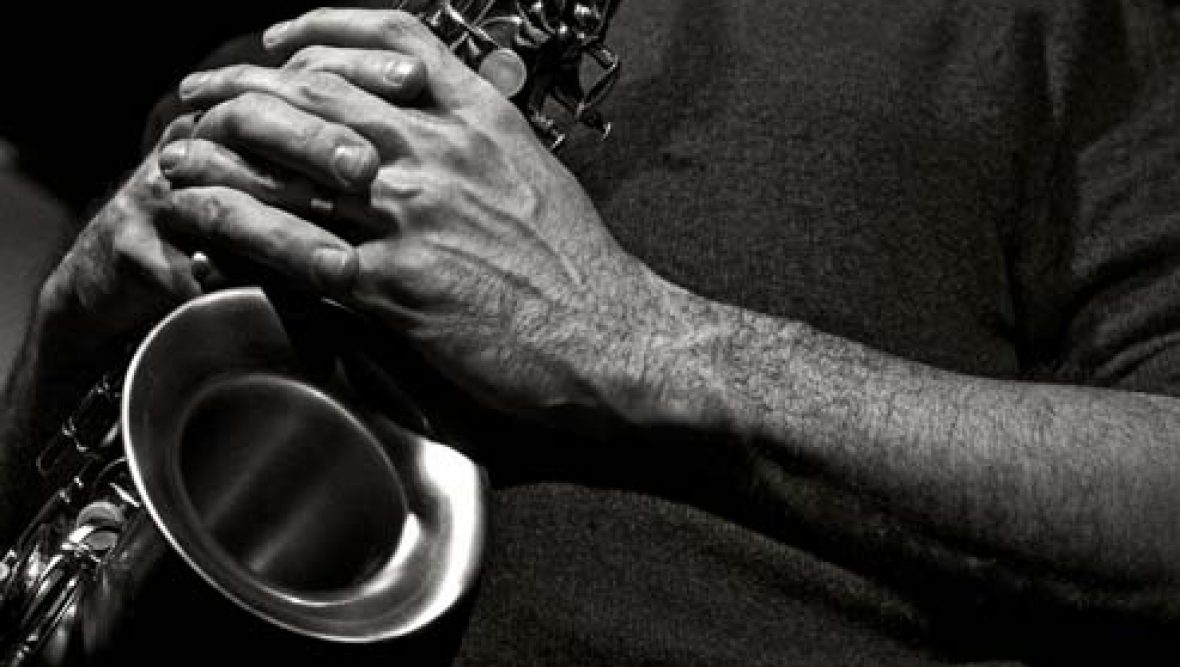
Vinicius Cantuária– Sol Na Cara – Gramavision/Rykodisc, 1996.
🇧🇷 🗣️⎄🔌 🎸 👁️ 🌃 🌎🔮:
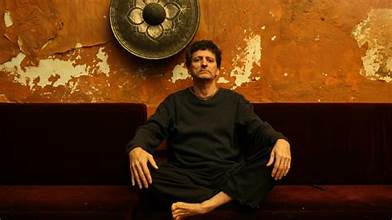
A beautiful, drifting and languid, modern Brazilian recording. This was Mr. Cantuária’s first International album and he had released several albums in Brazil prior. There is a very subtle use of electronics that I love and he employs surprising compositional devices throughout this lovely collection of songs. I discovered the CD putting it on, back in the day, at the Disco-Go-Round and I fell for the first song. This was was before I began to explore Brazilian music deeply. I didn’t really dive into that interest for another decade after. Mr. Cantuária has continued to release albums since and I believe he relocated to NY, at least for a time. “Sem Pisar no Chão”
Overall = 7.8 (10) – A fond revisitation. Get it!
Alice Coltrane – Ptah, The El Daoud – Impulse, 1970.
🎺 ⏺I! 🪄 ⎄🧫 🦋 😵💫 👁️🗨️📀👣:
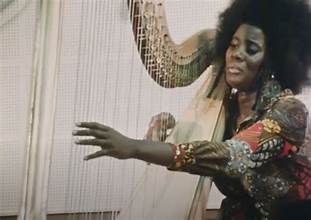
Alice Coltrane has been recently receiving her proper due. Some of the lack of recognition makes sense based on her husband’s legendary status, her being in his group and also that her own groups often featured members of his groups. But she also influenced John Coltrane in a variety of ways, particularly the Spiritual nature of her approach to music, the longer pieces with their loping vamps, filled with energizing solos are all common tools of both artists that she expanded on in her sound world. She plays both harp and piano here and creates cascading, rippling figures on both instruments with the solo features mostly split between the two, ripping tenors. “Blue Nile” Two Alto Flutes here!
Overall = 6.5 (10) – Nice, not quite full force yet. Get it!
Lawrence Brown – Slide Trombone – Clef/Polygram, 1955.
🎺 ⏺🪄🏌🏿♂️:
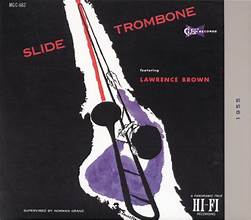
This is a really exquisite, small group Swinging album of standards featuring one of Ellington’s long time collaborators (collaborators in this case meaning it was rare for Mr. Brown to be recorded out on his own, or as a leader). It also features Sam “The Man” Taylor on saxophone, who is rarely heard in this context. Mr. Brown’s trombone playing is of a high quality. The album is more than the sum of its parts, a really good listen. “Just As Though You Were Here” composed by John Benson Brooks sweet little tune, by a rarely represented composer.
Overall = 8.2 (10) – A great find!Get it!
Tina Brooks – Minor Move – Blue Note, 1958.
🎺 ⏺ ♫🪄 ⎄🎧🎷𝍍🎶:
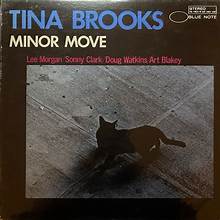
High grade Hard Bop. it is sort of a refracted Jazz Messenger’s album, with 3 Messengers, but featuring Tina Brooks as the saxophonist and Sonny Clark as the pianist. Mr. Clark plays with great beauty here, lots of his accompaniment figures draw your ear to them, it would almost intrude on the solo, if they weren’t so magical sounding. Mr. Brooks was a sort of a forgotten Blue Note artist, he made a handful of recordings, wrote some cool compositions and has a personal Tenor sound that suggests a taste of Hank Mobley blended with Charlie Rouse. Compelling music, not my favorite album of his, perhaps because other albums he made may have captured the fullness of his artistic vision more completely and this one feels like him as a Messenger.
“Minor Move”
Overall = 7.6 (10) – Like a “What If?” Messengers album. Get it!
Willie Colon – Lo Mato: Si No Compra Este LP – Fania, 1973.
🌶️💃🏽🪘 ⎄ ⚒️🎗️🫂 🏋🏽 ⚙︎💰💰:
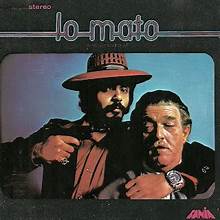
I’m not positive that this my favorite Willie Colon album, but it is in the running. It features two, classic hits, has the continued collaboration with Hector Lavoe (they built their legacy entwined) and features incredible trombone playing and arrangements. This equals Classic Salsa greatness. It was difficult for me to pick a song, there was a great trombone solo feature in the middle of the album, the rest of the songs have vocals so the trombone is less featured and then there were the two classic hits. These were all in the running, but instead check out the 2 trombone, background journey in this song! “Todo Tiene Su Final” I really love the twists given to basic parts and how they following the song’s progression. It is very compositionally satisfying part and also attention grabbing for an accompaniment harmony.
Overall = 10 (10) – I won’t quibble with greatness. Get it!
Rabih Abou-Khalil – Em Português – Enja, 2008.
🎺🇱🇧🇵🇹🪄 ⎄:
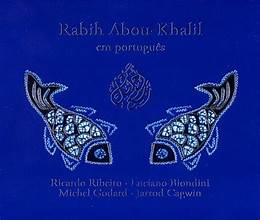
We are getting close to the end of my Rabih Abou-Khalil collection, though their are more albums to be had and I usually pick em when I find em. This one changes the colors a bit by adding some other cultural influences to the mix. Again and again I love this, wondering where the cultures are blending, how the personalities mesh and imagining how two cultures might blend together. Here we can discover one path Lebanon & Portugal might take.
I am currently reading Cuba and Its Music: From the First Drums to the Mambo by a favorite musician Ned Sublette, who continually surprises. The first chapters, in a clear, concise manner, establish that the regions of Spain & Portugal and what their Islamic/Muslim influences were. It seems very fitting to read this while listening to this recording. It is a riveting history and so much more than what we recall was the manner in which our modern world sprang. The music here reinforces those ideas musically. “No Mar Das Tuas Pernas”
Overall = 6.4 (10) – Some my not dig on the vocalist, but it is great music and a fusion which highlights hidden history. Get it!
Andrew Hill – Mosaic Select 16: Unissued Blue Note Recordings 1967-1970 – Mosaic, 1967-1970/2005.
🎺⏺️ ⏺ 🪄 ⎄ 🎨 🗝️🫂🫂🫂🫂🫂🎹🧫 ⌘ 🦋🦴:
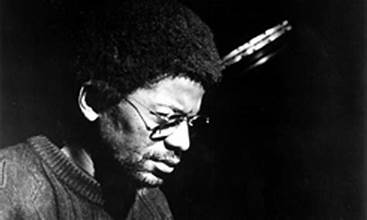
An rare collection of unreleased music from a favorite composer, and influence, on my own music. Andrew Hill’s major works will arrive down the road a bit, where as this is music that was infrequently available during his lifetime. About 6 of the 25+ tracks were released on certain Blue Note reissues and none of the other recordings were available before this reissue. The 5 sessions here were recorded around when Blue Note was purchased and under new ownership, owners who were not interested in experimental music, so these recordings languished without release. Michael Cuscuna , who was a driving force behind Mosaic Records and an incredible amount of reissues and recordings, was a fan of Mr. Hill and worked to release all of his Blue Note recordings.
My first experience with Andrew Hill’s music was probably in 1993 when I discovered his classic album Point of Departure. It took me on an extended wanderlust to keep listening and get lost in the music. I believe I cried when the haunting song “Dedication” alternate take came on after I had just said goodbye to the released take. It was like a perpetuation of such great beauty I was overwhelmed by the opportunity to listen again and stay in its shadowed glow. Since then I’ve collected nearly everything Mr. Hill recorded. I saw him perform twice and personally gave him my first recording. I have been continued to be mesmerized by his haunting, personal songs for the last 32 years.
This collection has great music on it. It wasn’t released because of those business type decisions, not any quality issues. One compelling reason to get this box set is the variety of collaborators, many whom he rarely recorded with. They appear in a variety of ensembles, including one album with added strings. The list is a fan fest: Charles Tolliver, Bennie Maupin, Pat Patrick (outside of Sun Ra!), Ron Carter, Paul Motian, Sam Rivers & Woody Shaw – this is great company! Mr. Hill gave plenty of space for the musicians to live within his compositions and their contributions feel natural and expressive. “Monkash”
Overall = 8.3 (10) – Favorite things. Get it!
Muhal Richard Abrams – Things To Come From Those Now Gone – Delmark, 1972.
🎺🧫🎹🪄 ⎄ 🎨:
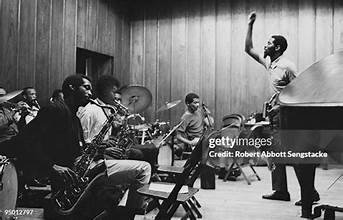
The Third (?) Wave of Avant Gard Jazz musicians delved into compositional, improvisational and comprovisational devices which expanded the emotional palate of “Free Jazz” or “Energy Music”. I appreciate this so much because it provides more contrast and range of feelings. Very often Free Music is overwhelming to listen to by being excessively long, continuously intense. In contrast, on this recording, there is a rich collection of pieces and collaborations. It’s an easier listen, yet there are still vibrant melodies and moods. I think that is one of Mr. Abram’s gifts, to instill an artistic sense of mood and contrast in his work. He was very conceptual and evokes excellent performances from the performers. “March of the Transients”
Overall = 7 (10) – Great set of tunes.Get it!
& Blu Blu Blu – Black Saint, 1991.
🎺🧫🎹🪄 ⎄ 🎨🥁🎧:
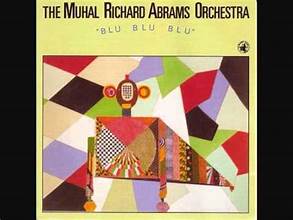
A Big Band with a guest whistler, Joel Brandon! And a bad motherfucker at that!! l wish I could find more examples of his work, because he can blow like a horn player and it is a fun surprise on this album. Mr. Abrams had a very strong series of recordings during his 60’s (in the late 80’s-90’s) that I believe I was drawn to these recordings because of the guest performers. I used to read the Penguin Guide To Jazz On CD nightly to discover who was on what recordings. I doubt I would have discovered many recordings without that practice. In Mr. Abrams’ music there is a ton of free improvisational opportunities, but an equal amount of interesting themes and orchestrated colors. Mr. Abrams’ music has the ability to evoke a variety of emotions within experimental music, offering contrast and range of expression. “One For The Whistler”
Overall = 8.1 (10) – Music that asks the question, what comes next?Get it!
Blossom Dearie – Give Him The Ooh-La-La – Verve, 1957.
🗣️ 🎨🎺🏌🏿♂️🪦:
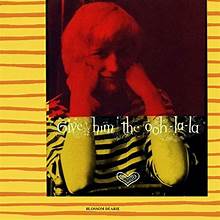
An amazing album cover, with an unusual color palate that drew me in. Verve records was no slouch for album art. The music is nice, as Pop as a Jazz Vocals album can be before it loses something. Most of the Blossom Dearie albums I have seem to play up the lightness, and youthful qualities, of her voice. The marketing positions her as the best girlfriend you could find. She is a fine interpreter of Jazz Standards. There are no musical surprises here, but it features an all-star band and has a loose concept for its song curation that works well as a whole. “Like Someone In Love”
Overall = 6.5 (10) – (1950’s)Teen Jazz?Get it!
Bon Iver – Bon Iver, Bon Iver – Jagjaguwar, 2011.
🪨🫧 🪩 🎧 📝:

This second Bon Iver album, Bon Iver, Bon Iver, really delivers on the need for proper citation formatting (if only it also included a “Bon Iver” song, and additional layer of confusion being that it is a band name and not the artist’s actual name!). The album demonstrates growth in Justin Vernon’s song writing. There is an interesting use of technology, more orchestration and more diversity in his use of rhythm, than in his first album. The first 3 songs are strong (an important element of Popular Album success) and the rest, though still solid, drift into something that reminds me of 80’s Stevie Winwood – more in sound than song. “Minnesota, WI”
Overall = 7.2 (10) – Bon Iver is still in the “like” category, than in “love” category for me, a couple of great songs tho. Get it!
The Brothers Johnson – Right On Time – A&M, 1977.
🔈 𖫪🫂:
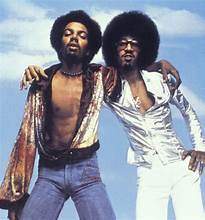
This album is Funk with few edges and angles. Quincy Jones is the producer and he seems to be developing the approach he will perfect with Michael Jackson. The results here are well played drab. Some songs sound like proto-Smooth Jazz and many decisions seemed aimed at the $s. Though I like the composer’s version best, “Strawberry Letter 23” is an amazing song which I am down with any time or any version.
Overall = 3.3 (10) – Blah. Get it!
Carla Bley & Paul Haines – Escalator Over The Hill – JCOA/ECM, 1971/1998.
🎺🌌🎑 ⎄ 🎨 📝 🗝️⌛️🕳️ 🧫🥁 🧀 🪄📀🫂 🗣️📀:
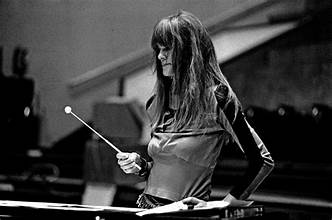
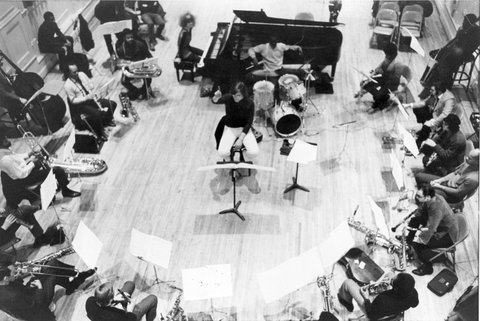
A weighty, and legendary, performance of one of the rare Avant Gard Jazz Operas. I think EotH is more notorious, than actually listened to in its full capacity. Putting together something of this magnitude is itself a challenging feat and Carla Bley is one of the great composers of the last 60 years, so there is an essential element to it. It may be considered her masterpiece, yet Mrs. Bley had a half century career, and may not be her most important recording. The original release was 3 records long, featuring a lot of experimentation and grandeur throughout the recording.
There is a good amount of bloat in this creation too and though Paul Haines is an interesting poet, his works have never hooked my interest. I think his experimentalism precedes him and his success is maybe more in the doing, then in the artifacts that result. Or I haven’t heard his strongest material yet. This album is also considered one of his greatest achievements.
Musically this is wild and weird. It runs the gamut of colors and emotions. There are great collaborators in the JCO (another achievement Mrs. Bley contributed to) including an early Linda Ronstadt performance!!“A.I.R.”
Overall = 8.3 (10) – I like parts of this a lot, but it has some difficult listening too. Not something to put on any old time. Get it!
Luther Allison – Soul Fixin’ Man – Alligator, 1994.
🇺🇸📣🏙️🎸🪦:
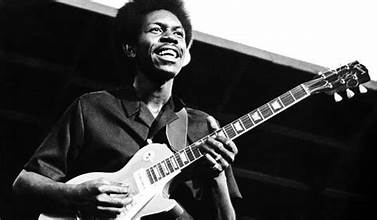
I like my blues with a little more Jank! This being a mid-nineties, overly polished, product that matches what the Deep Blues Soundtrack from a few ITS ago deemed inferior. The guitar playing is the best part and it does shine, but the songs are predictable and the band is too clean to get into my guts. “Middle of the Road” Apt title.
Overall = 3.4 (10) – Shiny car Blues. Get it!

 Found Sounds