Playlist – A curated list of favorite songs, from each album I listen to, updated as I listen.
Map – With a link to each album (if possible) marked in some referential geographical location.
This is an intense and lengthy listen with no poor quality recordings interrupting things. All the records are about 30 minutes long, but there are a lot of them.
The late 60’s are a real turning point in Brazil where the military takes over for about two decades causing many of the artists we are following to flee Brazil, or be sent away in exile.
Tropicalia is a very political protest style of music and as such is a mirror for America’s popular and political turmoil in the late 60’s. A Brazilian reflection of a similar conflict of discontent.

Elis Regina – “O Bem Do Amor” (1963) – This rewinds the script a little, a reminder of where the music is before it changes. Elis is always remarkable but this album is clearly following an artistic direction to present Elis, rather than of her own direction. Beautiful songs but very few surprises, it needs a little more weird and unexplored to truly make it sing. This is a good representation of her early style, and she is only 18 here.
“Domingo em Copacabana” The lightness of her voice and the ending where she scats a little bit are very pretty. There is also some nice trombone on this record (like on those Gilberto Gil recordings.) and the last tune, also “O Bem Do Amor”, has some Getz-ian saxophone. Light and airy.
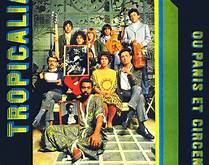
Tropicália ou Panis et Circencis – a 1968 collaboration album by artists including Gilberto Gil, Caetano Veloso, Tom Zé, Os Mutantes and Gal Costa. It is considered the Tropicalia manifesto and the title was a misspelled version of “Bread & Circuses”. The cover art is an ode to Sgt. Pepper’s. This a wonderful classic! And surprisingly cohesive despite being a collection of different performers and collaborations.
“Panis et Circences” this is mainly an Os Mutantes track. And though I hear the Beatles and the orchestral component this reminds me of the Velvet Underground too and has that feeling of a focus on the song itself more than musicianship.
“Geléia Geral” I love the clatter and general sloppiness. The instruments are stepping all over each other, but I love hearing all the horns in what is a Rock song. I find as a Reed player that I am always trying to understand how I can fit into a Pop/Rock ensemble if not as a horn section or soloist. To me this music is a guide towards having a relevant role in the ensemble and influences my ideas of song writing potential.
“Enquanto Seu Lobo Não Vem” – So beautiful…
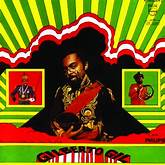
Gilberto Gil & Os Mutantes – “Frevo Rasgado” – (1968) – This is one of my favorite albums. It’s like the last few albums we have listened to, but the concepts are more refined. The whole album has a stupendous energy!
“Ele Falava Nisso Todo Dia” One of my favorite songs.
“Luzia Luluza” What a gorgeous arrangement. Delicate and takes that orchestral arranging into some amazing directions.
“Pé Da Roseira” Similar feelings here cool arrangement, it gives a sense of anticipation as to where will this song go.
All of these songs sound really modern for 1968. Sonically they have a unique character that I find compelling – like the feeling that every stone has already been turned is just not true, there are plenty of ways to create original music. Inspiring.

Os Mutantes – “Os Mutantes” (1968) – A groundbreaking album and really the spirit of International Rock and Psychedelica as conjured in Brazil. The horns really do it for me. The sound design and arrangements are creative and interesting throughout. Many of the songs are composed by the artists we have already been visiting with, like Caetano and Gil. Despite the variety of songs this plays like a conceptual album flowing from one song to the next, the format is part of the listening experience.
“Baby” is done here entirely different than on “Tropicalia Ou Panis et Circenis”. This one is more of a weird rock ballad, but I appreciate that they take it in different directions despite both recordings happening in the same year. It’s also maybe the most American sounding song here? I’m keeping my ears open for the composer’s (Caetano) version and a feature of these bands may be that they are playing each others songs regularly.
“O Relógio” Bleary & mysterious. I’m always looking for these fragile songs that send me into a dream.
“Bat Macumba” That dirty guitar sound feels like it is from a different, more recent, era. Pretty groovy!
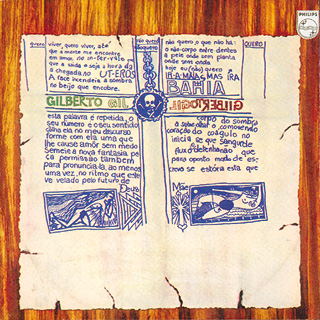
Gilberto Gil – (“Cérebro Eletrônico”) (1969) – This is another self titled album, called “Cerebro Electronico” to differentiate it from the other self titled albums. Gilberto was about to be exiled to London but here he is just confined – recording his parts in Salvador and Rogério Duprat recorded the other instruments in Rio de Janeiro and São Paulo.
Very experimental stuff and rocking out! There are some Zappa-esque and Beefheart-like events on this recording which is still pretty weird for the time.
“Aquele Abraço” – this is one of Gilberto’s most famous songs but also one of the most mainstream songs off this album.
“Dois Mil E Um” or “2001” – I wish I knew what he was saying here, is it speculative fiction? Many of the tunes on this album allude to something futuristic. This not the farthest out but it gives me a Hendrix feeling and also one of the most Rock n’ Roll tunes of the bunch. “Cerebro Electronico” & “Objeto Semi-identificado” are the strangest of the songs on this album and comparable to the most psychedelic experiments going on at the time like “#9”, “1983”, “Meddle” and the like.
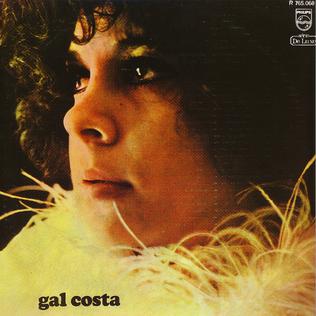
Gal Costa – “Gal Costa” – Maria da Graça Costa Penna Burgos! Many of these star Brazilian acts have enormous full names but are known only by a shorter stage name. This is her debut album as a leader and features versions of “Baby” and “Se Voce Pensa” from earlier albums on this journey.
The sound, the mix of modern popular styles and experimentalism is cut from the same cloth as the other late 60’s album. If Elis’s voice soars, Gal’s is more cute and sultry, but both can commands a song with her voice.
There are some dirty horn parts on this album that kill me.
I keep finding some truly striking moments of dissonance that feel foreign and yet are brilliant choices that have a purpose in the songs. I think the delicate beauty that is a feature of many of these song needs that dissonant sourness to create balance and contrast.
“Lost in Paradise” is Caetano’s song, sung in English, which has been occurring semi-frequently across these recordings. It’s an interesting tune, in general I find this album is trying to be more of an attempt to sound like International Pop and less a combination of Brazilian and International Pop mixed. Really good album regardless.
“Namorinho De Portão” man, FUZZ Guitar!
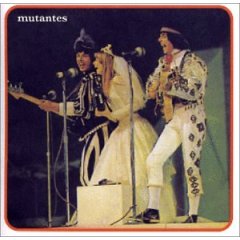
Os Mutantes – “Mutantes” (1969) – I’m thinking the prevalence of self titled albums must relate to the record label (?) yet usually these have been on the Philips Brazilian division, this recording is on Polydor. Maybe Brazilian Artist direction expected audiences to have really good memories as to which album is which?
This album has many sample worthy moments and is a new favorite album. The mutants show lots of range and are clearly using their influences as doors to explore not just copying.
“Não Vá Se Perder Por Aí” This song is defying my expectations from the unearthly voices at the beginning, to sounding like some San Fran Garage Band, to the violin solo! I wonder what access outside of Brazil this album had when it came out?
“Dia 36” Submerged drums, sunken voices – this doesn’t sound like ’69. Stunning little masterpiece, blew my mind.
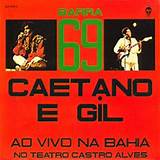
Barra ‘69 “Caetano e Gil – Ao Vivo Na Bahia, No Teatro Castro Alves” – A live collaboration concert, which can offer us some different perspectives on the music. Particularly how they recreate the psychedelic effects and arrangements live.
We have already heard several Gil/Caetano collaborations so far, but that is about to change, as both of their exiles are coming. Check out this timeline Brazil Timeline between 1965-1985, it’s sort of an alternate history to our own 60’s experience in the States.
“Superbacana” 4 versions, I didn’t really notice this song on Caetano’s debut, but here is a longer version – very Beatlesy. Plus the original and also 2 live, short clips of Caetano performing it on TV(?).
The lyrics! (Caetano Veloso):
Either all this people are mistaken
Or they pretend they don’t notice i was born
To be the supercool
I was born to be the supercool
Supercool Supercool
Supercool Superman
Superflit, Supervinc
Superist, Supercool
Splinters over Copacabana
The world in Copacabana
Everthing in Copacabana Copacabana
The worlds explodes far from here, very far
The sun answers
Time hides
The wind spreads
And the crumbs all fall over
Copacabana deceives me
Hides the superpeanut
The spinach, the tonic
The command of the supersonic airplane
Of the electronic amusement park
Of the atomic power
Of the economic advance
Scrooge McDuck’s number one dime is not mine
A battalion of cowboys
Obstructs the entry of the legion of super-heros
And I supercool
Go on dreaming until i explode, colourful
On the sun, on the five senses
Nothing in my pockets or hands
“Just a second, maestro”
Superman Superflit
Supervinc, Superist
Superviva, Supersheel
Superhot
https://lyricstranslate.com/en/superbacana-supercool.html
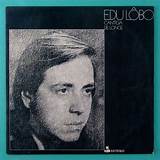
Edu Lobo – “Cantiga De Longe” (1970) – Yes this is from 1970 but was recorded in 69’. It is a good album to finish the 60’s on. It sounds like a different World after the all the psychedelics, still a work of beauty but the live Caetano/Gil was protesting, distorted guitars, sing alongs and a murky live sound overall – this is like being dropped into a Simon & Garfunkel album, clear as a bell.
It has more of a Bossa Nova feeling with beautiful, playful arrangements.
The only weird thing is 11 songs, 12 song titles… I believe the 2nd song is a medley of his song and another composer’s.
A little research offers a clue towards the long full names theme:
“In this Portuguese name, the first or maternal family name is Góes and the second or paternal family name is Lobo. Eduardo de Góes “Edu” Lobo – it’s just a Portuguese thing!
“Mariana Mariana” Gorgeous, languid, perfect.


5 thoughts on “April in Brazil: Part II: Sixties & Tropicalia”