Joan Armatrading – Joan Armatrading – A&M, 1976.
🪨🫧 🪩 🃁 🧀 ❤️🔥🎧:
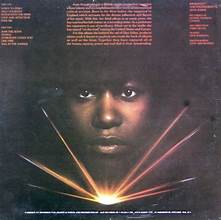
A superb Singer Songwriter album that leans into Rock, but was probably influential to a wide variety of artists because of the honesty in Mrs. Amatrading’s expression and the voice she offered women in music. I return to the music of the 70’s and consider it as being the perfect mix of technology, artistic freedom with diverse, mutually influential styles embracing the opportunities available. Mrs. Armstrong’s albums were in my parents’ collection, and I avoided them at that time in my life, but she wrote great songs even when they are often served with a little cheese. She also has an iconic voice, with interesting, personal vocal affectations. The band is top notch, this one includes the surprise bass voice of The Wire‘s Lester Freeman, Clarke Peters. That would be totally in character for him on that show too, despite actually occurring in reality long before the character was designed. I’m not sure if this is Mrs. Armatrading’s most popular album, but I consider it a masterpiece. “Love & Affection” one of those song’s I am jealous of and wish I wrote.
Overall = 9.1 (10) – A classic album. Get It!
Sandy Bull – Fantasias for Guitar And Banjo – Vanguard, 1963.
🇺🇸📣🌾 🪄🫂:
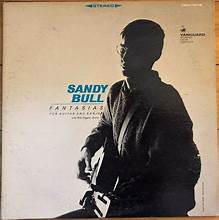
This Sandy Bull album was a “Dad’s Record Collection” theft, that I eventually re-acquired on CD. I believe my Dad recommended it to me when I started playing guitar and listening to Classic Rock. Then, I thought it was a bit meandering and similar-sounding; it didn’t really engage me, but I kept it in the back of my mind, as “of interest”. It is an interesting document of a Folk-style guitarist exploring improvisational possibilities, but I’m not sure my impression of Mr. Bull has changed. He is not a guitarist who wows me, but the support by Billy Higgins is a special surprise. He reliably makes this recording ring with vibrancy. Mr. Higgins was the ultimate sideman, peruse the list of recordings he graced and be awed. “Little Maggie”“Love & Affection”
Overall = 5.6 (10) – Fine ruminating for strings. Get It!
Jonathan Winters/Leo Kottke/Duck Baker – Paul Bunyan – Windham Hill/Rabbit Ear Productions, 1990.
🇺🇸📣🌾🫂 🎥🎞️✆:
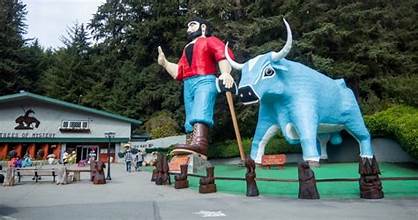
I have a few of these Rabbit Ears Storybook Classics. They paired animation with famous narrators and musical guests. They were originally on Showtime children’s programming and then on PBS as reruns. Showtime maybe became more focused on adult content, but initially was seeking material for a wider demographic. The added material is unfortunately lost in the inter webs so I am including the link to the full story here – Paul Bunyan. They were half hour episodes and I have never seen the animated portions, so in the “Music to Films I haven’t Seen” category. I considered them audio stories, until I looked for the recordings for ITS and discovered the animated content. This pairing is nice, Mr. Winters is a vibrant narrator, a master of voices and humor. Mr. Kottke and Mr. Baker accompany with dramatic swells and string work that evokes American Folk and Roots music for an American Folk tale.
Overall = 6.4 (10) – There are various entry points to listening to this music, but it may be necessary to be here for the story, over the music. Get It!
James Booker – The Lost Paramount Tapes – Paramount/DJM, 1973/1995.
🇺🇸📣🏙️🎹🗣️🦐 🪄 🦴 🥃:
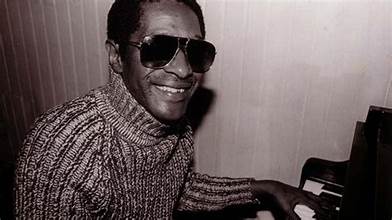
A nice, posthumously released collection of “lost” James Booker recordings for Paramount. Often, “lost” sessions are of dubious quality, though now you might see them being “repaired” by AI (also of dubious quality?), but these are nice recordings – valuable considering the lack of documentation of this important musicians career. I love his piano playing, but his voice really does it for me and his giant-sized personalty comes through in his singing. It definitely transports me to NOLA every time I hear him. Powerful conjurations. “Junco Partner”
Overall = 6.2 (10) – I’m still hunting for “the” James Booker album, all of these are good, but when did he create in the proper environment with the tape rolling? Which is his signature recording? Get It!
Loren Mazzacane Connors – Calloden Harvest – RoCo, 1997.
🌌⚡️✆ 🪄🎸 🎑⌘ ⚰️📀:
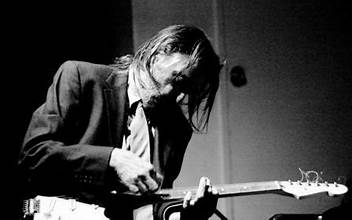
This album features more ruminative guitar work, but also slightly more designed songs, with dynamics and tempos that offer a sense of direction. Many of Mr. Connor’s albums feel shapeless when I first listen to them and after repeated listens the structure appears, fragments of melody reveal themselves. Despite their quietude, gentle pace and improvisational design they take on a noticeable form. This album has a lot of those qualities, but with more pre-conception. All of his albums explore the sound of guitar in a way I wish more artists would investigate. Sometimes they are dreamy and subtle, then there are some collaborative albums that take on different personalities and also some recordings with louder, more distorted approaches. Calloden Harvest is a suite, or concept album, based on the enslavement of Ireland by Cromwell. I’m not quite sure what the cover art is meant to call up, but there are a few album covers in his catalogue with similar art that he created. It reminds me a little of John Lennon’s art, though darker and more creepy. “First Light”
Overall = 6.6 (10) – If it were an old Jazz titled recording I would call it The Quiet Distortion of Loren Mazzacane Connors.Get It!
& Portrait Of A Soul – FBWL, 2000.
🌌⚡️✆ 🪄🎸 🎑 🦋 📹⚖️ 🤿 ⌘:
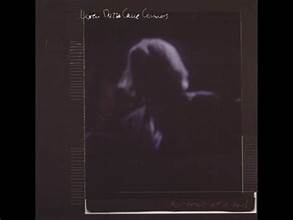
Some of my favorite music to enter the Dreamworld to. My initial interpretation was it was a sort of lightweight, ambient, noodley group of guitar improvisations. After more and more listens I started to identify shifting melodic cells and fragments of themes that create a sort of aquarium-like suite. Mr. Connors’ commitment to slowness is critical, giving the music a sort of underwater, looking up through gently bobbing seaweed, meandering fish and refracted light which drifts down to the depths with the tide. This music is peaceful and gives a sense of being alone in the world. How often can you find that place? Anytime you want with this recording. The “songs” are titled for Days/Evenings/Nights and my sense is Mr. Connors recorded this over a series of days and the titles are merely identifying an order of recording times. It sounds, collected here, as one experience. “Evening 3” & “Night 3”
Overall = 8.7 (10) – Drift along. Get It!
Mahalia Jackson – Gospels, Spirituals & Hymns vol.2 – Columbia, 1998.
🇺🇸📣🌳🗣️⛪️🗝️👁️🗨️🔭 :
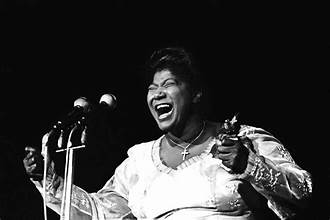
This is Volume 2 and it features some of Mrs. Jackson’s later recordings, but it is still seminal Gospel music by one of our earthly guides to the Spiritual universe. There are a variety of musical settings: organ, Bluesy, Choral and vocal features. All are top notch. I gravitate to Gospel voices and her’s is crucial, featuring incredible power, intensity and steeped in dramatic phrasing. I listen for her throaty shout to derive elements of my saxophone sound voicing. “It Took A Miracle”
Overall = 7.1 (10) – Great, but probably not her greatest.Get It!
Beach House – Bloom – Sub Pop, 2012.
🪨🫧 🪩 🗣️ ❤️🔥 🃁🎧 🎗️🏋🏽🚘⚰️🌊 🤿:
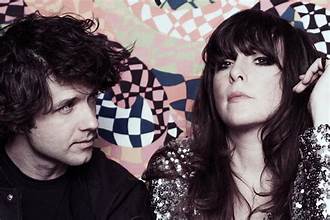
Another classic Beach House album. With at least 4 songs that I count as favorites. I love this album almost as much as Teen Dream. Teen Dream being my first love, can never be supplanted, but they are near equals. Epic, immersive, music that transformed me at a vulnerable time in my life. This album leans more pop, than the Rock sound covered in Teen Dream and it feels more sensuous and loving. Where Teen Dream feels like raw and broken appeals to the universe, Bloom feels lost in love and loss. I love being in that musical space and I listened to their music everyday for two years. It was a mad discovery at the time. I’ve opened to a lot of new music since and have new ideas of the music I want to create. The philosophy being, keep it simple and make the right move at the right moment. “Other People”
Overall = 10 (10) – Swoon. Get It!
Roscoe Holcomb – The High Lonesome Sound – Smithsonian Folkways, 1961, 1964, 1974/1998.
🍏🌾 ⚰️🪕:
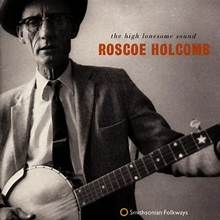
One of my earliest forays into Folk Banjo recordings and I was wooed by the title. I’m down for anything sounding lonesome and the idea of it also being “high” while featuring a weathered looking elder suggested a portal to the past that I could learn from (I’m always checking into sound, tone, timbre varieties). This Smithsonian Folkways collection delivered and stoked my interest to further exploration. “House in New Orleans” – Initially, I was debating whether this was a version of “The House of the Rising Sun” which uses this song’s title in its first line. It is. Many older source songs claim similar resemblances to that popular ballad, so that wasn’t a given conclusion. The truth is that many songs carry deeply evolving histories stretching back to their origin countries and then being adapted to modern times. You can trace the lines. We usually stick with the most popular version as the “important” version and ignore the travels the song took to arrive at its modern success.
Overall = 6.3 (10) – Roots. Get It!
Renaud Garcia Fons – Entremundo – Enja/Justin Time, 2004.
🌍🇫🇷⨻:
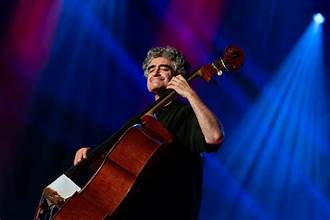
My description for this music would mirror a lot of what I have said about Rabih Abou-Khalil‘s recordings, it is modern, advanced, instrumental music, which is composed based on a fusion of cultures and styles and performed with excellent musicianship. The thing is, I don’t find this music as compelling Rabih Abou-Khalil’s and I can’t figure out exactly why? This recording is less Jazz forward (than a previous recording I included on an earlier ItS) and I enjoy it more than that recording, but not by much. I guess I’m not sure where this music’s center is. It has a mix of European influences: Spain, Andalusia, France and mixed-Arabic cultures and on this album also some clear stabs at Pop compositional devices. It feels like something I should like more than I do.”Rosario”
Overall = 3.7 (10) – I keep trying to hate it? Get It!
John Kaizan Neptune – Tokyosphere – Japan Kaizan Music, 1988.
🇯🇵 🇺🇸🪦 🧀⨻:
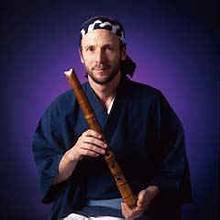
John Kaizen Neptune, an American Shakuhachi player, who works in a multicultural musical style, mixing Jazz, Blues, Pop and other styles with traditional Japanese music – yet he is American not Japanese. I take a pause with any recording that presents a cultural impression from a different cultures perspective as this recording does. While this particular performer is accepted and embraced in Japanese culture, as with food, I’m not always convinced these fusions create something tasty. On this recording the most traditional songs sound the best to me and the others are interesting curiosities, but don’t compel me. I am not versed in traditional Japanese Shakuhachi music, but I sense a lack of authenticity here and mixing the Blues, or Jazz, in doesn’t make it stronger for me. Perhaps it is well played, inauthentic music? “Yamato Dawn” Might be the only song I really dig…
Overall = 3.4 (10) – It often veers into New Age territory, too frequently for my tastes. Get It!
Yaya Diallo – Nangape – OnZou, 1980.
🌎🫧🇲🇱:
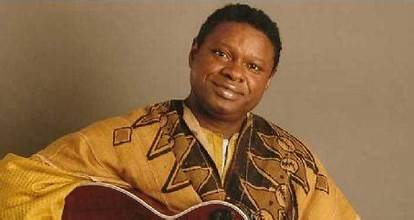
The debut release from this Malian percussionist, who went to college in Canada, and who plays a variety of traditional instruments. I have some questions about what is being presented here? It is a pretty easy disc to listen to, but there seems to be overdubbed parts as Mr. Diallo is the only percussionist listed, but in several songs there are multiple instruments being heard? My first question was the appearance of flute, clearly a Western style of flute playing and unusual for what I expected as traditional Malian music? The flute doesn’t sound bad, but I question the authenticity, of what we are hearing. Are we hearing newly written music in a Malian style? New music with no historical ancestry? The liner notes do not answer these questions and the flautist is defined as not being educated formally in this music, but instead has learned in an “Avant Gard” manner. That defines nothing to me and instead makes me concerned that the Avant Gard term can be a band aid description for outsider art, non-formal study and occasionally music that doesn’t cut it. The flute here softens the sound and makes me think of the old school “Exotica” designation. He does sound formally trained to me here, but just instinctual in what he is creating in this music. Also this recording could just be two college students from Canada, one Malian, recording a bunch of songs to get gigs with and then Mr. Diallo just became a more important figure than that beginning recording suggests. “Nangape” which is apparently the name is Mr. Diallo’s mentor.
Overall = 4.2 (10) – Ok, its an early release, perhaps future recordings would show more command. Get It!
Jeff Buckley – The Grace EPs – Columbia, 1995. (Peyote Radio Theater; So Real; Live From The Bataclan; The Grace EP & Last Goodbye)
⏺️ ➕🪨🎟️🎸 💰 ⚒️⌛️ 🏋🏽🚘🫦⚰️ ❤️🔥 🦋:
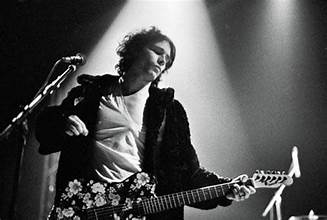
Jeff Buckley never fails to uplift my spirit. His music returns me to a key period in my life, Summer of ’94, recording music with my guy Jeff Schwachter, seeing & meeting Jeff Buckley live at The Local 182, then moving to Albuquerque – then again to New Orleans. During those road trips I listened to Grace, before that it was the soundtrack to a couple of busy nights with a beautiful woman. This collection of EPs, including some live performances, offer me those memories, but with slight shifts fas they differ from the original release. The experience feels both fresh and far off, the memories drift away as the songs depart their traditional scope. Mr. Buckley was a exquisite musician, evoking fierce emotions in each performance. “So Real” (Live) Rotterdam.
Overall = 8.7 (10) – With only a few recordings in a career, every second counts. Get It!


