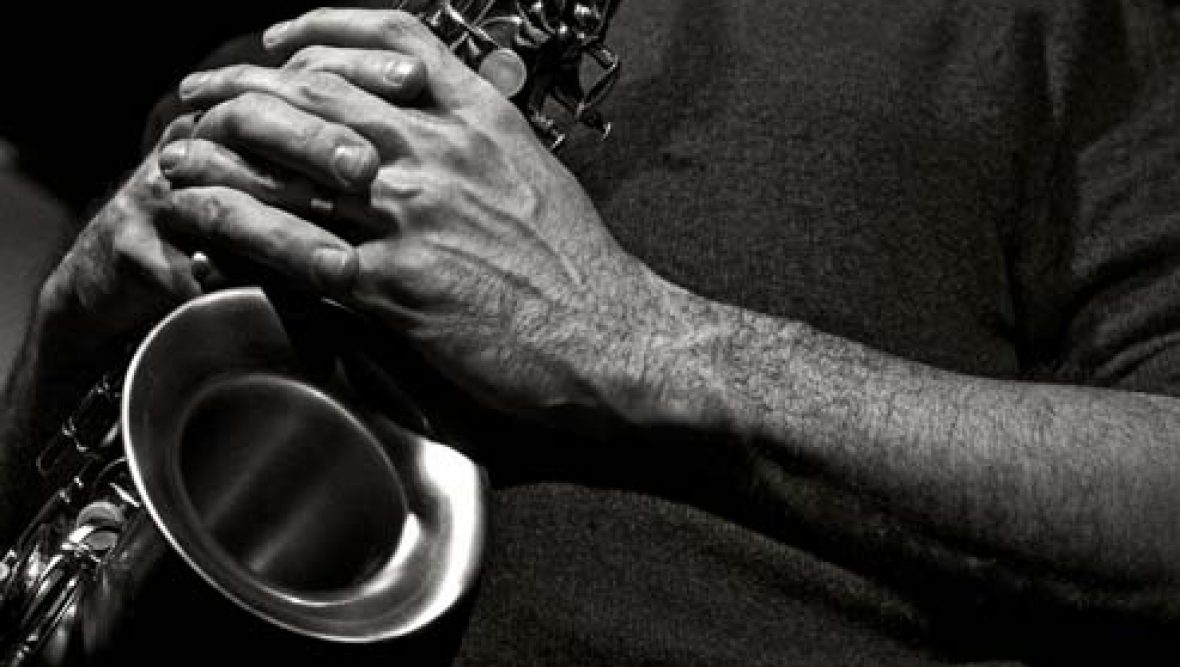
Bo$$ – Born Ganstaz – Def Jam, 1993.
🎤🪦:
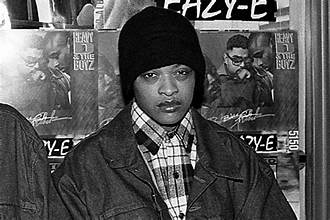
Bo$$ appeared on the Rap map in 1993, she was featured as a hard, female, gangster rapper. Her appearance was minimal and severe. She seemed to fit in using hard language and taking the Gangster Rap genre into a new market as a viable female representative. I picked it up for those reasons, but I grade Rap music based on a variety of categories (I try to grade each genre reflecting its own aesthetics, with certain elements being universal – like packaging, recording quality, etc.).
My favorite Rap music includes:
- creative and stylistically personal lyrics and rhymes.
- personally designed, exciting beats.
- musically transformative samples.
- cultural relevance (reception beyond release – popularity, critical acclaim, stylistic influence, etc.).
This Bo$$ album, it is her only big label released album, doesn’t deliver highly in any of those categories for me. She shocked people with her roughness and swearing, but the songs lack depth. And there were questions about her authenticity. The opening track is a recording from her Grandmother leaving a voice message and describing how she grew up, ballet classes and the like.
Also, Gangster-styled music often depicts narrative hardships in a way that can be considered a form of protest. This album, however, embraces the stereotypes and the Bo$$ persona could have been guided by label leadership, which doesn’t sit right for me. If an A&R person or a producer decided to cash in on a popular style using an artist from a marginalized demographic in that style (Gangster Rap vs. Women) to capitalize on its marketability, it contrives all the wrong creative instincts in me. “Progress of Elimination”
Overall = 2.3 (10) – It’s ok but too many swears replace articulation of thoughts for me. Get it!
Beres Hammond – Full Attention – V.P., 1993.
🇯🇲🪦:
Lol! Pretty crappy! Dancehall crooner style, but over-produced and I’m not sure I like any of these songs. Beres Hammond does have a great voice and he recorded some classic cuts, these ain’t those. “Full Attention”
Overall = 1.8 (10) – Ehhh, don’t?Get it!
Nat “King” Cole – 1945 – Chronological, 1996.
🗣️ ❂🫧🎹🎺🏌🏿♂️💰:
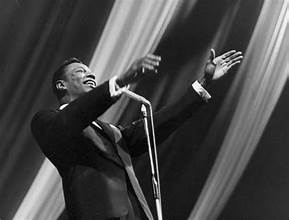
Nat “King” Cole was an enormously popular figure primarily he was a fantastic singer. These Chronological collections, from early in his career, offer many examples of his excellent keyboard playing. The range of material documented goes beyond the Pop masterpieces he was most known for, with some hard swinging groups and accompanying singing groups.
He was a popularizer of the piano trio he primarily employed: guitar , bass & piano. That was “the” style of piano trio until about 1947 when the drum kit would generally supplant guitar in the trio.
There is a nice mix of Pop songs and riffing Swing instrumentals on this collection and it offers evidence of Cole’s excellent improvisational skills. Popularity digs deep grooves that an artist then has to ride and continue to produce a style record companies searched for. Hunting for the next big hit or trying to reap the dollars from an artist’s previous success. We recall his music through the hits as well as Cole’s achievements as a Black artist, breaking barriers, but he was a solid Jazzer too, which is often overlooked. “Black Market Stuff” & “Homeward Bound”
Overall = 7.9 (10) – Explore his hits, but check out the passion pieces too. Get it!
1946 – Chronological, 1997.
🗣️ ❂🫧🎹🎺🏌🏿♂️💰🎄:
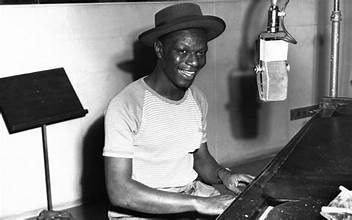
This collection’s timeline coincides with the King Cole Trio Time radio program, which made him the first Black (male?) musician to host a radio program. However, Mary Lou Williams hosted Mary Lou Williams’ Piano Workshop on WNEW in 1945, so there may be some semantics regarding the “first” status here – or another example of the dubious nature of male-washing. Mrs. Williams herself was a huge Nat King Cole fan (and peer). Cole’s immense fame would follow that show to the stars. Even landing that type of gig involved some type of previous fame though.
Everything Mr. Cole performs has a certain smooth clarity, which I think defines a quality found in a lot of popular music:
- simple enough to feel a sense of natural focus as a listener
- refined in design and in recording documentation for its time
- carries clear dynamic balance
- evokes the body responses of singing along/dancing to the beat
This is a solid recipe for Popular hits. “I Can’t Believe That You’re In Love With Me” with Willie Smith.
Overall = 8.2 (10) – Classic, early peak performances.Get it!
Ludwig Von Beethoven/Budapest String Quartet/Milton Katims – Beethoven Quartets (Op. 18, nos. 1, 4 & 6; Op. 59, no. 3 “Razumovsky”; Op. 95, “Serioso” & String Quintet, Op. 29) – Sony Classical/Masterworks Heritage, 1940-1941/1997.
🎼🗣️ ❂🎻🎼 🎗️🆑 ⎄ ✪⌛️:
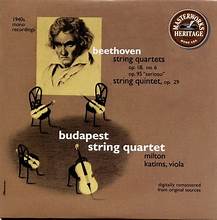
Historic music performed by a perfect String Quartet. I was wooed by the cover/packaging of this Classical “Masterwork” in a similar way that Blue Note records do for me. I already had Budapest String Quartet albums that I yoinked from my Father’s record collection and I considered them to be a premier String Quartet. Beethoven & Budapest seemed like a perfect match. However, I am not as confident in my critical ear for Classical music, and even more so 20 years ago when I purchased this collection, but I feel secure in that this is one of those peak recorded performances of important music. “String quartet No. 3, in C Major, Op. 59 Razumovsky : II. Andante con moto quasi allegretto”
Overall = 10 (10) – Great music. Get it!
Martin Denny – Afro-Desia: The Exotic Sounds of Martin Denny – Scamp, 1959/1995.
🎥 ❂🐠 🎨 🎗️ 🧀 📹 👩🏼⚖️ 🥃 🎧:
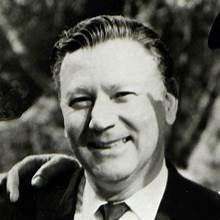
Mildly offensive exotica, from one of the masters of that medium. Enter an imagined world of music of the savages of the world, tiki gods, voodoo mysticism and ancient cultures brought to aural soundtracks – with no emphasis on researching where these White people tropes were derived from. The made up gibberish languages, and sound effects, do the most damage. Musically these sound scapes showcase film-like scores with evocative arrangements and dramatic elements. The vocal parts and the titles are the cheesiest element and do the most culturally severe insult, but Martin Denny made no claims towards authenticity and the aim may have been to indulge in the cheesy, party vibe kitsch. It nails that element. “Simba”
Overall = 5.1 (10) – For what it is, it is solid. Get it!
Mulatu Astatke – Ethiopiques 4: Ethio Jazz & Musique Instrumentale 1969-1974 – Buda Musique, 1998.
🌎🇪🇹 ❂🎺🪄:
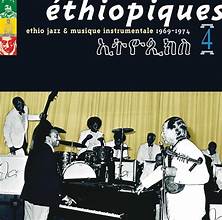
More Mulatu Astatke (I reviewed 2 or 3 other albums at the very beginning of ITS), including a track or two found on those recordings. In this case, it is a compilation of early works from a few Astatke albums. Unfortunately Ethiopiques doesn’t clearly explain who is on their recordings. It is a French label, with English liner notes, but my ire is aimed at the cover explanation, which gives no indication that Mr. Astatke is the focus of the disc. Furthermore, the discography is poorly outlined in general. I thought this was a compilation of many artists and had no idea it was a feature for Mr. Astatke’s music. Mr. Astatke also had issues with the label, feeling that although it offered him some international exposure, the money did not actually reach him. And the liner notes feel deceptive and un-genuine. Recording rights across different countries often result in questionable proprietary. The music of the recording is still great, though I initially worried I had duplicated a recording I already had. Every jam grooves. It is more ensemble than soloist minded and it is more psychedelic than a lot of the “psychedelic” music that has been reviewed recently. “Gubèlyé”
Overall = 8.1 (10) – There is a great mix of Synth, Guitar, Vibes, saxophone sounds – very sample-able and has a vibe. Get it!
Jagdeep Singh Bedi – Soft & True – Music of the World, 1987.
🌎🇮🇳📣 🌃 🤿 👁️🗨️🎑 🦋 🪄 🛁👣:
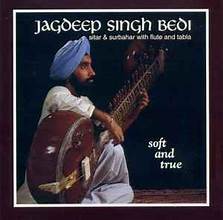
This recording really lives up to its title, Soft & True. It is wonderful, meditative music, featuring Surbahar – a bass sitar. The sound of which brings me to a release from my concerns and contemplation of my psychological baggage. I think it is a pretty obscure release? I had a hard time finding much information about it. I will snatch pretty much any traditional Indian music I can find. I wonder about how, over the thousands of years, this music has been developed into something that feels therapeutic and natural. I lean more into the aesthetic conception of music and yet administer it all the time for healing. There is something that feels scientifically sonic in acoustic healing rituals. “Rag Bhairavi”
Overall = 8.5 (10) – So soothing.Get it!
Gal Costa – India – Mercury/Universal, 1973.
🌎🇧🇷 🌎🫧 🔮🗝️ ⚒️🪗🫦:
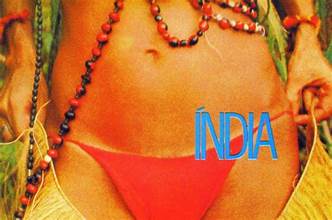
This Gal Costa album grew on me, initially it had a few favorite songs, but with many of Mrs. Costa’s records I feel there are clear attempts to mix with American/Euro Pop influences that don’t quite land their punch. There are a few of those here too, but listening to them repeatedly I am finding nuances and appreciating those songs more than I did. I think the Pop influences often feel too derivative , that adding them would result in a hit, but they are thrown together haphazardly. The blend with traditional Brazilian music elements doesn’t always jibe either. I have also found other Brazilian artists’ similar attempts from the late ‘60s to the early ’70s more successful. I’m not sure how creatively in control Gal Costa was of this music, so the wrong producer or arranger may have made those decisions. Regardless her voice really wins the moment and some of those songs lose those derivative qualities after more listening and it has now become one of my favorite albums. “Relance” The funkiest Brazilian accordion! “Passarinho”
Overall = 9 (10) – Why India? I wonder?Get it!
Felix Chappottin – Mi Son, Mi Son, Mi Son – Barbaro, 1979.
🌎🇨🇺 🎺💃🏽🪘:
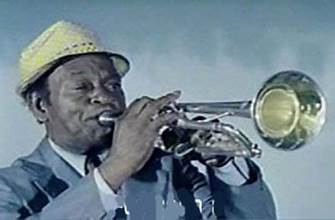
An incredible Cuban trumpet player leading Arsenio Rodriguez‘s famous band after Rodriguez had left Cuban for health reasons. This is an iconic document of Latin brass playing and early examples of Afro-Cuban styles that might have been more successful and well known if they had been recorded on the “right” label. We can still enjoy them now, I just feel like these songs would have reached international popularity with slightly better distribution and promotion. I picked it up for the cover and the tell-tale white spine with its particular font, reminiscent of the Fania label. There are brass moments here that I find really unique, in an Ellington-like arranging manner. “Guaguancó Sabroso”
Overall = 7.7 (10) – Under recognized. Get it!
Duke Ellington – The Duke Steps Out: 1929-1930 – History, 2004.
Beyond Category ⏺️ ❂ 🎺🥁🏌🏿♂️ ⎄ 🎨 ✪ 🗝️ 🪄⌛️:
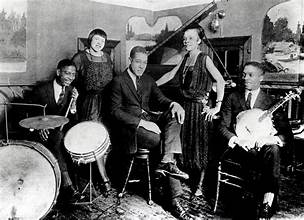
1929 – The members of the earliest popular version of Duke’s band are starting to solidify. Great soloists and section players, who contribute solos, riffs and themes of note. There is a strong influence of New Orleans Jazz blending with the sound Ellington was searching for. This massive collection has several mistakes in its minimal information, everal songs appear out of order, the wrong song was listed or possibly Ellington gave retitled certain songs he arranged. There are 2 versions of “St. James Infirmary” and “When Your Smiling” but the first appearance has a different title, and they are also not the same arrangements (not 2 takes of the same version). It is a little confusing and also something I was warned about regarding this collection before purchase. Budget inadequacies. The music is great and there is an easy 600 pieces in the total collection. I think you can tell that this material features Ellington being able to market his band without featuring as many Pop and Novelty songs. He has become the popular figure, highlighting his own music. “Blues of the Vagabond”
1930 – Ellington, along with Prince & Miles Davis, (my other artists who have their own category) was a miraculous conceptualist. Each of them broke ground creatively, as band leaders, composers, arrangers and performers, I favor artists who lean toward the magical, over the crafts person, in most of my favorite music. I like a quality of “where did that come from?” when I listen. In 1930, Ellington had already had a few hits and was performed at the Cotton Club for several years, building his popularity. Throughout The Great Depression, he would develop his group into one of the most popular bands in the country and already commanded great popularity in Europe. The music we have listened to so far was often composed by others or fit novelty type stabs at hit making, but from 1930 on the band was finally The Duke Ellington Orchestra and remained so. His conception, his creations (with a variety of important contributors), his proliferation and exquisite style and taste along the way. “Double Check Stomp”
Overall = 7.7 (10) – Hear a band coming into its own.Get it!
Miles Davis/John Coltrane/Sonny Stitt – In Stockholm 1960 Complete – Dragon, 1992.
Selim Sivad ⏺️ 🎺𝍍🎶✪ 🗝️🗝️🗝️🪄🎹🎟️⌛️🎷:
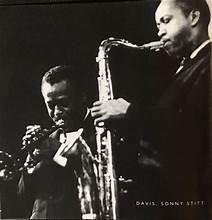
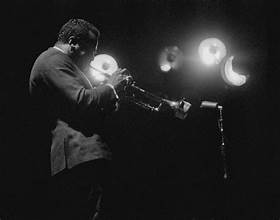
With the advent of Long Playing Records came the recording of longer works, concept albums and lengthier solos (allowing soloists to “open up”). Listeners gravitated towards album format recordings, despite a continued emphasis on singles. Big Band Jazz had usually featured shorter solos, but there were legends of live performers opening up and stretching out. Miles embraced the long format recording by creating works that were curated conceptually, with an overarching aesthetic vision. Every album release post-Kind of Blue sounds like a suite to me, though they are (mostly) not long form compositions or song cycles. Miles knew people would listen to them in a sitting (usually) and he made many masterpieces that deserve to be heard in full. Some of the music he recorded did not lend itself to live performance, “So What” and “All Blues” from Kind of Blue do pop up on live sets, but a lot of other tunes rarely appear in concert. This collection of 4 live concerts offers examples of how Miles’ albums were designed differently from his live performances. Standards, Ballads & Blues, showcasing the band members talents as they stretch out – almost every song is 10+ minutes long.
The concerts document Miles’ First Great Quintet in a transitional period leading to its ending. Midway Coltrane would leave for greater fame as a leader and Stitt would arrive, but not quite fit the direction Miles was headed. He sounds great, but the Bop and Blues material here would transform into other worlds and something more abstract in Miles’ future. “All Blues” (Live from Konserthuset, Stockholm – March 1960) Yowza! Trane just in it so deep!
The unusual thing about this collection of concerts is the switch in saxophonists. Coltrane sounds like he is bursting through the conventions of the repertoire, taking his solos beyond the songs. Its amazing, but it doesn’t exactly fit the material anymore. Stitt doesn’t fit either, he also sounds great and he fits the music more than Coltrane does, but the repertoire changes featuring more Standards in the mix. Stitt doesn’t fit because his style is going backwards for Miles’ conception of this group. By itself the music is excellent, but contextually it doesn’t fit the continuity, it sounds more like Miles albums from the early 50’s. That music has plenty of it’s own virtues that make it important. But are these recordings better than those? No, but they are still great recordings to hear. Sonny Stitt is doing his thing with one of Miles’ greatest groups. “Stardust” Stockholm 1960, Miles lays out.
Overall = 8.7 (10) – Great live music from a great band.Get it!
Prince – Sign Of The Times [Box] – Warner, 1987/2020.
The Purple Patch Ƥ𖫪 🫧🦄🫦 ⏺️🎟️ 🎬⎄ ✪ 🗝️💰 💰 💰⚒️🎸 ❤️🔥 👁️🗨️ 🔭 ♛:
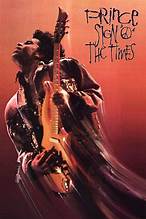
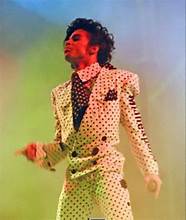
Their are two Prince “camps” I am in: One, that Sign Of The Times is a different, but equal, masterpiece compared to Purple Rain. And Two, that most great artists have one moment of convergence where all the right elements meet and are captured in a peak act of their greatest work – and that Prince had two such moments. This is not meant to diminish the other works, it is just rare for everything to arrive at the same time and also to be captured on a recording.
This music reminds me so much of my sophomore year of high school. Purple Rain was something I experienced as a middle schooler and this album reminds me so much of my High School friends (Sam C., Mashammoquet M., Abbey G., Marc’s C.M., JD, Jeff S. and Heather S.). It returns me to Sam’s porch with him imitating Prince singing “Slow Love” and a party set up hang at Marc’s. All of these songs hold meaningful history for me. I consider Sign Of The Times one of my formative sonic texts. I also recommend going and watching the concert film. Prince was voted best performer that year in Rolling Stone Magazine. After this recording change would come to Prince’s approach to music making, he still remained absurdly prolific, brilliant as always, but not necessarily as consistently brilliant on record as he was before. “The Ballad Of Dorothy Parker” I find this song to be a Prince song even my non-Prince friends enjoy.
Overall = 10 (10) – Incredible! Get it!


