B-52’s – Wild Planet – WB, 1980.
🪨🫧 🪩 🧴🚘 🧀 🥃💰:
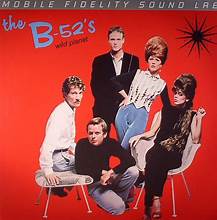
The New Wave/Pop/Punk band from Georgia that I listened to with trepidation when they were most popular. They were a little too goofy weird, I was all for weird, but their weird seemed more comical than creatively weird. I did call in to request the video for “Monster” on VH-1, because of its claymation video and I thought the singers were hot, despite their giant hair. Otherwise I avoided them, “Love Shack” was too big a song to appeal to me back then, but their early sound, the vocal harmonies and the sort of trance Punk riffs worked well. I was also a fan of their strange lyrics.”Give Me Back My Man”
Overall = 7.6(10) – Party time. Get it!
Schlomo Carlebach /Benedict Silberman – In The Palace Of The King – Vanguard, 1965.
🇺🇸📣🌾 🇳🇱🔮 👁️🗨️ 🕳️⌛️:
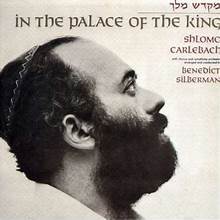
A controversial, but groundbreaking, Jewish religious/musical figure, “The Singing Rabbi”. This music appears to be Jewish songs, Rabbi Carlebach wrote many original songs, but he also was a catalyst of celebratory Jewish religious singing. I think he slipped into a timely niche with both the early 60’s Folk Musicians and Gospel/Civil Rights style singers, where religious musical traditions merged with Pop culture, but in this case for Jewish people. He was also accused of abuse by many, which he did not refute. These pieces are orchestrated and it is difficult to find much detail about their conceptual direction. I think it is unusual to hear these songs in this manner, it does sound sort of like show tunes, or a Musical, with orchestration. I also think Mr. Carlebach was forming one way that Modern, American Jewish music would sound like. “Choimeinu Haschem (Give Me Light)”
Overall = 5.5 (10) – Interesting more than wondrous. Get it!
Charlie Booty – After Hours With Charlie Booty – Solo Art, 1994.
🇺🇸📣🏙️🎹🦐:
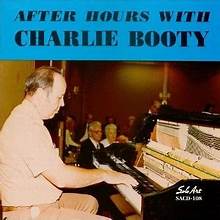
I’m convinced, without discovering much evidence, that Charlie Booty worked at, or had a residency, in some New Orleans institutions (bars, lounges, clubs or hotels) playing piano for an extended period and only occasionally recorded his style of NOLA/Stride/Boogie & Blues piano. This album features Standards, NOLA Standards and Blues, along with several obscure songs I hadn’t heard before. He is a solid pianist, though he rarely burns it up or does anything explosive, he simply holds it down. Unfortunately the music on this (self released?) recording is not something I could find available for streaming, instead a variety of house party recordings appear on YouTube that are very similar to this recording. “Piney Woods Stomp” It gives you a sense of his sound.
Overall = 5.2 (10) – Solid, if not flaming, NOLA piano work.Get it!
Brian Eno – Apollo: Atmospheres & Soundtracks – Virgin, 1983/1993.
🌌⚡️✆ 🎬🎑 🦋 👁️ 🎧 🌃 🤿 🛁🗝️ ⌘🕳️:
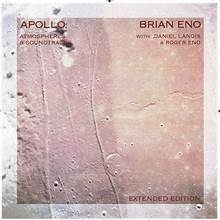
So beautifully adrift. Somehow Mr. Eno is continually creating the sounds of the future, even if this music commemorates an event from the past. The album was initially recorded in 1983 for the film For All Mankind which was released in 1989. It has since been reused for various film and tv scores. It is visually evocative yet remains minimal and ambient. Various reissues exist, including extra tracks, some of which were released on Ambient 3. This music is performed by the trio of Brian & Roger Eno and Daniel Lanois. I think the way that group works is probably ground breaking too, because it seems like there are elements of all 3 playing/performing and also manipulating the sounds in the studio. I believe modern composers and arrangers have converted some of their standard creative outlets into studio engineering and production. That is a direction I am trying to build in my own skills as well, Eno was one of the progenitors of this method. “Under Stars” & “An Ending (Ascent)”
Overall = 9.5 (10) – I love this little masterpiece. It doesn’t play like a soundtrack.Get it!
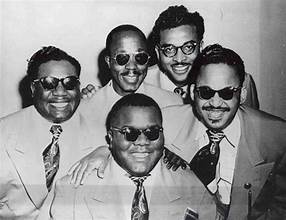
The Five Blind Boys of Mississippi/The Sensational Nightingales – The Lord Will Make A Way: The Early Recordings 1947-1951 – PVine, 2002.
🇺🇸📣🌳🗣️⛪️👁️🗨️:
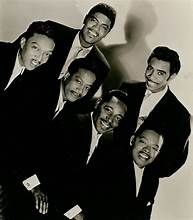
Nice find! Early recordings of two classic Gospel quintets. My most faithful Gospel interests lay in these early vocal groups. I find this singing tradition hugely influential on all American Pop music. One element of the Black musical aesthetic has permeated American music. The singing style is emotive, instrument like, celebrating vocal stylistic individuality rather than reaching for specific technical perfection (as Opera singers might) and embracing ensemble accompaniment. All of these qualities find their way into Popular music vocal groups, most obviously when during the Civil Rights Movement the barrier between Sacred and Secular music drastically changed in our country. Make no mistake, early R&B and Rock & Roll were already absorbing this music. Additionally, many sacred artists became secular until the possibility of one spiritual commitment negating the other was dispelled. “I’m Happy In The Service Of The Lord” The Five Blind Boys of Mississippi & “In The Room With The Lord” The Sensational Nightingales
Overall = 6.5 (10) – Some hair, and spirit, raising reverence.Get it!
Beach House – Depression Cherry – Sub Pop, 2015.
🪨🫧 🪩 ♛ 🛁🚘 ❤️🔥🎑:
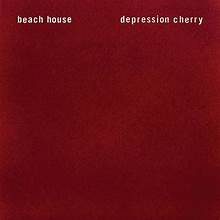
Another great Beach House album among my favorites. This album has one (of the two) Beach House songs I don’t like, but I’ve grown to appreciate it. I do have five of the songs in my favorites category, so it more than balances out. I think their recording concept changed from their prior albums, moving in a more electronic direction. They also released Thank Your Lucky Stars shortly after this, within a year. I believe if the two albums were blended into one double album, the balance would carry the recordings into masterpiece territory, along with their 3 prior albums. I still love their recordings, but do feel the songs reflect a bit of an over-produced approach and stray from the sheer beauty of Mrs. LeGrande’s voice, sinking deeper into moody vibes and obscuring some of my favorite song writing. I’m still a lover though. “Beyond Love”
Overall = 9.2 (10) – Still deep waters to wade in. Get it!
VA – Music Of Central Asia, vol. 9: In The Footsteps Of Babur – Musical Encounters From The Lands Of The Mughals– Smithsonian Folkways, 2010.
🍏🌾🇦🇫🇮🇳🇹🇯📣:
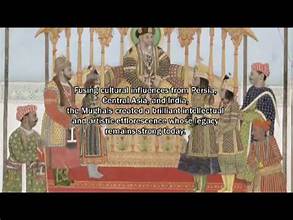
In the previous In The Stacks we heard some Martin Denny “Fake Exotica” and here we have the opposite: musical traditions that blended cultures historically blended cultures due to global politics. It is well documented and exciting because it is similar to, but not the same as, music I have heard before. The Mughal Empire formed initially by Babur which covered most of South and Central Asia, including what is now Afghanistan, parts of Iran and India.
Five musicians play pieces resembling Ragas and Folk songs on instruments new to me: Dutar, Rubab, Santur, Setâr and Tanbur. There are solos as well as a few pieces where musicians play collectively. It is a positive introduction to this music. “Sayr-i Badakhshan (A Stroll in Badakhshan)”
Overall = 7.1 (10) – Exploring the sounds of the past.Get it!
Issam Hajali – Mouasalat Ila Jacada El Ard – Habibi Funk, 1977.
🌍🫧📣🔮 🇱🇧 ⌘ 🕸️👣 🌃:
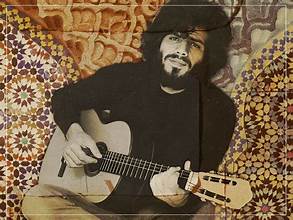
A Lebanese singer-songwriter collaborating with Parisian musicians. This rare and seldom-heard music which blends synthesizers with Modern Rock influences. But the music is relatively gentle and the label name Habibi Funk, which is well promoted on the CD case, doesn’t seem to fit the vibe being created in the music. I only question that because I bought it expecting one sound based on the cover and received another sound altogether. I enjoy the sounds I got, but I was expecting to dig in to something grooving a lot harder. This could fit in nicely with some Nick Drake and James Taylor, it is clearly from the 70’s, but the gentle side. “Lam Azal”
Overall = 6.3 (10) – Nice album after you recalibrate your expectations, i.e. not Lebanese Funk, but a Lebanese artist fronting a Parisian Singer Songwriter band.Get it!
VA – The Ongaku Masters vol. 4: Cross-Overs And Extensions – Celestial Harmonies, 2004.
🌍 🇯🇵📣🔮🌃 👁️ 📹 :
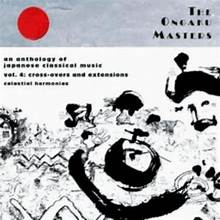
This collection, from a bigger collection, features traditional Japanese musical forms found in either Modern contexts or created using outside influences. You know, the stuff that I love. But I couldn’t tell you the differences that are occurring, maybe if I had the other 4 Ongaku Masters volumes? A lot of my knowledge of this music would come from Japanese cinema and samurai films, which I think probably already incorporate outside influences. It is a peaceful, but dramatic, listen which offers very different musical aesthetics – particularly in the use of space and texture, which I enjoy. I would suggest I am missing some clues without the full collection. “The Temple Of Yesterday”
Overall = 5.7 (10) – Atmospheric, not truly traditional? Get it!
Toumani Diabaté – The Mandé Variations – World Circuit, 2008.
🌎🫧🇲🇱🔮📣 ⌛️ 🛁 🤿👣 🦴 🦋 👁️🗨️:

Gorgeous solo Kora performed by one of its living masters. This album was recorded about 2 decades into Mr. Diabate’s career and is unusual for featuring only the Kora though it often sounds like several performers to me, but that is a tribute to his technique and abilities, there are a few songs which send my mind chasing zithers, harps and finger picking folk guitarists. Overall the vibe is bright and shimmering. I can listen to this music in the same moods as I listen to Spiritual and meditative music. I think most of the material features original compositions, so there is a nice blend of traditional styles being represented in modern compositions – meaning it has the foundations of the traditional music, but those are being used for original composition. “Cantelowes”
Overall = 7.7 (10) – Deep in the sound of the Kora. Get it!
VA – Cuba: I Am Time – Blue Jackal, 1997.
⏺️📣🔮💃🏽🇨🇺 ⌘ ⚒️🎗️ 🎟️👣 ⚙︎:
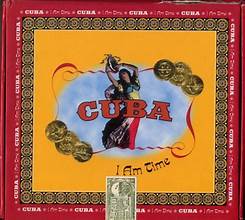
The cigar box packaging really got me and at the time I was far less familiar with Cuban music, so I was just entranced by the design and mystery. What I have is an excellent collection meant as both an introduction to and a celebration of Cuban music—two objectives that don’t always align, but do successfully here.
The four disc set is divided and is not consistently chronological. Instead the discs are categorized by important elements of Cuban culture in music: Invocations – Traditional African influences, Religious and Ritual; Canzon – Singers & Songs; Bailar – Dance & Drums and Cuban Jazz – Afro Cuban Jazz. The liner notes are incredibly well researched and explain these elements, the artists and the songs in detail. Each disc should be considered its own vibe and I’m not sure you throw just any of these discs on and party, but maybe it is high quality educational programming? Fact is, as with my History of Popular Music course, there is no way to be completist in these settings and no way to tell the entire story. Comparsa San Agustín – “Con Su Pin, Pin, Pin”
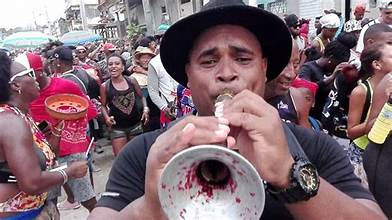
Despite the quality information on the styles, songs and performers there is a dearth in the why these songs were chosen. The assumption is they depict these elements properly, but accessibility for the recordings probably played into it and there is not much to reference. I haven’t heard of 90% of the performers and Cuba itself presents a sort of enigma regarding performers, given our countries’ often stressed relationship. This aspect doesn’t ruin the listenability of the box set, but it does jump around timelines and I’m not sure I follow the established themes as I listen.
I love the liner notes, but I don’t feel they should be a requirement for understanding what we are listening to. Instead it should complement the listening inclination—a simpler expansion to complement the recordings. For example, many songs on both Invocations and Cantar seem like they could also be danced to – are they not chosen for the Bailar disc for a reason? Regardless they often segue into something alien sounding, rather than creating a continuous vibe over the entirety of each disc.“Pa Que Te Salves” – Issac Delgado
Overall = 8 (10) – Great intro to Cuban music of all plumage, I may have progressed to wanting artist’s individual recordings. Get it!


