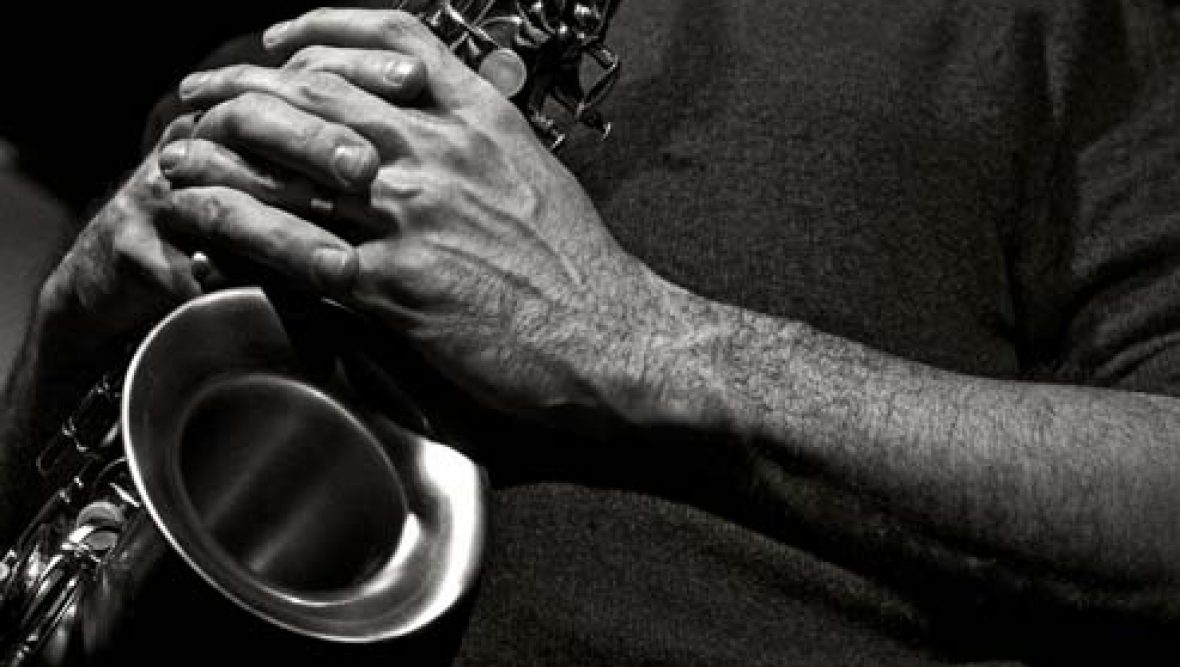
Brand Nubian – One For All – Elektra, 1990.
🎤📝🎨🎭💰⚒️:

A heyday era Rap album for me, good beats, samples and verbal acuity. Grand Puba seemed to be the prime voice in this group and he has a sharp, edgy tone that can inflect lines with harshness or humor. The other members offer no significant drop off of intensity. I believe the lyrics lean in a bit of a militant, Muslim and Black Power direction – and for me at least not in an insulting, but instead sensible way. It may have muted some of Brand Nubian’s popular appeal and also their expressions of frustration from 1990 feel completely contemporary in 2026. The issues are similar if not outright the same. “Wake Up (Stimulated Dummies Mix)”
Overall = 6.2 (10) – Classic Rap album for me. Get it!
Gregory Isaacs – Night Nurse – Mango, 1982.
🇯🇲🗣️ 🎭🫧:

Sadly, the other earlier Gregory Isaacs’ album I own came out with a crack in the disc, this one has an amazing title though! It’s a pretty low-key collection of crooner jams, which are pleasant enough without ever gripping me up. The digital, post-Dub version of Reggae has some bumpy transitioning to do in the eighties. Navigating the cold automated aspects of electronic production. I like this music, but it lacks a lot of tension and almost every instrument is supportive of the voice, which was not the case in earlier Reggae. The intensity is not being built by the music and everything sounds like it was created in a sterile environment. “Cool Down the Pace”
Overall = 4.6 (10) – Good, but it needs a little kick in the ass of the musical accompaniment, or a breather creating it. Get it!
Nat “King” Cole – The Chronological: 1944-1945 – Classics, 1996.
🗣️🎹🎺🫧❂ 🗝️🎭:

This album features the classic trio in action. Performing novelty, tunes, swingers and ballads, with one larger group with horns. My mind wanders towards changes in language over many decades and how certain inappropriate comments would be veiled in humor, or coded terms, instead of direct statements. One song “I Would Love To Make Love To You” made me wonder if that phrase was akin to saying “having sex”? Which seems a little racy for the time period. When I heard Prince on “Head” or Trent Reznor saying “I want to F%*# you like an animal” were these song meanings equivalent in different eras? Or was “make love” more of a sweet way of saying “being in love” back then? Was it acceptable? Another one with issues – “If You Can’t Smile and Say Yes” Novelty songs often hold complex inappropriacies, it makes you wonder how it was written?
Overall = 6.5 (10 – The refinement of the trio is well recorded here. Get it!
& The Chronological: 1946-1947 – Classics, 1998.
🗣️🎹🎺🫧❂ 🗝️🎭:
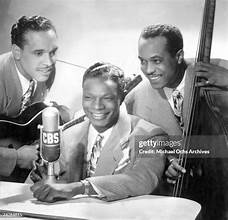
This period of Mr. Cole’s career really blows my mind, the perfection of the Swing feel is about as clean as it gets. There is also a beautiful lilt across most of these songs, gestures unhurried, where time feels like it slows. And beautiful craftsmanship in all areas. “In The Cool Of Evening” the interaction between the trio on this track is profound, it sounds simple but there is a lot going on, tempo shifts, role changes, dynamic subtlety and that drifting feel. “Smoke Gets In Your Eyes” Here Cole’s piano playing is showcased and he plays everything as a singer would even if he is not actually singing here. He knows songs as a singer does, which I mean as knows them deeply. The vocal pieces on this collection are excellent as well, it’s strange not to pick a 3rd(!) song featuring his voice.
Overall = 8.7 (10 – Infrequently does music sound like it can slow down time, but this music can. Get it!
Ludwig Von Beethoven/Arturo Toscanini/NBC Symphony Orchestra – Symphonies No. 2 & 7 – RCA Victor, 1949/51/63/90.
🎼🗣️🦴❤️⎄🗝️🗝️🇩🇪📀🃁 🏋🏽🫂🎗️⌛️:
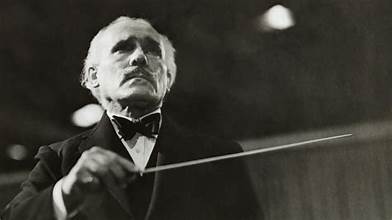
Classical music is good for – the music you have most likely heard, and can recognize, but not from actually having put the music on to listen to. Classical music also finds a way into our lives continuously, or copies of it do, meaning we all have a pretty good idea of who Beethoven is, even if we might not identify specific music of his knowingly. It is that level of iconic stature, and when I teach children about Classical music, one child always brings up Beethoven’s deafness from prior knowledge. Beethoven’s symphonies are masterpieces of conception, creativity, editing and his music is considered one of the catalysts that transitions the Classical period into the Romantic period of Classical/formal music history. Additionally, Toscanini is considered one of his most brilliant interpreters. In these recordings we have legendary music that has roots so deep it shapes our musical ear before we have heard it. “Symphony No. 7 in A Major, Op. 92: II. Allegretto”
Overall = 9.4 (10) – Great music in history. Get it!
& Symphonies No. 4 & 6 – RCA Victor, 1949/51/52/63/90.
🎼🗣️❤️⎄🗝️🗝️🇩🇪🦴📀🃁 🏋🏽🫂🎗️⌛️⎄:
Beethoven’s 6th symphony is probably the most famous of the 4 collected on these 2 discs that I am reviewing. It is unusual to have to choose a portion of a longer work, like a symphony, and extract it for a Play/mix. Classical music presents a bit of commitment to its listening experience, if you approach it traditionally. That commitment can include time, focus, the concert experience and also the frequent lack of vocals or, for us in America, the lack of English language. We need a lot of stimulation, brief if possible, to attract our ears. Formal music for listening is popular in a completely different way than Popular Music. I consider it important to listen to “The Classics” to understand music more thoroughly, though I also consider its importance to be a little over-blown. That opinion is coming from the perspective of a student of music and an educator of music who was required to develop my understanding of it. “Symphony No. 4 in B-Flat Major, Op. 60: I. Adagio – Allegro vivace”
Overall = 9.5 (10) – More great music in history. Get it!
Bill Lee/VA – OS/OST – Do The Right Thing (Score – feat. Branford Marsalis & Soundtrack) – Motown/Colombia, 1989.
🎥🎺🎷🎻⎄ 🗝️🎭♛ ⌘🔭🦴:
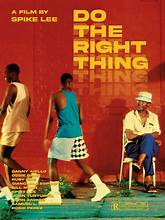
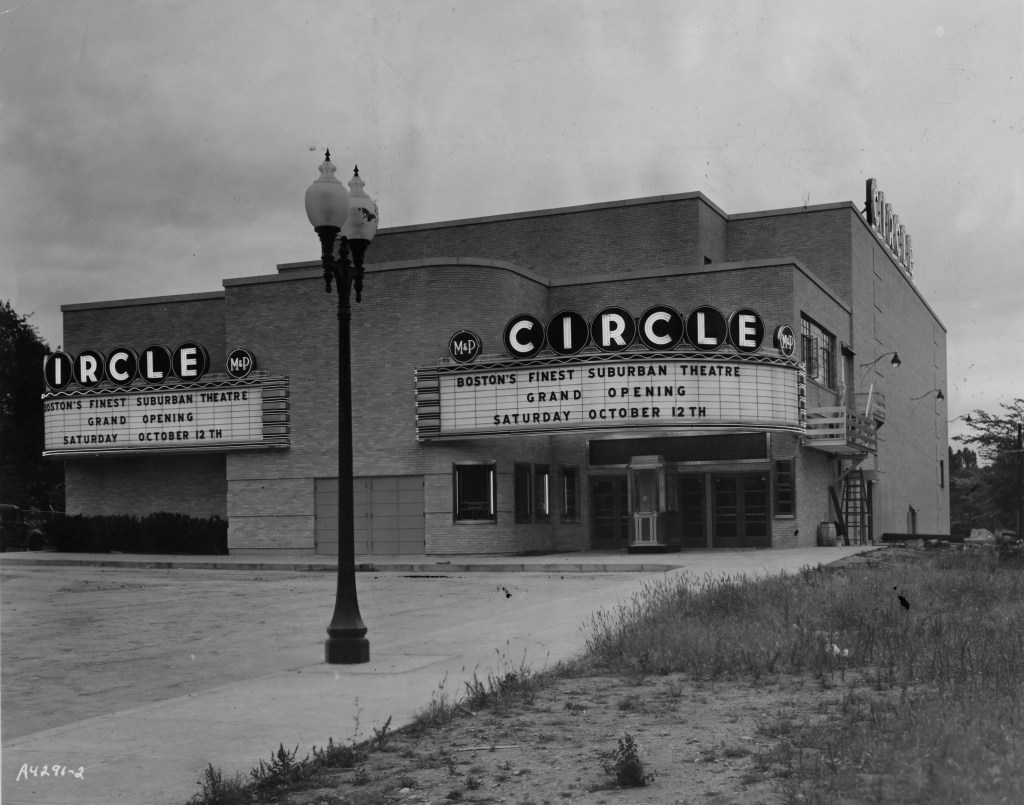
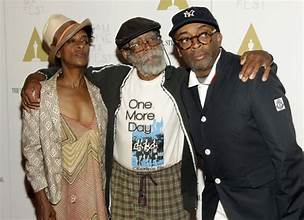
Do The Right Thing was a seminal film for me and I became a serious film fan around this time, when it came out in 1989. My friends and I saw it at the Cleveland Circle Theater and left with a feeling of transformation. Spike Lee was commenting on a world that we didn’t see clearly yet (I was 16). And I definitely did not understand who his father, Bill Lee, was. Nor did I recognize that this beautiful score was Bill Lee’s music. I was getting initially interested in Jazz at the same time, playing guitar and a year away from getting my first saxophone. I did recognize who Branford Marsalis was, and probably considered that the music was his. It is some of my favorite playing of Mr. Marsalis (on both this score and “Fight The Power”). I now understand the immense legacy of Bill Lee, from his wonderful, hard to find, Strata East recordings, to his many recordings as an important sideman and composer on Jazz albums, to being a session musician extraordinaire on some iconic songs like “Mr. Tambourine Man” and “Puff the Magic Dragon” and scoring most of his son’s early films. It is a deep and unexplored legacy that I encourage you to investigate his over 250 recordings! I believe he is one of the most under-recognized musicians in history. This score plays very well as a disc you can listen to, it doesn’t play – as typical scores do – in bits and pieces that lack resolution and need the film to appreciate. “Mookie (Orchestra)”
Overall = 9.2 (10) – A personal favorite. Get it!
🎥⨻🏋🏽💰⚒️✺🫧🔈🪩🎤🇯🇲:
The Soundtrack too! I don’t know how many films I have collected both the score & the soundtrack of? The brilliance of the soundtrack is how Spike Lee wove the diaspora of contemporary Black music into the film using the device of the radio station and its connection to the community. Sadly these types of radio stations are rare to find these days, that lack transforms the idea of how we discover (or fail to) new music today. Now we have a very incestual ear relationship with streaming services, where our tastes decide the content of what we listen to. A system of listening that is like a stagnant tide pool. We don’t hear things without prior interest as much. I became interested in a lot of different bands that I wasn’t familiar with from hearing this soundtrack. The biggest song, “Fight The Power”, was a Summer anthem. My first hearing of it was in the Egmont projects in their back staircase exits. Danny D. blasted it from the 3rd floor to a group of teens and it became a life soundtrack moment. How many songs do you recall from your first hearing? It was epic! Do The Right Thing taught its audience a lot of things, but one was the breadth and variety of Black culture and its varied opinions and beliefs. We refer to communities as if one entity, when they are wildly diverse, reef like social structures. I believe diversity builds strength and stronger people. “Fight The Power” Public Enemy with the extended sax solos from the film edit.

Overall = 6.7 (10) – A very sentimental collection of music for me. Get it!
Ethiopiques #23: Orchestra Ethiopia (1963- 1975) – Buda, ?.
🌎🇪🇹📣🔮⌛️:
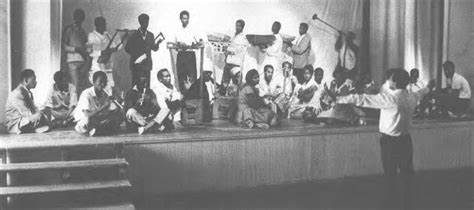
A collection combining the two Orchestra Ethiopia releases from the late 60’s to the early 70’s. This group was an orchestra of traditional Ethiopian instruments and they would tour presenting Ethiopian/African music to the world, sometimes as “The Blue Nile Group”. Though I believe this music is traditionally based, I am not sure that the music was traditionally performed by a large group or orchestra. And the musical directors for Orchestra Ethiopea were often people of non-Ethipian background, who would create larger, long-form, works (not included here on this collection) which I would need to do more research to decipher if that was a traditional Ethiopian musical form or if it was an influence of the outside world. Good music, it has a field recording-like sound and is also important for the preservation of musical traditions – even if these are perhaps presented for modern consumption. “Besetchet”
Overall = 6.8 (10) – Good music, hard to parcel the history, but valuable recordings regardless. Get it!
Jova Stojiljković “Bešir” & His Brass Orkestar – Blow Besir Blow! – ACE/Globe Style, 1989/95.
🌎🇧🇬🎺🕺 📣⚒️🎗️⌘ 🦴🥃:
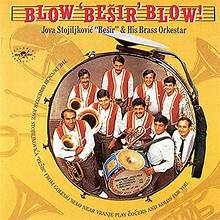
When you title an album something people must shout at you when you are performing, you can feel comfortable that it’s going to be exciting music. European marching bands are a deep cultural tradition, but recording albums wasn’t really a primary focus, so this is a good find. It is music for life, for celebrations, dancing and parades! Besir is a monster from Golemo Selo, delivering on the legens on the up-tempo songs and the brassy explosions of Brass increase the excitement. “Safetov Čoček”
Overall = 7.8 (10) – Lucky find. Get it!
Bulgarian Women’s Choir – Tour ’93: Melody Rhythm Harmony – Mesa/Blue Moon, 1994.
🌎🇧🇬🗣️🎟️🎨🦋🔭👣:
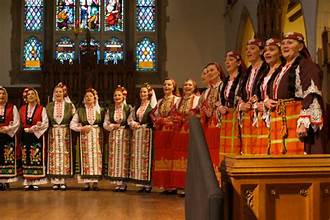
I am transfixed by their voices and harmonies. Several of the Bulgarian choir albums that I have found attempt to add outside/modern elements to entice Western ears. This recording is really just getting down to business and maybe a bit like what hearing them perform would be like. I think trying to capture what they do, rather than trying to reframe it, is a positive decision. Even in their collaborations within Pop music, as with Kate Bush, they appear and do what they do, which is appropriate, it is hair raising sonically – why mess with the goods! “Mechmetio” *I’m not positive that this is the same recording as is on the “tour” album, but it is live from the same time period, from the same orchestra and extremely intense.
Overall = 7.6 (10) – An example of one of the most beautiful and unique vocal styles of the world. Get it!
Enrique Chia – La Musica De Ernesto Lecuona – Begui, 2001.
🌎🎹🇨🇺⎄🎭🪦🧀👜:
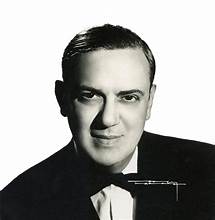
A collection of piano pieces with orchestra performing the works of a seminal Cuban composer who wrote many popular songs. I think the originals were ballroom types of pieces, lush and romantic, but this recording takes on a “Pops” orchestral feeling. It isn’t on local PBS but it could have been and it is designed to appeal to an older generation of listeners. I like it for having examples of these songs and a skillful pianist presenting them, but it is very much on the edge of being too sentimental for me. I think you could find this playing in a restaurant and it can recede into the background easily. I’m also not sure that you would clock the Cuban origins in this performance and the performer sounds equally lost in the sentiment, which increases the cheese. “Al Fin”

Overall = 2.5 (10) – Maybe a dream of what it was like in Cuba, described by Cuban Liberace. Get it!
Gal Costa – Cantar – Mercury/Universal, 1974.
🌎🇧🇷🗣️🫧🎭⨻:

Probably the most balanced of all the Gal albums I have reviewed so far. There has always been a song or two on the other recordings that I don’t favor. In this case the album is filled with really good songs, interesting arrangements and visits to a variety of different sonic places. I think the variety has been my only issue with the others – a Blues or a Rock song that seems out of place and comes off a bit cheesy. Not Gal’s fault, instead probably the production aspects were the problem, though she may have chosen, or desired to perform, those songs. This album has a distinctive variety of material, but it all fits and feels authentic. “A Rã”
Overall = 8.2 (10) – Great album! Get it!
& Pegando Fogo – Polydor, 1998.
🌎🇧🇷🗣️✪🫧🎭⨻:
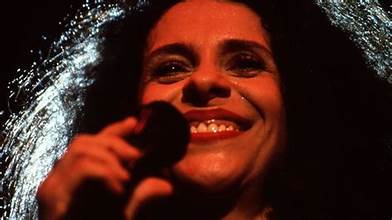
A hodge podge collection, possibly a discount batch, because the album title does not appear on her “legitimately” released discography. I don’t usually choose these types of releases, because they tend to exploit ownership and copyright laws. Their liner notes are often in other languages and deciding whether I have these songs elsewhere is difficult for me to track. The songs are great, but I think the curation is only looking at what is freely available to use and holds no overall sense of aesthetic design. These songs don’t really fit together in any complimentary way, veering from Samba, to MPB, Tropicalia, Disco, Rock etc. I accidentally grabbed this recording and then kept it because many of the original recordings aren’t available in America, (or at least hard to find). “Pais Tropical”
Overall = 3.7/7.5 (10) – The music is great, the collection release is not, it serves as a means to an end. Get it!
Duke Ellington – Black & Tan Fantasy: 1930-1931 – History, 2004.
Beyond Category ⏺️ ❂ 🎺🥁🏌🏿♂️ ⎄ 🎨 ✪ 🗝️ 🪄⌛️:

Swing bands, dance bands, would record their versions of Popular songs of the day, with a particular arrangement meant to showcase the band’s performers and strengths. In 1930 you were arriving at the crooner era, advancements in microphone technology ushered in a popular era for singers to become “lead” artists. Most bands worked with a variety of singers and integrated Pop material mixed into their showcase pieces. This was a necessity, because the bread and butter of their income was playing events, touring and concert performances. These bands needed to be able to play the newest, popular songs for the dancers. Ellington did this too despite the prominence attributed to his composer/arranger/band leader skills. Familiarity is one of the techniques for creating popular sounds and Ellington is indeed composing his own addition to the popular song library, while performing the music of others. “Old Man Blues” (1930 Unissued take).
The 1931 disc has many variations of the same Pop songs, with different arrangements and singers – even using different styles for the same material. Considering that these tracks were not really meant to be consumed in collection form, you would pick them up as 2 song discs, you would probably avoid the contrasts. Two people might know 2 different versions of the same song as the “original”. Some questions arise as to why they have different versions – Were the different versions meant to refine a song and get at that hit? Was it an opportunity to get paid for the same material and use the copyright laws of the era to their benefit? Were the different singers trying out the material and seeing who would have the most success? The band arrangements change too, to my ear they see-saw the prominence of the band vs. voice, deferring to the voice and style of the singer. They all sound great, but it would be interesting to decipher the intent of the multiple recorded versions. My feeling is that because the timing aligns with the rise of Popular singers, based on recording technology, that they were trying different artists out, looking for whom they would want to perform with or being asked to support a popular singer. Ellington eventually settles on certain singers who become part of the group, at least for a while.
Overall = 8.3/7.5 (10) – Listening to two takes of the same song can offer the listener insight into one of the great bands of its day. The second disc features too many Pop songs and versions of the same songs. Get it!
Miles Davis – Ascenseur Pour L’échafaud (Lift To The Scaffold) – Fontana, 1957/58.
Selim Sivad 🎺🗝️🪄 🎥🎑🌃🤿🕸️➕✪⎄:

Miles recorded, or contributed to, four film soundtracks, but most of those were towards the end of his life, this is the lonely, only film music from early in his career. His music has been used for many films, because he was incredibly expressive and an innovator in the creation of mood and accentuating the visual aspects of sound. This music here is an ominous dream and was a full lean in the direction of modal improvisation that he was experimenting with at the time. Listening to these pieces for enjoyment is difficult because they have awkward cuts, abrupt endings and though they sound of a kind they don’t actually segue very well. That is often the nature of film music, particularly from that time period. The CD I have has loads of alternate takes which increases the awkward listening, but the music is excellent and even hits at a sort of small group version of what Miles would be doing with the larger ensembles in his oeuvre. It presents as a concerto-like feature for trumpet. “L’assassinat de Carala”
Overall = 7.3 (10) – I would love to hear this music performed as for the audience, not film. Get it!
Prince – Sign Of The Times [Box] Live in Utrecht (disc 7) – Warner, 1987/2020.
The Purple Patch Ƥ𖫪 🫧🦄🫦 ⏺️🎟️ 🎬⎄ ✪ 🗝️💰 💰 💰⚒️🎸 ❤️🔥 👁️🗨️ 🔭 ♛:

Prince was chosen as Rolling Stones top performer/performance in 1987 and watching the live videos of Sign Of The Times revealed the intent of a lot of songs from the album. The songs were designed in a suite like manner and he mostly sticks to their album sequence live, but many of the songs have important roles in the live performance. For example they can feature individual band members, open up solos, or in the case of a few songs, the songs I didn’t really understand when I first listened to them on the record, offer visual elements with dance features or acting out skits that build visual story telling into the concert. When the album came out it was clear that Prince was pulling songs from a diaspora of musical styles, showing he could perform everything – make it his, with a few songs which sounded like they were from outer space, but watching the concert footage made it clear that he was also building a legendary performance style connected to the album. “Hot Thing”
Overall = 9.3 (10) – Often cited as the best live group of its day. Get it!


