Lula Côrtes e Zé Ramalho – Paêbirú – Normal, 1975.
🇧🇷🌎🫧🪨⨻😵💫🫧📣🔮🪄🫂 :
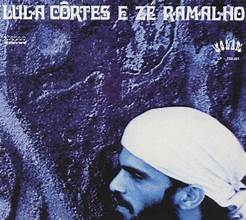
An eclectic Brazilian Pop album which draws from Rock, Psychedelic, traditional Brazilian Folk music, Classical and Improvisational styles. There are Funk Bass lines, giving way to Classical sounding guitar with a drifting flute and bird song mixed in. Then something electronic and pretty. It’s my favorite form of diversity, drawing and pulling from all the corners. Additionally, it is a legendary and rare recording, the original pressings were lost in a flood and the artists went on to full careers after this debut, and this went unheard initially. The music can get a little lost in the woods, but always has a distinct vibe. “Maracás de Fogo”
Overall = 7.8 (10) – Another Brazilian trip out! Get it!
John Coltrane – The Complete Africa Brass Sessions – Impulse, 1961.
🎺 ⏺I!➕ 🎷🪄🥁𝍍🎶📀🗝️✪🎨:
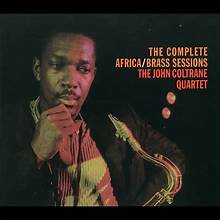
This is Coltrane’s only large band recording, as a leader, until using larger ensembles in his Free period. Successful Jazz artists usually follow a path – that their label encouraged, or curated, where they record “specialty” concept albums outside of whatever their classic popular sound is. For Coltrane whose sound was a small group focused on intense improvisations this led to: this large ensemble recording, collaborations with Duke Ellington and Johnny Hartman, a few live performances, a ballads album and a long form composition in his suite & masterwork A Love Supreme. Those recordings would have been considered something special and different to offer the fans and also expand his audience, who might find these settings desirable. There were also plenty of quartet/quintet recordings in between those recordings.
The orchestrations were provided by Eric Dolphy and McCoy Tyner, not Coltrane himself, which is surprising to me because Coltrane wrote beautiful songs and in his improvisations clearly absorbed an incredible amount of knowledge that included theoretical concepts and interests beyond Jazz. Perhaps, he wasn’t as comfortable with writing parts, arranging or orchestration? This recording is designed to feature the soloist, in a concerto-like setting, with a collection of pieces that I would describe as “Modal” Big Band (featuring: long stretches in “modes”, drones, sparse accompaniment and vamps). Most of the solos featured are Trane’s. The ensemble has a great sound and Trane never sounds less than otherworldly by this time. It is only in comparison to his other works of the time period that suggest this is not the most peak album of Trane’s to hear. He was releasing masterpieces regularly in that period, this is a masterpiece, but one of several from the time. “The Damned Don’t Cry”
Overall = 9.1 (10) – A rare setting to hear Coltrane during his peak. Get it!
Benny Carter – Cosmopolite: The Oscar Peterson Verve Sessions – Verve, 1952/1954.
🎺 ⏺🎷🪄🏌🏿♂️🎹⎄🎨🫂:
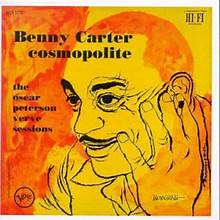
Exquisite small group Swing and alto playing. Oscar Peterson became the “house” piano player for Verve/Norgran, accompanying a variety of Swing legends in the Post-Bop era, these recordings were in addition to his own expansive collection of recordings as a leader for the label. Benny Carter, Swing legend that he is, band leader, arranger, composer, alto saxophonist and trumpet player, had a 7(?) decade career. He continued to put out relevant recordings into his 90’s! These recordings are lush with ballads and Standards, and you can really get a deep sense of Mr. Carter’s alto playing (he being one of the big 3 Pre-War Alto Players) on these recordings. Mr. Peterson was a sensitive accompanist, despite his vast technique he never intrudes on the soloist. “Laura”
Overall = 7.3 (10) – Some of the great Benny Carter in a featured soloist role.Get it!
Kenny Burrell – Introducing: The Complete First Blue Note Sessions – Blue Note, 1956. [Including: Introducing Kenny Burrell; Kenny Burrell Volume 2 & K. B. Blues]
🎺 ⏺ ♫🪄🎸𝍍🎶🪄🪘:
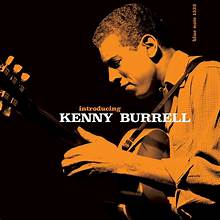
Though Kenny Burrell would release 7 Blue Note albums between 1956-1963 and then return to the label later in the 80s. He recorded equally as frequently for other labels and many of his most esteemed recordings are to be found on those other labels. His Blue Note recordings I find simpler, more focused on Mr. Burrell himself than the band mates or concepts structuring the sessions – like Guitar Forms with a big band and others with equally popular guest soloists, like John Coltrane. It is a little surprising to find Candido playing conga on the first half of this 2 disc set, because it is a debut and early in both of their careers. Candido would also release his debut recording as a leader in 1956, so both musicians were on similar career trajectories. It also suggests that this Jazz/Latin fusion was important enough to Burrell to include it as an introduction to his sound. The recordings are primarily Standards and Blueses with “Swing” conga for the most part – not really Latin repertoire. Mr. Burrell was a very versatile player, a “stylist” who could fit in any situation. I use the term “stylist” for performers who have a distinctive style that they can bring to any material and make it sound personal and authentic. For the guitar playing alone I find these recordings to be one of my favorite examples of Mr. Burrell’s sound. “But Not For Me” & “D.B. Blues”.
Overall = 7 (10) – Prime Jazz guitar playing. Get it!
Willie Colon – La Gran Fuga – Fania, 1970.
🌶️💃🏽🪘⏺⎄🗝️ ⚒️🎗️⚙︎ 🫂:
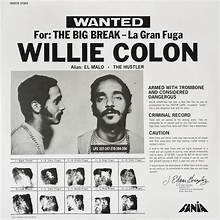
Another classic Willie Colon album. I don’t think this recording had any hits, but it perpetuates the “gangster” style album covers and features a complete array of Salsa bangers. I particularly dig the songs where they transition into a new section towards the end. They are usually Coro, or Solo, sections which kick in with a different groove. I have begun to recognize the preparatory horn parts that signal those transitions and that read makes them all the more exciting. In Jazz that feature action would be more abrupt and concealed, in dance music it is setting up for the dancers and becomes intuitively sensed. “Panamena”
Overall = 6.8 (10) – How many classics did Willie Colon create? Get it!
Cannonball Adderley – Presents Love, Sex And The Zodiac – Concord/Ace, 1970/1974/2011.
🎺🎷📀🗝️✪🪄🥃🪦✊🏿🧀🫂:
One of two “Zodiacs” that Mr. Adderley presented, he also appeared on his brother’s Soul Zodiac which came out in 1972 – 2 years after this album was recorded and 2 years before it was released. That’s a strange coincidence to be involved in two such projects, moreso because this is a Soulful Zodiac too? Rick Holmes, an L.A. D.J., is the narrative voice on both recordings and that may have been the instigation for the Zodiac themes. I do not have the second of these Zodiacs so I can’t compare, but my feeling is that the music here isn’t well conceived. Cannonball pops in and out, the themes don’t really develop or have significant solos. It feels incomplete. The narration is some sort of dull sex instruction, or “self help” reading and mostly to be ignored. I think they must have been on something and it’s result is confusingly weird. “Taurus: Wampus Cat”
Overall = 4.2 (10) – Musically a bit of an afterthought, otherwise interesting for its strange capturing of Zodiac culture of the 70’s. Get it!
Bobby Hutcherson – Mosaic Select #26 – Mosaic/Blue Note, 1974-77/2007. [Includes Cirrus; Inner Glow; Waiting; The View From Inside & Knucklebean]
🎺⏺️ ⏺ 🪄⑉🗝️🔮➕🧀👜:
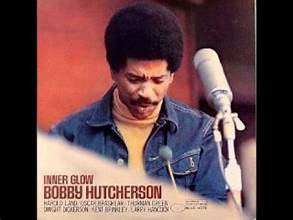
A collection of mid-70’s, lesser known, Bobby Hutcherson recordings. They are probably lesser known because of their time period, the mid-70’s Jazz desert. These recordings have some fusion elements, but do not go full force in that direction. Instead there is a blend, mixing fusion, modal Jazz and a “contemporary” Jazz sound (something inching towards a “Smooth” Jazz – which wouldn’t have had a name yet). These recordings have a sophisticated sheen and are clearly deploying some qualities of Popular Funk and Disco music in the mix. It gives a distinctive sound over 5 albums, despite a varied cast of musicians. The solos are far more intense than you usually hear against these lush sound palates. Despite the Popular influences I don’t hear a considerable amount of Hip Hop Samples culled from these recordings, some of Bobby Hutcherson’s other recordings have been Sampled. Most Jazz artists needed to negotiate the musical terrain of each new era and Mr. Hutcherson had a distinct vision in his approach. He sounds in prime form across these albums and in about a decade or so he would return to a more acoustic style of Jazz playing with a repertoire which focused on Standards. This makes the fusion aspects in these albums welcome explorations in a short period of his career. “Later, Even”; “Why Not”; “Hangin’ Out (With You)” & “Boodaa”
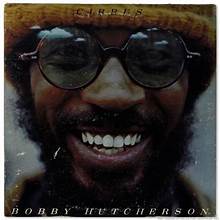
Overall = 7.3 (10) – One of my favorite musicians, though these are not necessarily considered his prime recordings. It’s a collection that is probably for completists or if you dig on this proto-Smooth sound it might be a prize. Get it!
Pepper Adams – Quintet – V.S.O.P., 1957.
🎺🎷𝍍🎶🪄:
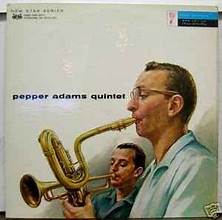
Another early Pepper Adams recording as a leader, with a mostly West Coast band. Though Mr. Adams was a Detroit guy; his initial successful, professional career began with Stan Kenton on the West Coast. Mr. Adams has a more East Coast sound, hard and fast, so his early releases with a “cool” aesthetic in the marketing seem a little miscast. His later recordings find him in the best settings for his sound – Hard Bop, Be Bop and Big Band. He is one of the great Baritone soloists, so these albums have value and are fun, they just don’t set him free or showcase his best playing. “Freddie Froo”
Overall = 5.1 (10) – Hard swinging, yet somewhat mild, Bop. Get it!
Betty Carter & Ray Bryant – Meet – Columbia, 1955-56.
🗣️🪄🎺🗝️✪🥁🏌🏿♂️🫂:
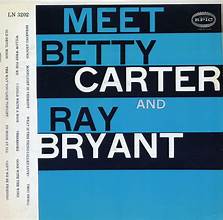
A mutual debut as leaders album, featuring mostly Standards, with a back up big band on a few track, then a few smaller group tracks with vocals and piano trio on the second half of the disc. It’s not their first gig, but Mrs. Carter and Mr. Bryant do not sound like they are in their 20s on this recording, it is assured and well represents their styles. The label must have been excited about their potential or the artists themselves had a commitment to each other, to marry their debut recordings. I recently picked this CD up and was surprised that it has taken me so long. I am a Betty Carter fan, it is a great debut and I’m not sure how frequently she recorded with a large group during the rest of her career. Her later career involves a lot more experimentation, but this album is a great comparison piece when familiarizing yourself with her style and how she treats the Standard repertoire. The piano trio sides are a bonus, nothing out of the ordinary, but Ray Bryant leads a crisp and clean sounding trio. “Runaway” & “Threesome”
Overall = 7.1 (10) – Debut recordings are a critical “get” to understand a career. Get it!
Rosemary Clooney – Love – Reprise, 1963/64.
🗣️🎺🫧🎨🎭:
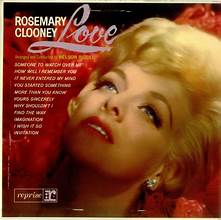
Swinging Pop vocals, a collection of ballads, including many rare and unusual song choices, with lush orchestration by Nelson Riddle. Interestingly, Riddle and Clooney were apparently “together” at this time. It’s an incredible album, top notch singing, balladry, orchestration and the song choices are exciting – even suggesting a few that I would love to learn. Apparently this was recorded, not released and then sold to Reprise records when Mrs. Clooney was signed there and then released 4 years after it was recorded. It was kind of a lost album and I’m not sure if it made any significant waves when it was released. “It Never Entered My Mind”
Overall = 7.6 (10) – Maybe my new favorite Rosemary Clooney album. Get it!
Dalida – Accompagnee Par Raymond Lefevre Et Son Orchestra – Barclay, 1957/2002.
🗣️🫧🎼🇫🇷🇮🇹 🎭🎨 🔮🧀🫂🪦👩🏼⚖️📹:
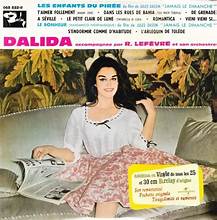
Born Italian, naturalized French, Dalida is a Pop vocalist featured with a Pop orchestra. It is a cheesy and dramatic affair. I’d never heard of her before finding this disc (it was a cover purchase), but Dalida was a huge star in France. This kind of orchestra, at times, reminds me of old cartoon scores, because the musical clues help us visualize the drama unfolding in the arrangement. Dalida also was a successful actress too, which for this type of music is a naturally complimentary career – any of these songs could be from shows. “Histoire D’un Amour”
Overall = 2.9 (10) – Thin, glistening International Pop. Get it!
Vashti Bunyan – Lookaftering – DiCristina, 2005.
🪨🫧 🪩🗣️⎄🎑🌃:
This album reads as if it were recorded around the time of Mrs. Bunyan’s first album from the 1970’s. The gorgeous musical accouterments give it away though, they are too present in the recorded mix to be dated from the same period. Mrs. Bunyan’s voice and lyrics can read a little too idealistic and Hippie for me sometimes, but that isn’t necessarily a complaint. I’d like a little more tragedy, but these are beautiful songs which stand out even more when you realize this was her comeback album, and her first album was a legendary collector’s “secret” classic recorded decades earlier. This album was encouraged by fans who rediscovered her debut, it is a quiet gem and has a consistency across such a wide gap of time that suggests the authenticity of her persona. “Here Before”
Overall = 6.9 (10) – A great edition to the Folk dream world. Get it!
Johnny C – The Fantastic Johnny C: Booaloo Down Broadway – Phil-La/J/G,1968/1998..
🔈✊🏿🪩💰⌛️⌘:
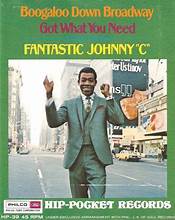
Early Soul from Philly! It seems like Johnny C really only released one album, which had a few hits, but I think those hits were supplanted by other Philly artists over the years, because I haven’t heard them before. Nor had I heard about The Fantastic Johnny C, despite living in Philadelphia for 3 decades. I discovered him after buying this disc. It’s a solid collection of songs and maybe more interesting to me based on what was happening in Philly in 1968 and discovering a little more of the picture of the vast amount of Popular music coming from here. “Boogaloo Down Broadway”
Overall = 3.7 (10) – Some hits though they sound very similar to other music of its time. Get it!
Anouar Brahem – Barzakh – ECM, 1991.
🎺🌌🎑🪄📣🔮🇹🇳🌃:
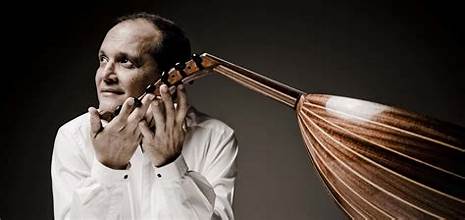
Music from an unusual trio of oud, violin & percussion, quiet and intimate. It features a few solo oud pieces too. I find it interesting to contrast this music with Rabih Abou Khalil’s. Their careers started around the same time and Mr. Abou Khalil also appeared on ECM initially, but then mostly recorded for the Enya label. Mr. Brahem continued with ECM. I think Mr. Brahem’s approach, compositionally more spacious, subtle improvisationally, and less weird, probably fit the ECM concept better, but the two oud players and composers have some intriguing parallels over their careers. “Ronda”
Overall = 4.7 (10) – Pretty, sometimes a little non-descript. Get it!

 Found Sounds