Overall = 2.7 (10)
Vinicius Cantuaria – Psychedelic Rio – Sunnyside, 2024.
🇧🇷 😵💫 ⎄:

I might describe this as Dreamy Brazilian Cowboy music rather than Psychedelic Rio. Perhaps the lyrics are the trippy part and I just don’t understand Portuguese? The album has some creative guitar work and the songs create distinct moods, but it doesn’t compare to the psychedelia of late 60’s Brazilian groups, like Os Mutantes. I am otherwise into it. It is a later Cantuaria album that revisits many of the interesting chord progressions and modern Brazilian compositional styles found in his earlier works. I am a fan of all of those elements, but It is conceptually confusing, and it appears to be a self-released album that isn’t listed on his Wikipedia discography? ”Berlin”
Overall = 4.7 (10) – There are some nice songs here, but the Psychedelic title set me up for a different anticipation.Get It!
Alice Coltrane – Journey In Satchidananda – Impulse, 1970.
🎺 ⏺I! 🪄 😵💫 ⎄🧫🎹🎷👁️🗨️🦋🎑🫂:
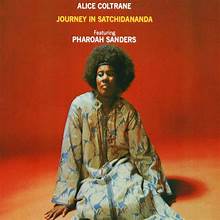
One of my favorite Alice Coltrane albums. I particularly love her harp version of “Sheets of Sound” blended with the bass drones and meditative sensibility. I find it a little more settled than the earlier, previously reviewed, Ptah, the El Daoud and Pharaoh Sanders’ ability to vocalize through a saxophone is remarkable and found in its natural habitat here. He plays mostly soprano saxophone and his tonal experimentation offers a different perspective in the Soprano range. Familiar, but focused in a fresh way. Overall the album creates a distinct vibe and I think Mrs. Coltrane builds on this sound from here on out and she was a progenitor of this style of devotional Jazz. “Shiva-Loka”
Overall = 9.1 (10) – Set your mind free. Get It!
Ray Brown – Jazz Cello – Verve, 1960.
🎺 ⏺ 🪄 🎭🏌🏿♂️🥁:
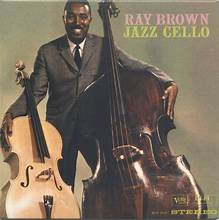
One of Jazz’s greatest Bass players, here performing on Cello, which offers a very different perspective on his playing. Ray Brown is both the leader and the primary melodic voice on this recording. He sounds great and has a deft, swinging band accompanying him, with some smooth arrangements. There are other Jazz Cello/Cellist albums, but rarely is the Cello featured in this manner. Mr. Brown is most popular for his supportive role in ensembles, particularly with Oscar Peterson. He rarely has the opportunity recordings to play melodies and typically solos less frequently. He most known for his perfect time and exquisite swing. This recording is an opportunity to hear a different Ray Brown, from hundreds of other recordings. I consider it an important responsibility to hear artists in their most popular moments, with their peak collaborators, any well considered feature showcases (which this album is), live performances and any recordings which are unusual for their career (which this album also is). I think if you investigate a musician’s recording career in that manner it gives a pretty full picture of their artistry. Then if you love them you try to find it all. That list is probably too many settings for the casual listener and many artist’s careers don’t receive all of those opportunities – short or less successful careers (usually I just find everything from those folks). I think it is great to here Mr. Brown take the space in the forefront here, taking melodies, solos and leadership – it shows a full perspective of the man, despite it being on his doubling instrument. “Almost Like Being In Love”
Overall = 7.4 (10) – Ray Brown sounds great on cello. Get It!
Tina Brooks – The Waiting Game – Blue Note, 1961.
🎺 ⏺ ♫ 🪄 ⎄𝍍🎶:
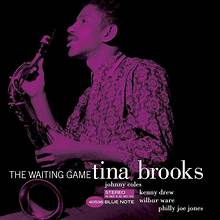
High quality Hard Bop. Less Messengers-y than the previously reviewed Minor Move, but with a similar approach to song curation – meaning Messenger like mix of Blues, Soul, popping Riff based tunes and a Standard or two. It is an equally amazing group on this recording, but also a sort of oddball assortment of great players: Johnny Coles, Kenny Drew, Wilbur Ware & Philly Joe Jones. I’m not sure if those four have ever recorded together any other times? The songs are mostly penned by Mr. Brooks, he wrote good themes and creates an environment for soloing of renown. I think drug problems were the cause of Mr. Brooks short career and he also maybe arrived at a time when popular attention was being placed on Modal, Avant Gard and stretchier Jazz. The straight ahead Hard Bop market probably didn’t make room for artists who weren’t the big names, though there are plenty of high quality recordings if you know where to look. In this case Mr. Brooks, he was perhaps playing in a camp which already had plenty of stars, and his 4 leader recordings are not as well known, but of no lesser of quality. “David the King”
Overall = 7.3 (10) – Fetching tone, good themes and high quality sidemen.Get It!
Willie Colon – The Hustler – Fania, 1968/2007.
🌶️💃🏽🪘🫂🗝️⎄⚒️♛🆑⚙︎:
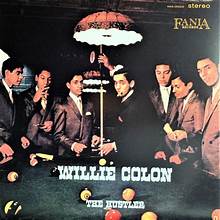
I’m not sure this is my favorite Willie Colon album, but I return to it a lot and when I do it is. His trombone tone is so intense and raw, it raises hairs and the man can write a vamp like almost no one. Every theme he writes is anthemic and he also draws from all types of traditional Latin music, blending them into contemporary Dance fusion. I can’t speak much Spanish, but every song unfolds like it is a story. I question if the cover art, the gangster imagery, does Mr. Colon’s music a disservice. Many of his covers playfully glorify that tough guy image, and were probably successful advertising, some of the songs I know tell those tough guy tales, like Ruben Blades’ “Pedro Navaja“. This pre-dates Rap album covers which present a similar style of imagery by about a decade and a half.It also seems to predate popular Blaxploitation films and The Godfather (1972), both of which really popularized gangsters as protagonists. Maybe I should reconsider and offer Willie Colon as the trendsetter! “The Hustler”
Overall = 8.2 (10) – Great album, and of a string of them! Get It!
Rabih Abou-Khalil – Hungry People – World Village, 2012.
🎺 🪄🇱🇧⨻🧫👣:
More of that wild, “Popeye” scatting in Middle Eastern Fusion! This album is released on a new label for Mr. Abou-Khalil, but the recording retains similar concepts, and timbres, found on the previously reviewed Rabih Abou-Khalil albums. It seems somewhat lesser in magnitude in comparison to those earlier albums, but I can’t put my finger on a reason why. Perhaps it is the continued instrumental palate reaching some kind of plateau, though it is still an exotic sound. But we have heard several examples of this unusual sounding group and maybe my ears have acclimated. The music is definitely on the same level, though I’d like it to go off the rails every once in a while, it sounds with a consistent sense of restraint – challenging material, well practiced hands, someone should F around now and then! “When The Dog Bites”
Overall = 6.1 (10) – It’s a good one, maybe if I heard it first I’d like it more? Get It!
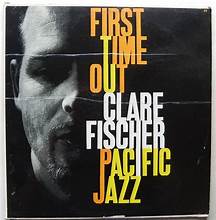
VA – Mosaic Select #19: The Pacific Jazz Piano Trios – EMI/Mosaic/Pacific, 1953-1963/2005. [Includes – Trio: Russ Freeman/Richard Twardzik, Russ Freeman – Trio & Jazz Swings Broadway; Jimmy Rowles – Rare – But Well Done & Pianist’s Galore; Clare Fischer – First Time Out & Surging Ahead]
🎺⏺️ ⏺ 🎹 🪄 ✺ ❂ ⎄🆒🏌🏿♂️:
I particularly searched for this collection to acquire the Clare Fischer albums. Dick Twardzik I am into too, but I already had a copy of that split album with Russ Freeman. I had wondered, since discovering that Mr. Fischer arranged a lot of Prince’s music, what his earlier Jazz sides and compositions sounded like. Twardzik was an outcat among outcats, so exploring his material had already been a pet study of mine. The other pianists on the set are nice bonuses accompanying those harder to find performers. I am a big fan of Piano Trios as a style, I like discovering how each combo arranges itself and explores the music is an endless treat.
Despite their Pacific Jazz/Trios connection these artists, and their albums, are pretty different in content. The Freeman side features a first choice West Coast band member, both Cool and Swinging. The Twardzik thorny and odd, with plenty of originals presented on his side of the recording. Jimmy Rowles is revered as an accompanist and he brings a bright, clean Swing vibe to a collection of mostly Standards. Clare Fischer lies somewhere in between. On these recordings, and in this particular place in his life, he seemed to seize the opportunity to showcase his songs and his playing. He is experimental in a more contained way than Twardzik. Half of the total collection is Fischer recordings, these are great to find because he and Twardzik are the least known and have the most difficult albums to track down. Twardzik I believe had the shortest career and Fischer is more well known for his poorly acknowledged arrangements of Pop music – but not really well known for that either, he is more of a studio guy in a sense there. I like hearing both of their compositional personalities, but Twardzik wins the song title sweepstakes. “Albuquerque Social Swim” by Dick Twardzik & “Free Too Long” by Clare Fischer
Overall = 7.6 (10) – Great set, also a variety of performers, putting it on in one go is probably a no. Get It!
George Adams/Don Pullen Quartet – Life Line – Timeless, 1981.
🎺 🪄🎷🎹🧫🫂⨻:
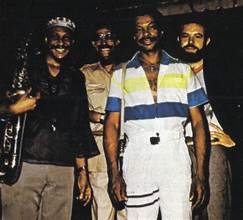
Vital, intense music, which crosses genres and plays to the full spectrum of emotions. Mr. Adams will scream to infinity and then swerve right back into some gut bucket swing. Mr. Pullen will knuckle punch his keyboard in a sweeping glissando and then spring into a tightly locked line or rousing Gospel-like chords. This was a great partnership that really embraced a wide range of styles, this song for example,“Seriously Speaking”, Adams sings, there is a juke joint Blues feel and then Adams rips some wild lines from the future and then into some kind of Soul-Funk Blues with Adams’ switching back and forth voice to horn, even a little flute at the end – the flute sounds forgotten based on its late arrival, but not out of place.
Overall = 6.6 (10) – A year late made a difference for me (see below).Get It!
& George Adams/Dannie Richmond – Hand To Hand – Soul Note, 1980.
🎺 🪄🎷🧫🫂:
It’s barely part of that era, but this is 80’s Jazz and it has an audible change in the recording style. In the late 70’s and early 80’s Post-Fusion, Disco popularity and the arrival of the Digital Age provided an uncomfortable journey in recorded Jazz music. The electronic components, what became popular: synths, drum machines, invasive studio production changed the recording medium . Jazz recordings from this time often seem uncertain of how to employ the possibilities, maybe the artist do too. A lot of these recordings have an overall sound that doesn’t always appeal to me. Most of this album leaves me wondering why was this music recorded, it doesn’t seem terribly memorable, though it features great players and has some interesting songs and solos. Jimmy Knepper consistently stands out, but I think the recording process subdues this music, I am unmoved by most of it and in other recordings I have been moved by all these performers. I wonder if the life was extinguished in the recording process. “Joobubie” A Hugh Lawson tune.
Overall = 4.2 (10) – All of these players have greater moments elsewhere. Get It!
Ethel Ennis – Sings Lullabies For Losers/Change Of Scenery/Have You Forgotten? – Fresh Sound Records, 2012.
🗣️ 🎺🫧🏌🏿♂️🥁❂:
A voice from Baltimore, Mrs. Ennis had some early stabs at national popularity but remained rooted in her hometown. She captured a few nationally popular moments, but mostly performed regionally. Mrs. Ennis is well supported on this 3 albums collection, she has a strong voice – not too distinctive, I wouldn’t be able to pick her voice out, but has excellent phrasing and she performs many well curated Standards. The results will not replace the most appreciated or well liked versions of these songs, but I appreciate her artistry and the arrangements supporting her voice. There are a few songs that stand out and I am interested in learning, based on her versions. “Off Shore”
Overall = 5.6 (10) – It collects 3 good albums from a neglected singer from Baltimore. Strong Jazz/Pop vocals.Get It!
Boredoms – Pop Tatari – Reprise, 1992.
🪨🫧 🪩🇯🇵 😵💫⨻🧫🥃:
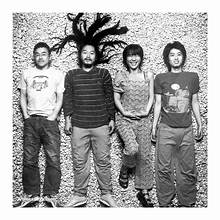
Somebody tell me what just happened? If you gave me a blindfold test I would claim it was a Muppet Thrash Punk band that uses a lot of jagged sample-like loops. There is also some smash & grab guitar work and frequent strange, little, electronic interjections. Despite the chaos it is pretty listenable and interesting throughout the album. Other albums of theirs do not sound like this at all, but if you like the Weird then this album is pretty essential.“Bore Now Bore”
Overall = 6.5 (10) – Not for everyone, cohesive chaos and I enjoy self referential song writing.Get It!
James Brown – James Brown’s Funky People: Lyn Collins; Fred Wesley & the JBs & Maceo & the Macks – Polydor, 1986.
🔈 𖫪 ✺ ❂ ⚒️🏋🏽 ⚙︎:
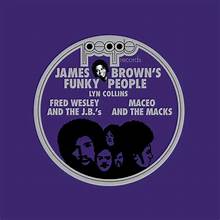
Every song could yield multiple samples. Some of the music could be instrumental versions of original James Brown songs, but rebranded for a fresh sideman project. Some of the music is James Brown as a producer presenting Lyn Collins. Mrs. Collins, is sort of a female version of Mr. Brown and was being produced and promoted by him. We don’t really recognize that the biggest, most popular artists often expanded their business plan to include other artists and outlets for their music. It happened a lot, it was certainly a smart business plan for maximizing one’s popular cache. James Brown’s version mostly featured his sidemen, so he got them paid, cultivated their names and got paid himself. “Parrty (Pt. 1)” by Maceo & the Macks. Releasing these (mostly) Funk instrumentals can be seen as one of elements that will lead to rap music, musically, beyond their value as samples, because you could rhyme over the grooves.
Overall = 6.8 (10) – Every beat is crisp, you only miss the man a little bit. Get It!
& Revolution Of The Mind – Polydor, 1971.
🔈 𖫪🎟️ ⚒️ ⌛️💰🎗️🏋🏽 🕳️ 🕸️🫦 ⚙︎ 🗝️:
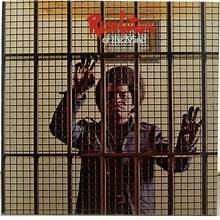
Every song could yield multiple samples. This album is a live collection culled from a few Apollo shows in 1971, it was James Brown’s 6th (of 8) live albums from around this time. Live albums like this can also serve as “Greatest Hits” albums, featuring the artist’s most popular songs for a live audience. This album is also a conceptually new version of his band and a debuted a new sound. You can’t beat this band live, highly intense, and their connection is incredibly deep and precise. James Brown the showman is evident throughout these concerts as is his Hype People who rotate up and “Rap” here and there, it creates the feeling that a critical event is captured on the document. If you want to point a finger, maybe those “raps” spawned a new form of music. Add in an ecstatic audience, a world class band feeding them and one of the great performers of all time bringing everything to its center.
Overall = 8.2 (10) – And with JB in there the music pops even further.Get It!
Paul Bley – The Paul Bley Quartet – ECM, 1988.
🎺🌌🎑 🪄🎹🧫:
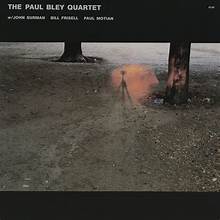
This group, unlike the following reviewed later album, mostly performs as an improvising group, the other album is more solos and duets by 4 people. It makes me wonder about the decisions for both concepts, were they aesthetic or out of necessity? I think I enjoy this album more, but also was expecting something more like this when I picked up that CD, so I can’t decide if the expectations delivered a less favorable reception on my part. It is challenging music, with many striking moments, but it also carries an air of uncertainty, because it is clearly leaning into free improvisation. “One in Four”
Overall = 6.2 (10) – All of the participants with big ears and making the moments happen. Get It!
& In The Evenings Out There – ECM, 1993.
🎺🌌🎑 🪄🎹🧫:
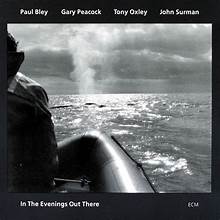
This recording seemed like a quartet and is billed as co-leadership with Tony Oxley, Gary Peacock and John Surman – all leaders in their own right. However, it is really a collection of solos & duos with one quartet piece in the center. I wonder if that was intentional and what the recording session was like or if these pieces were gathered from several sessions? It starts vibrantly, but then sort of falls into the background as you continue to listen, with another spark of engagement at the end. There seems to be a mix of composition and free improvisation though it is a very subtle distinction between the two on this recording. “Note Police” Paul Bley
Overall = 5.3 (10) – I am maybe disappointed by the lack of group interaction, more than anything actually being wrong with what is here.Get It!

 Found Sounds