Gal Costa – Gal Costa – Universal, 1969.
🇧🇷🗣️🫧⨻🎨🎭🧀⚙︎:
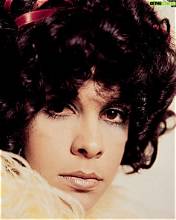
Not her debut, between the first 3 decades of her career she released 6 albums with titles using some form of her name! This is an aspect of Brazilian music titling fancies common to most Brazilian artists and also that they often have multiple names (usually first, paternal and maternal last and then often from a location). This is a really solid album. Frequently in Mrs. Costa’s career, there seems an intent to showcase her voice in English and in Popular musical contexts of the time. In this case I think the song “Baby” was a very successful example of that, but the song doesn’t really work for me, because it seems too cute and the Rock/Pop elements seem too confectionary. There are other songs that are too cute, but they are of a guilty pleasure for me and ultimately it is a well balanced album with plenty of other great songs that balance things out. “Lost in the Paradise” & “Se Voce Pensa”
Overall = 7.4 (10) – Another Brazilian favorite. Get it!
John Coltrane with Eric Dolphy – Evenings At The Village Gate – Impulse, 1961/2023.
🎺 ⏺I! 🫂🪄🗝️🗝️🎷🎟️🧫⎄:
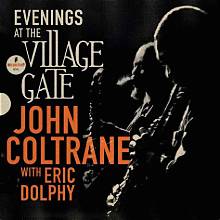
Live and important music, documenting one of Coltrane’s peak ensembles. There are plenty of recordings of this group live, but they are all welcome because of the fire they bring. Both Dolphy and Trane, though well recorded, only had a brief time where we had the chance to hear their innovations. I’m not sure how much this recordings adds to their legacy in comparison to the Village Vanguard recordings (which I have as a 4 disc box set and that music was available from near when it was recorded and thus has decades of influence, where as this recording was a more recent discovery). The fans are thirsty for more of this Avant Garde music and the lengthy solo features deliver on the spirit that this music brings. “Impressions”
Overall = 8.2 (10) – Intensity. Get it!
Willie Bobo – Spanish Grease/Uno Dos Tres 1⏺2⏺3 – Verve, 1965/66/1994.
🎺🫧 ⏺🪄🪘🧀📔:
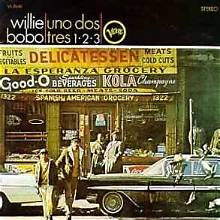
A two album set of Latin/Pop/Jazz (maybe a 40/40/20 distribution of those elements) from a seminal Afro-Cuban musician. I think Uno Dos Tres 1⏺2⏺3 is the stronger album with better players. Unfortunately the track listing is out of order, which is confusing. Additionally, these recordings lean heavily towards Pop cover songs, like “It’s Not Unusual” or “Michelle” for example. There are few improvisations from the horns and the material can lean cheesy. The other, non-cover song material, leans into some kitsch and this music suggests more of a Dance Party nature (a 60’s dance party) but with no prolonged grooves. “Fried Neck Bones And Some Home Fries”
Overall = 4.3 (10) – The songs are mixed up suggesting a lack of care in its reproduction, but the 2nd album is much more intense in its feel and grooves.Get it!
Donald Byrd & Doug Watkins – The Transition Sessions – Transition/Blue Note, 1955/56/ 2002.
🎺 ⏺ ♫🫂🪄🎷𝍍🎶⎄🎗️⌛️:
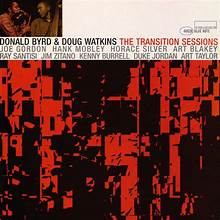
A seminal collection of early Hard Bop, with a pair of critical collaborators who also appear on one of the Pepper Adams album below (recorded a few years later than this album). As with Mosaic collections, this collection was most likely designed with Michael Cuscuna’s fingerprints on it somewhere. This reissues several rare albums from a long defunct label, Transition Records, which captured some early proto-Hard Bop. I think the distribution level of the original Boston-based label, and that it collects 3-4 different albums of material, suggests that these recordings were not so well known in their day. The collection features early leader roles in both of these men’s careers, meaning Donald Byrd was not the well-known name he would become yet. I do consider this collection on the list of key Hard Bop albums and worthy of greater acclaim than they were given historically. “Little Rock Getaway”
Overall = 8.8 (10) – Top notch, seminal hard bop. Get it!
Willie Colon/Ruben Blades – The Last Fight – Fania, 1982/2008.
🌶️💃🏽🪘🫂🗣️⎄🗝️🗝️📝🎬🎞️👜:
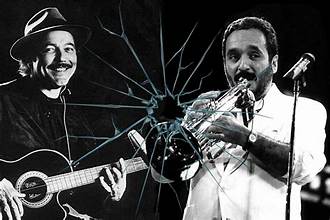
A later, one of their last, collaboration between these two Salsa luminaries. It is apparently a soundtrack for Mr. Blades’ first acting role, he would continue to lean into more acting roles after this recording. He also describes it as one of the least favorite albums he created and it is definitely missing something. I have never seen, or heard, of the film apart from the album. The simplest answer to these doubts is that between these 2 artists there are a multitude of magnificent recordings and really no reason to bother with this album unless you are a completist. “Andanza”
Overall = 5.1 (10) – Pretty pale in comparison to either artist’s signature works. Get it!
Manny Albam – The Blues Is Everybody’s Business – Gambit, 1955/1957.
🎺🪄🎨🏙️📀🥁🏌🏿♂️⎄:
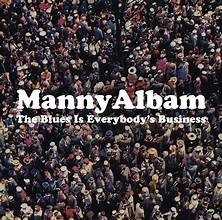
A Big Band album that starts with the 4 part suite that titles the album, followed by several other Albam compositions. Mr. Albam was born in the Dominican Republic but grew up in NYC and won a Grammy for his arrangements for Bernstein’s West Side Story. He was then involved in Jazz education including a stint at Glassboro State – now known as Rowan University, where I teach History of Popular Music currently. This Arranger feature album features 4 different top notch Big Bands with a variety of the excellent, late 50’s, section players like Phil Woods.
Post Big Band era Big Bands are interesting because they are mostly non-viable business entities – size of ensemble, dance/concert hall venue and the post-War consolidation of most big bands.
The recording came out before Albam’s Grammy, so this album was achieved based on his arranging stature and probably as a gift session for doing plenty of studio gigs. It is very hard to receive recording opportunities in modern times when you aren’t the performer. As is it also is to present new music, where an audience has little prior connection to the material. The album features great music, which has a little of that Big Band excess and has Pop elements embedded in the arrangements – like the strings, harp and dance music features, but it also embraces the improvisations and soloists. “Ida Bridges Falling Down”
Overall = 6.6 (10) – Suite stuff! Sort of out of its time period when compared to the Jazz of 1957, but just by because the popular style of the day moved on from big bands. Get it!
Onzy Matthews – Mosaic Select 29 – Capitol/Pacific/Mosaic, 1963-65/2007. [Includes: Blues With A Touch Of Elegance & Sounds For The ‘60’s! + 29 unissued tracks from various sessions]
🎺⏺️ ⏺ 🪄🎨🎷🥁🏌🏿♂️⎄:
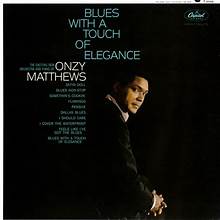
Mosaic collections are valuable particularly because they collect rarities and timely reissues of artistically fertile collaborations or recording sessions. I had never heard of Onzy Matthews and picked this set up because of Mosaic’s endorsement. In this case the rarity is drawn from the fact that Mr. Matthews was primarily an arranger. As mentioned with Manny Albam above, in modern recording times selling a non-performer’s music is particularly difficult, there is less of a specific face to promote. Mr. Matthews had great success with a few Lou Rawls recordings, which probably earned him these sessions, but much of this music was never released after it was recorded. It is top shelf Big Band music from the post-Big Band era. And the recordings are filled with great soloists, section players, compositions and arrangements. They lean towards Hard Swinging and have all the elements of straight ahead Jazz of the 60’s – clean, crisp swing, featuring many Standards. In a sense when the Modal and “Out” Jazz was popular the inside, straight ahead music became somewhat the popular outsider and thus a lot went unheard. “Dallas Blues” and “Pensive.
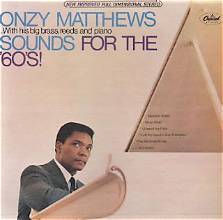
Overall = 8.6 (10) – This is an excellent collection that is more rewarding for the fact that it is a complete discovery of music I hadn’t heard, with some favorite players.Get it!
Pepper Adams – Quintet:10 To 4 At The 5 Spot – Riverside/OJC, 1958.
🎺🫂🪄🎷𝍍🎶🆑🎗️🎟️:
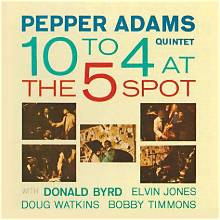
A classic Hard Bop recording, featuring one of the style’s esteemed frontline pairings of Pepper Adams and Donald Byrd with a great rhythm section. It also continues the seminal Hard Bop collaboration reviewed above featuring Doug Watkins and Donald Byrd. This is usually considered Mr. Adams finest album as a leader, many of his albums are blowing session style so it often comes down to favorite songs, sidepeople or the best vibe created in the session. This album has everything you could want and it takes it up a notch. Mr. Adams sounds excellent and the Baritone/trumpet blend crackles. “The Long Two Four”
Overall = 8.2 (10) – If you wish to Bop hard then this album is as good as any to Bop with. Get it!
& Encounter! – Prestige, 1968.
🎺🪄🎷𝍍🎶:
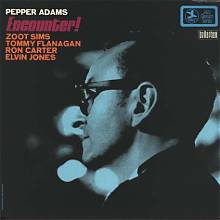
This recording is from about a decade later, featuring a collaboration with Zoot Sims, though I am not sure that collaboration continued much beyond this album. It’s straight ahead, with good solos, interesting song choices and maybe it resides in a more Swinging place, than the Hard Bop that Mr. Adams thrived on and was featured in the previous recording. Mr. Sims also sounds good in this context which is a little outside his natural post-Bop/Post-Big Band sweet spot. I wonder what spurred this collaboration and if the Baritone saxophone was considered a less popular draw. Mr. Adams’ recordings frequently usually paired with other name players to drum up sales. “Inanout”
Overall = 6.8 (10) – It’s a swinger! Get it!
Sallie Blair – Squeeze Me – Bethlehem, 1957.
🗣️🫧🎺🎭🎨🐠🧀👜🪦🥃👩🏼⚖️:
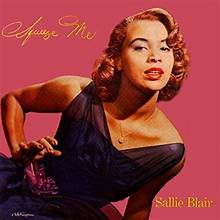
Big Cheesy arrangements with an Eartha Kitt type of voice, very dramatic and overly stylized. Mrs. Blair even uses an accent (we might remember Maya Angelou doing the same for her Calypso album reviewed early on In The Stacks) on the last, Exotica type, lounge song. There are also a few songs where Mrs. Blair sweet talks the listener with flirty banter. The Big Band is augmented with Pop Strings, percussion instruments and even a tease of an oboe. Mrs. Blair’s voice is ok, but the artists that are being imitated (choices by the label is my guess) are singular. There are hundreds of lost Pop singers in the annals and Mrs. Blair is a good one, whom I never heard of before being wooed by the cover of this album. It is a solid, but understandably not first tier album of vocal music. “How Long Has This Been Going On”
Overall = 3.7 (10) – A fine addition to the collection, if this is your bag – Exotica, Pop Vocals and orchestral lounge. Get it!
Candy Butchers – Play With Your Head – RPM, 2002.
🪨🫧 🪩🗣️⎄📝🪦:
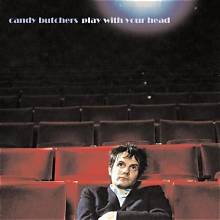
I’ve seen Mike Viola live and am a fan of his song writing. This album came at a point where “making it” may have seemed a particularly frustrating goal and a lot of sounds on the recording seem to be chosen to see if something works to that end (achieving a hit song). Some of the guitar sounds, some of the slick little riffs and the glossy production ideas tend to over-polish the rawness that I most appreciate in Mr. Viola’s style. I think about half of the songs are really good and then the other half actually pretty bad. His Pop writing, when at its best, is surprising and he has a really sour, sarcastic edginess to his voice deployed with lyrics that can feel aurally poisonous (this is a good feature, beautiful like a snake) the other songs on here are dull and obvious. “You Belong To Me”
Overall = 3.3 (10) – Half a good one. Get it!
Terry Callier – What Color Is Love – Chess/Geffen, 1972.
🔈🗣️⎄📝🌾⨻❤️🔥🧀:
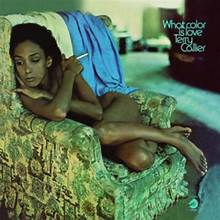
This album has one of the most beautiful covers. Mr. Callier can’t be defined by one genre, this music resides in some personal genre that mixes Folk, Pop, Soul, R&B and Singer Songwriter material. I’m not certain, but I think that individuality made him a difficult sell to fans of those disparate genres and that his popularity is derived mostly from his persona which centers the music in the middle of all those styles. His lyrics are not terribly mysterious, his voice is warm and the music here seems like Pop orchestral accompaniment with occasional cheese in the arrangements. “I’d Rather Be With You”
Overall = 6.7 (10) – I like this album, but the cover is one of my favorites and the music doesn’t quite match the heights of the image. Get it!
Anouar Brahem – Le Pas Du Chat Noir – ECM, 2002.
🎺🌌🎑🪄🇹🇳🪗⎄:
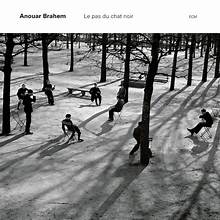
A French title and French sounding Folk Improvisations by a trio of Oud, Accordion and Piano. With all ECM recordings there is another element – the ambience of the recording space is embraced like an additional musician. Their recordings usually feel like you are inside the recording space. Understanding how a live performance being recorded features all of the components as relevant (musicians, material, space, concepts etc.) because of its in the moment documentation, versus a studio, or digitally recording, having the musician individually perform their part live at different times. The sounds are then isolated and the space is not as important as the microphone recording it. On this type of recording the musicians are breathing the same air that evokes their sounds. Also Mr. Brahem seems to have settled into a recipe at this point in his career, featuring Folk based compositions from various cultures and Jazz influenced improvisations. Often this music sounds a bit Classical, incredibly delicate and it holds a quietitude. “Un point bleu” & “Leila au Pays du Carrousel”
Overall = 7.4 (10) – Quiet yet often quite energized and featuring three musicians really listening to each other. Get it!


