Chubb Rock – The One – Select – 1991.
🎤📝:
My copy of this CD seems to be disintegrating and is testing the limits of the CD life span, as I probably bought it 35 years ago. It plays on my home system and not in my car, plus the ink from the liner notes is now stuck on the disc itself and the plastic sleeve I keep it in. I do remember these songs fondly, though they sound very dated now, particularly the strong 90’s drum loop sounds. I believe Chubb Rock’s career never reached the heights of this particular recording again, but he is a slick lyricist, only occasionally lewd. The tracks, particularly the music, do sound old to me now. “Just the Two Of Us”
Overall = 4.3 (10) – Mostly a nostalgia trip for me. Get it!
Linton Kwesi Johnson – Tings An’ Times – Shanachie, 1991.
🇯🇲📝🏋🏽⨻👣:
More deep thoughts from LKJ, in poetic form, about history, culture and racism over primarily Dub Reggae beats, but with a variety of live instruments to liven the flavors (sax, violin, melodica etc.). Mr. Johnson is deep and deserves a stature similar to other Poet/Musicians like Bob Dylan and Leonard Cohen. I suppose he does not because his career was somewhat isolated (from the International Pop scene) in the UK and that Dub Reggae was sort of an out of a mainstream sub-genre. Though Reggae is often very political and critical of society the sound is often perceived as low-key, chill out vacation music for us in the U.S. and incisive political commentary often gets ignored because of its warm, positive musical vessel. “Mi Revalueshanary Fren”
Overall = 6.7 (10) – Occasionally this recording slips into some cheesy Caribbean vibes, but that is often juxtaposed with intense, biting social critique. Get it!
& More Time – LKJ, 1999.
🇯🇲📝🏋🏽⨻👣⚒️♛❤️🔥:
Despite being about 8 years later this recording displays the full LKJ recipe: rich, deep poetic lyrics; Dub Reggae based instrumental tracks that include a variety of Caribbean musical influences; expressive instrumental solos on a variety of instruments and a lot of Political/Social content. It is a great mix and though I believe Mr. Johnson produced this himself; it has the feel of a “legacy” recording gone right. It includes the things his fans would look for and a high quality representation of his sound, without becoming overly saturated or self-congratulatory. “Hurricane Blues”
Overall = 8.8 (10) – A favorite. Get it!
Nat King Cole/Nelson Riddle – St. Louis Blues – Capitol, 1958.
🗣️🫧🏙️🗝️🎨🧀🗝️🫂:
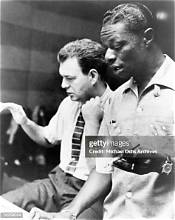
Big cheese Pop orchestra, with strings, featuring the smooth voiced legend. Nelson Riddle is great, but he is often leaning into his Jazz and Blues influences with a glossy, shining aim that is a bit of a juxtaposition with what the roots of those musics exude. His Pop affectations are contextually at odds with the musical roots to my ears. Additionally, Mr. Cole definitely can sing the Blues (and these songs are all Blues songs), but his style is clean and polished in a way that avoids the embrace of having any Folk Blues character. This record is Big City, Pop, Blues with a Pop Jazz Orchestra, which means few solos and instead bouncy Swing that would fit well next to your favorite Sinatra recordings. “Memphis Blues”
Overall = 5.2 (10) – Pretty perfect for what it is, but be sure of what you are getting – more dinner party than downhome meal. Get it!
Ludwig Van Beethoven – Missa Solemnis – Deutsch Gramophone, 1990. [Charlotte Margiono; Catherine Robbin; William Kendall; Alastair Miles; The Monteverdi Choir; The English Baroque Soloists & John Eliot Gardiner]
🎼🗣️🗝️⎄👁️🗨️:
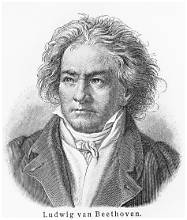
Beethoven was the most effectively epic of Classical composers; there are bigger works, but rarely do they reach the grandeur of his works of scale. This music sounds enormous and expansive. As you can see with both Classical discs this week, even the participation and information is extensive about the works presented. Even looking for the correct recording (particularly on YouTube) is its own challenge. My Classical search cipher is: Composer; work (often an opus number); Performer(s)/Ensemble; label and year. John Eliot Gardiner has apparently 3 recordings of this work through the years and there were multiple live video recordings of performances too – debatable if any of these were of this particular recording. I would suggest that even the recordings deemed of “classic” status are supplanted by favorites in other eras. This a natural result of music that’s primary source is written, published scores – not recordings.
Beethoven achieved a level of popular status culturally, and in social class standing, he was treated as somewhat of a hero (apparently a gruff and difficult one), it is interesting to hear his religiously inspired works. They suggest he devoted himself to his creation of them in a slightly different way than his non-religious works. The Romantic period drew from a lot of inspirations: nature, antiquity, heroic tales of myth and legend and also early examples of nationalism and celebrations of regional culture. “I. Kyrie”
Overall = 8.1 (10) – It’s not everyday I can listen to a Classical choir, but when I do this work could be a primary choice. Get it!
& Franz Schubert – Cello Sonata No. 3 in A Op. 69 [String Trio (Serenade) in D, Op. 8; Seven Variations in E flat major – Schubert: Arpeggione Sonata in A minor, D. 821] – EMI Classics, 1992. [Emanuel Feuermann; Myra Hess; Theo van der Pas; Szymon Goldberg; Paul Hindemith & Gerald Moore]
🎼🗣️🗝️🗝️⎄⎄:
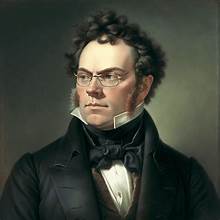
Another maze of discovering the proper recordings on YouTube. Between multiple composers, performers and reissues, this collection delivers on famous cello recordings featuring Emanuel Feuermann. He taught here in Philly at the Curtis Institute briefly, from 1939-1942 when he passed.
Mr. Feuremann’s recording career was more limited because of its time period. His story reflects the European Jewish experience in the 30’s. Initially he was very successful, in 1933 he escaped Berlin after being removed from his position because of his Jewish heritage. He made his most well known recordings in the UK, some with Hindemuth, who also left Germany when the Nazis established control of the country. Later on he would escape Austria, in 1938, for the same reasons that the Nazis had established political control of Austria. He then came to America for that brief period before his early passing at age 40. His history offers two contemplations: How the American immigration story plays out and what refuge means, as well as what legacy could this brilliant artist have left us if he were not persecuted because of his religion? “Adagio Cantabile” from the Beethoven Cello Sonata.
Overall = 8.3 (10) – Masterwork. Get it! *I can’t find this specific recording, that release is a cheap, vast collection of all Feuerman’s recordings.
Jack Nicholson/Bobby McFerrin – The Elephants Child – Windham Hill, 1987.
🎥📝✪✪🗣️🫂:
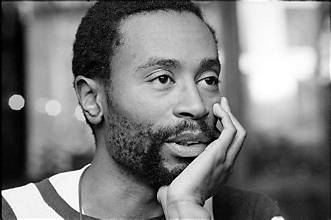
I was drawn to this animated story telling classic aurally. I definitely had no knowledge of the visual components, at 14 it would have seemed like something made for children to me and it is, but it also offers appeal to adults through its narrators. I do use this recording frequently when I need time for young students to take a break. The cartoon is not motion animated, page/panel style animation instead. The narrative pairing was inspired – I think this is produced by Rabbit Ears, and/or Random House, as a sequence of children’s stories which are told collaboratively on TV featuring iconic narrators and musicians in an animated half hour format. Mr. McFerrin is glorious and inspired, the music is from his deep, compelling inner world and jarringly Jack’s voice is kind of sleazy – which works best as the snake and crocodile of the tale. The disc has many a cappella bonus tracks, the full story is linked in the title above.“The Elephant’s Child Lullaby”
Overall = 7.5 (10) – They should continue creating projects like these, compelling interpretations of children’s stories featuring well curated, collaborative artists. Get it!
Majek Fashek and The Prisoners of Conscience – Spirit Of Love – Time Warner, 1991.
🌎🇳🇬🇯🇲🧀🔭🪦:
Comparisons to Bob Marley are unavoidable with this recording of Majek Fashek’s and unfortunately, listening to it now, it pales in comparison. I believe I bought this when it came out because of a Spin Magazine recommendation. Back then I was into it, but despite being well played and produced now it feels dull and superficial. Often with Reggae, as with Bob Marley or LKJ, there is idealism balanced with venom, humor, anger and righteousness, there is no venom in this music to make it truly critical of our world and incisive – instead it sounds childish and naive. The sound quality is good but glossy and heavily cheesed. The music sounds mostly like Reggae but with a hint of the Nigerian/African instruments of Majek Fashek’s background mixed in, plus a touch of religious prothelysing. Jimmy Iovine is the producer and that might be the issue, his largest successes are extremely mainstream Pop records. If I liked it more I would try to compare it to other albums of Majek Fashek’s to decide if it’s his concept and song writing that is the issue or more from the production side. “The Spirit of Love”
Overall = 2.2 (10) – Not so much. I probably won’t pursue that query, but let me know if that is an inaccurate assumption. Get it!
The Bulgarian Voices feat. Huun-Huur-Tu; Sergey Starostin & Mikhail Alperin – Angelite – Fly, Fly My Sadness – Jaro Medien, 1996.
🌎🇧🇬🇹🇻🫂🗣️🦋🦴🎧😵💫👁️📹👁️🗨️🕳️:

A successful combination of 2 premier, traditional, vocal ensembles whose cultures are about 2100 miles from each other. Tuva is East of Bulgaria, but with mountains and the terrain features making that distance more remote. The results of the recording are pretty magical: the Bulgarian Voices are female and the Tuvan throat singers male which creates a wide spread in the vocal range and they utilize drones creating a deeply hypnotic feeling to this music. The music is something new and one of those culture mash-ups that I love dearly, because it is uncharted territory for both groups and an inspired creation that may have only occurred a few times in our history in recordings and performance. Rare air. There are other recordings with Bulgarian choirs mixing with other styles – like the album with dance beats, less successful marriages in that case, this one is a keeper. “Legend”
Overall = 8.2 (10) – One of a kind. Get it!
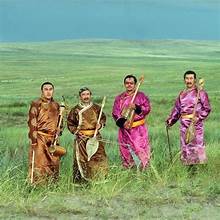
Le Mystere des Voix Bulgares – 3 – Fontana/Polygram, 1991.
🌎🇧🇬🗣️✺🦋🦴🎧⚒️:
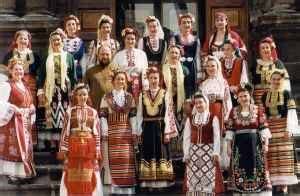
I long thought the title of this album was actually the ensemble’s name. But these albums are collections of various artists and Le Mystere des Voix Bulgares (and the various incarnations collecting this music) are both a series title and a musical style. Many of these ensembles were supported by the Bulgarian government or some form of the ensemble being institutional, intended to preserve the culture. It’s gorgeous music, that I buy indiscriminately (though the Disco beat release was a failure to my ears) and I ignored the fact that these could be totally different ensembles, when trying to file them together. Bulgarian choir music has a different concept of tonality and the harmonies they create seem intuitively perfect while simultaneously breaking the rules of Western musical theory (so much for theory, lol!). “Shope Shope” & “Izlel e Delio Haidutin”
Overall = 7.5 (10) – All of these recordings are worth finding. Get it!
& Vol. 2 – Elektra/Nonesuch Explorer Series, 1988.
🌎🇧🇬🗣️✺🦋🦴🎧:
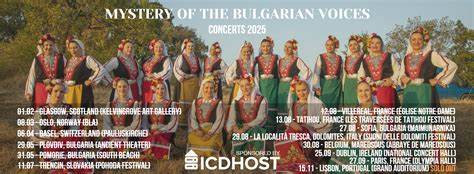
Interesting to find this at the Book Trader and also that the multi-volume collection’s volume 2 appears on a different label than volume 3. This album states “recorded by” Marcel Cellier on the cover, he was a Swiss businessman, radio host andan ethnomusicologist whose focus was on Romania. These recordings of various Bulgarian choirs were another primary focus and he received a Grammy for this recording. I find endless beauty in these choirs and I find it interesting that often someone from a different culture is needed to help preserve these traditions, because the people of the culture grow up with the traditions around them and can’t view the changes clearly as they are subtle in real time. “Bezrodna Nevesta” & “Kaval Sviri” – probably my favorite Bulgarian choir piece.
“A kaval is playing, mother,
Up-down, mother, up-down, mother.
Kaval is playing, mother,
Up-down, mother, outside the village. I’ll go there, mother, to see it,
To see it, mother, to hear it. If it is played by a fellow villager,
I’ll love him only for a short time,
If it’s a foreigner (i.e. from another village)
I’ll love him all my life.”
Overall = 8.9 (10) – I gotta find volume 1! Get it!
El Camaron de la Isla/Paco de Lucia – Con La Colaboracion Especial – Mercury, 1973.
🌎✪🗝️🇪🇸🫂🗣️🎸🛁:
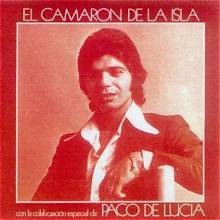
I can’t decide if Paco de Lucia is more well known than el Camaron internationally because he is so otherworldly as a guitarist or because he isn’t singing in Spanish. El Camaron sounds amazing and I don’t understand if he is considered as equally groundbreaking as a Flamenco singer or if because he is singing in a non-English language it makes his brilliance harder to translate to an English speaking audience? I am also unsure if el Camaron was introducing Paco de Lucia on these many collaborative recordings, or if they were a power couple, or if de Lucia was joining el Camaron to help launch his career. There are 10 albums of these two together and wiki suggests it was mainly two successful, young flamenco artists collaborating. “Las Doce Acaban De Dar” What a sick clink!!
Overall = 7.6 (10) – My Flamenco education continues. Get it!
& Arte Y Majestad – Philips, 1975/1985.
🌎✪🗝️🇪🇸🫂🗣️🎸🛁:
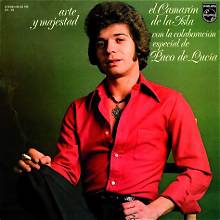
For the earlier album review I chose a song to feature el Camaron exclusively, a striking cut, but I also wanted to present something with minimal de Lucia. He sounds so fantastic that I began to get lost in that brilliance and further away from understanding what el Camaron was bringing to the party. There is great guitar on all of these albums and at least in this case their collective mastery is evolving as it progresses. The parts are tighter and there are more open moments for flourishes of genius, something I think is important too Flamenco music. My sense is that the improvisation in Flamenco is in those moments, instrumental breaks, the feel, a mastery of space and time. I consider some of that to exist in Jazz improvisation, but improvisation in Jazz has become more the idea of in the moment composing and though the two styles share some qualities I think they lean into different executions of that approach, Flamenco more in the ornamentation of a song and Jazz the extemporaneous creation of melody within the song form. Earlier Jazz often works more from the ornamentation approach. “Solo Vivo Pa’ Quererte”
Overall = 8.2 (10) – A collaboration aging like wine. Get it!
Willie Colon/Hector LaVoe – Guisando/Doing A Job – Fania, 1969.
🌎🗝️🗝️✪🇨🇺🫂:
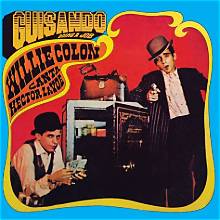
These two legends looking incredibly young on this cover and a recording that conveys a sense of playfulness, despite the ode to gambling and criminal activity on the cover. There is no “bad” music I’ve found from either of these musicians when they are working together. A perfect pairing that created much of the classic Salsa we regard in the highest terms now. I do think their ambitions are somewhat simpler in this recording, musically they both would evolve into creating more complex creations later on their later albums. “No Me Den Candela” I love the Bluesy tinge Mr. Colon adds to this solo.
Overall = 9 (10) – Another Salsa classic. Get it!
& Willie Colon/Ruben Blades – Canciones del Solar de los Aburridos – Musica Latina, 1981.
🌎🗝️🗝️✪🇨🇺🇵🇦🫂:
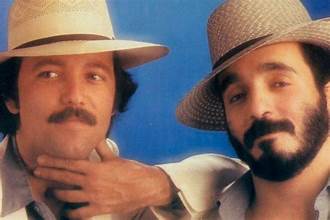
I think there is a point where a musical genre becomes ensconced and then splinters into various sub-genres. It is usually the result of changes in many areas: technology, social, personal maturation etc. over time. This Salsa album fits into that category, it still features strong music, but it is adding in new technology and pulling more from 80’s tastes (post-Disco Pop, digital studios, more Fantasy Island cheese) then the 70’s. I won’t regard it as one of the best albums this partnership created, but it doesn’t have the problems the previously reviewed The Last Fight had and the cheese here is subtle. There are some striking transitions within songs, multiple exciting and unusual brass pyramids (when the horn parts have staggered entrances, while stacking pitches, giving an aural effect that draws your ear towards the shape of the harmony) and some catchy parts. Each song had a little something that said pick me. “Y Deja”
Overall = 5.6 (10) – Solid later recording of one of Salsa’s great pairs. Get it!
Vinicius de Moraes/Toquinho/Maria Creusa/Marilia Medalha e Monsueto – O Grande Encontro – Gala/Som Livre, 1979.
🌎🇧🇷❂ 🫂⎄:
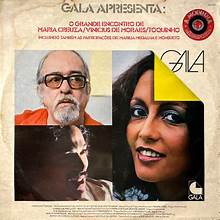
I believe this is a compilation album of these artists working together, not a live “meeting” of them in concert as I initially thought. Perhaps the 3 snap shot cover should have given it away. It has pretty guitar work and songs with slightly cheesy dressing up in the arrangements. Brazilian Pop music often ventures into Fantasy Island territory and these songs have a studio orchestra type of feeling. I also appreciate finding any music by lesser known Brazilian artists in America, so it was a good find despite being a bit on the confectionary side. Sweet cheese. Vinicius de Moraes – “Eu sei que vou te amar”
Overall = 4.3 (10) – It would be nice to find the original albums these tracks are culled from. Get it!
Duke Ellington – Sophisticated Lady 1932-1934 – Membran, 2004.
Beyond Category ⏺️ ❂ 🎺🥁🏌🏿♂️ ⎄ 🎨 ✪ 🗝️ 🪄⌛️:
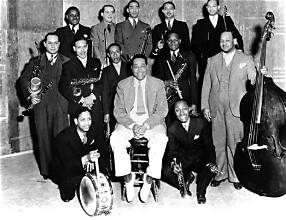
These recordings still feature quite a bit of Pop songs of the day, multiple versions of many songs and guest artists – usually vocalists, in between the classic Ellington compositions. This makes a lot of sense, dance music was centered around contemporary hits and leading a dance band meant performing recognizable tunes that the audience wanted to dance to. Ellington was creating some of those hits himself and performing other songs in the style of his band. Soon he would progress to playing mostly his own music and then adding in a few well chosen hits (and involving collaborative composers/arrangers to further develop their song book), but at this still early period he would need to rely on other people’s material more significantly. The 30’s I believe to be the transition of his popularity and the ensemble begins to be shaped by the personalities of the players in turn. Ellington is writing, or using parts that feature his musicians in the best light, some of these musicians would stay in the band for their entire professional lives. Some would step out, attempting side projects and trying to capitalize on their fame. Ellington would continue creating successful music for another 40+ years with this band, far out pacing the average turn for a popular musician. This is a tribute to his sustained excellence, almost no artists achieve this combination of iconic stature, popular success, artistic legacy and sustained career relevancy. “Jive Stomp” & “Rude Interlude”
Overall = 8.6 (10) – Progressing to a second decade of fame. Get it!
Miles Davis – Someday My Prince Will Come – Columbia, 1961/1999.
Selim Sivad 🎺🗝️🪄✪ 📔𝍍🎶:
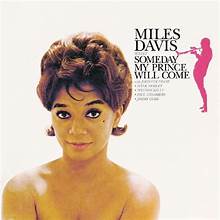
I believe this is the only studio recording that Hank Mobley contributed to during his short stint with the band. He is one of several tenor saxophonists in a transitional period between the first and second great Miles Davis quintets. At least until Wayne Shorter arrives the band was playing in a similar style as it was shaped with Coltrane. Here they perform many of the same songs and the individual roles and contrasts are similar. Hank sounds great, but his style is not the foil for Miles that Trane, or Shorter, were, and musically their directions were more experimental and adventurous. I don’t think Miles felt comfortable going in those directions until he had the band for it and so these recordings are reviewed in comparison to some of the greatest music to be recorded. There is no flaw, but they are very good with occasional moments of greatness. Miles could transform a Pop song like no other, earlier Jazz always did this, but when we arrived at new popular genres it became less common to evoke those moments. “Someday My Prince Will Come” is a great example of his abilities at doing this and it also demonstrates the contrasts between Mobley and Coltrane as they both have solos on the recording.
Overall = 8.6 (10) – A great transitional Miles album. Get it!
Prince – LoveSexy – Warner Bros., 1988.
The Purple Patch Ƥ𖫪 🫧🦄🫦🗝️✪ ⚒️🏋🏽📀🎧⚙︎😵💫❤️🔥:
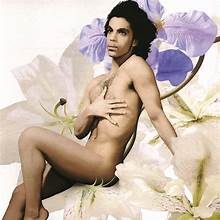
Though I consider this another great Prince album I do notice some decline from the heights of my favorite albums. I think it is a two-fold issue, both going too deep into his iconic persona while simultaneously drifting away from understanding his audience. The biggest stars do seem to lose touch with how the average person exists and thinks, as well as how aging naturally changes what you speak about to your audience. Are they traveling with you or are you aiming for a younger audience than you are actually an established icon for? For Prince his original fans would be in their late 20’s at this point and music, culture and personal growth have all changed since he was singing about “Head”. The imagery and music here feels a little over stylized and not in his early manner which people followed and coped his style for themselves. The music is great though, there are hits like the Funktry classic “Alphabet Street”, plenty of psychedelic Pop and always Bangers. I don’t actually consider this a Long Form work, but the original CD played as 1 long track, many of Prince’s albums (as with Miles Davis’ albums) are designed to be listened to as an album length journey – yet have individual “hit” type radio play songs. I think Prince’s studio creativity was hitting a certain peak here too. “Anna Stesia” & “When 2 R in Love”
Overall = 9.1 (10) – Still bringing it a decade on! Get it!

 Found Sounds