Method to the Madness II (What was pulled from where): Always a mix of sleeves and cases. Mixed genres including primarily Jazz, a Mosaic Box Set, Jazz label cases: Impulse, Verve, Blue Note & ECM; a Brazilian case, a Salsa case, a Rock/Pop case, a Singer/Vocalist case and an R&B album.
Gal Costa – Gal Canta Caymmi – Mercury/Universal, 1976.
🇧🇷🗣️🫂 ⚒️🧀🪩🎨🗣️⎄:
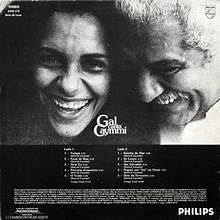
Prime Gal! Slanky, Brazilian, Funk and Disco with sparse, crisp arrangements and just the right touch of cheese. Her voice is liquidy and especially commanding in her high range, she reaches the top tones effortlessly. The arrangements stay recessed in the background to feature her voice and Dorival Caymmi’s lyrics. Everything is played perfectly, top notch band, and they never allow the Disco cheese to smother the song. “Festa De Rua” & “São Salvador”
Overall = 8.8 (10) – Wonderful re-imaginations of classic tunes, by one of the great Brazilian voices. Get it!
John Coltrane – The Major Works Of John Coltrane – Impulse, 1965/1992.
🎺 ⏺I! 🧫🎷❂🎗️🏋🏽🕸️⚰️📀🔭🦋🪄🦴:
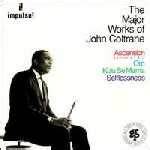
Somewhat of a strange collection. I say that from being described, vaguely, as Coltrane’s “Major Works”, which is a similarly iffy term as with “Best of” and “Greatest Hits” collections. Fact is, the categorization criteria is undefined. Yes, some of this music I would describe as part of Coltrane’s most “Major Works”, but I think this collection’s curation is really about the length of works and their explorative nature. These are not his most famous, popular or successful works and though they are extended improvisations they do not follow my definition of Long Form Compositions like a Symphony, or Suite, would be – as they are spontaneously composed and would sound different with a repeat performance (noticeably there are 2 versions of Ascension here, they follow similar direction, but I think few would know which is playing without reference). These pieces are some of the freest, energy, avant garde, experimental works that Coltrane made, usually with larger ensembles (not his quartet). Ascension is lauded as being one of the major achievements of his career. All of this collection is among the most challenging listening experiences you can have. Relentless, intense, enduring, very aspirational and inspirational, but not for everyone. The heat is turned up and then never relents for 15-40 minutes per piece. I consider them all really important and Ascension is up there with the earliest and most influential free playing documents that anyone provided – it solidified Coltrane as a leader of that movement. “Selflessness” – I do question collecting this type of music into one, two disc, listening experience. I think listening to it in doses, or only specific pieces, is more effective, because the intensity factor can easily wash out if being listened to for 2.5 hours.
Overall = 10 (10) – Easy 10 for the 2 Ascensions and if this is your bag it is essential, if you are more of a melody/song person then it may be the opposite of your aesthetic. Get it!
Art Blakey & The Jazz Messengers – Soul Finger – Verve, 1965.
🎺 ⏺𝍍🎶🪄:
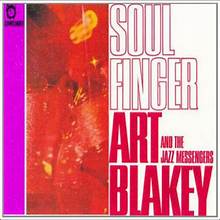
Not classic Hard Bop, good though, but a strange, uneven session pairing Lee Morgan, Freddie Hubbard and Lucky Thompson in the front line. They all sound good, but I think the greatest Blakey albums are led by a lineage of excellent “musical directors” and this album is maybe not so much directed – it feels more casual. It still feels good, but the songs feel thrown together, short and a little low-drama for a Blakey album. This “Soul Finger” is not that “Soul Finger” and though the packaging feels influenced by the mid-60’s the music does not and maybe to its detriment. It feels like left-overs from the 50’s but duller. I’d recommend at least a dozen Blakey albums before thinking of this, which I only recently picked up or knew of its existence. “Spot Session”
Overall = 4.7 (10) – Middling Blakey. Get it!
Donald Byrd – Byrd In Hand – Blue Note, 1959.
🎺 ⏺ ♫𝍍🎶🪄:
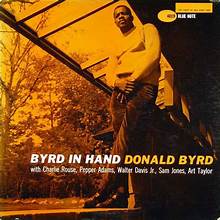
Classic Hard Bop. Again Byrd paired with Pepper Adams, but otherwise a different group. Donald Byrd was always a top ranked Hard Bop/Funk/Fusion trumpet player, without actually being the most popular trumpet player over his 40 year career. From 1955-1979 he released multiple albums as a leader for every year except 1965. It’s about 60+ recordings. Perhaps the most important of these, the most critical and influential in their time period, are the later forays into Fusion or Funk. He is on an equal number of classic recordings as a sideman, including some really important ones, particularly from the early era Hard Bop. I point to his time with the Jazz Messengers and Hank Mobley as being integral recordings to the inception of the style. His own recordings are never less than top quality, but also rarely considered among the most important recordings, among his peers. He is not particularly experimental as a leader (until the 70’s), none of his original songs are considered Standards (at least none I can recall or any that are commonly played). And though he has great technique, with a big, brassy tone he is often considered the next trumpet in comparison with his contemporaries (Clifford Brown, Freddie Hubbard, Booker Little, Lee Morgan etc.). He beats most of them on longevity and perhaps has more consistent success across multiple time periods. “Devil Whip”
Overall = 7.3 (10) – This album is as good as any of his albums, but may not be better than the one which includes your favorite songs, or side people, on it. Get it!
Fania All Stars – Recorded Live At Cheetah – Fania, 1972.
🌶️💃🏽🪘🎟️:
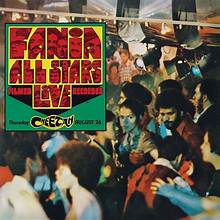
All-Star recordings can be hit or miss, in the case of the Fania All Stars it was a brilliant move and perfectly executed by the record label. Showcasing the collective cast of successful Fania recording artists, while reflecting the wide range of LatinX cultures in the music, featuring a top flight large ensemble in mostly live settings. If you see below (in the Chris Connor listing) the “live” setting can capture a band being driven by the intensity of the audience and their interaction with the band. The wide range of artists here offer a contrast in styles and the individual features offer reward to their biggest fans while sharing the spotlight and introducing them to other artistic peers. The music is ego-embracing, so the popularity contest between the biggest stars rarely messes with the successful formula. In other All-Star recordings that can really dismantle the achievements of the collective, but here the only drawback is the similarity between the many Fania All Star “live” recordings. This one may, or may not, be better than other Fania All Star live recordings that we will explore. “Que Barbaridad”
Overall = 7.8 (10) – It’s a party, take your clothes off! V. 1 Get it! V.2 Get it!
Oscar Aleman – Swing Guitar Masterpieces 1938-1957 – Acoustic Disc, 1998.
🎺🎸🏌🏿♂️🇦🇷🪄:
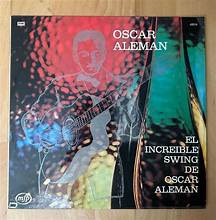
An Argentinian contemporary of Django Reinhardt, but also somewhat of a stylistic younger sibling. Mr. Aleman was a hell of a guitarist in the Gypsy Jazz style. His name being lesser known (than Django) may have been that he never had legendary performances captured on record. Word of mouth disappears faster than documents do, he may have been known in his day, but if his recordings aren’t being heard the legacy will fade. Artist’s careers can be quantified differently – longer careers, more consistent work, achieving higher heights and even the pervasiveness of their influence on others. There are so many ways it can shake out. But, unless you are saying I want to listen to Django Reinhardt and instead listen to a similar artist in Oscar Aleman there is no reason to compare them. Almost no one knows of him these days, but Mr. Aleman could sing, swing and play the shit out of the guitar. “Nobody’s Sweetheart”
Overall = 6.6 (10) – Heavy Swing! Get it!
Mosaic Select #34 – Denny Zeitlin: The Columbia Studio Recordings – Mosaic, 1964-1967/2009. [includes – Cathexis; Carnival & the Zeitgeist sessions]
🎺⏺️ ⏺ 🎹🔮➕:
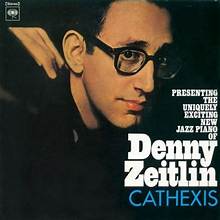
An extensive collection of Zeitlin’s early piano trios. The “sessions” detail means a lot of extra, unreleased, material is included here. Zeitlin is someone I was not very familiar with before acquiring this set. I love a piano trio and the first disc Cathexis is pretty spry material, with a personal take on Standards and some 60’s sounding originals. The group hints at the popular trios and piano players of that day, yet doesn’t carve out something so distinct that it strikes me as deeply. I think I would rather go to other great trio music that obviously influenced Mr. Zeitlin (Bill Evans, McCoy Tyner or Herbie Hancock for example) before this recording, but it is a good recording to have and to hear.
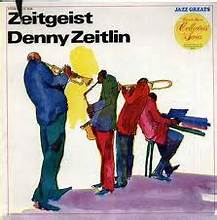
The second & third discs reveal more personality, particularly in some striking improvisations that only reveal the melodies of the Standards being played at the very end. Often the reveals are surprising. The piano playing reveals personal voicings and unique approaches to the tunes. It’s the journey not the destination.
Mr. Zeitlin’s career(s) took unusual paths, not always as a musician, but he recorded regularly from these recordings to some released in the 2020’s. He made appearances on Sesame Street and the composed the soundtrack to Invasion of the Body Snatchers.“Cathexis”, “The Boy Next Door” & “Offshore Breeze”
Overall = 7.1 (10) – Great piano music, it doesn’t quite knock my favorites of that genre off the table, but worthy of immersion. Get it!
Cannonball Adderley – Something Else – Blue Note, 1958.
🎺🫂𝍍🎶🎷💰♛🎗️🕸️🪄:
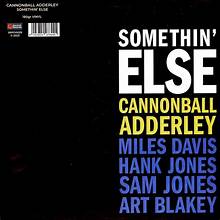
A Hard Bop masterpiece, that documents one of the few times Miles Davis recorded as a sideman after the early 50’s. Excellent band, that performs with one mind, perfect storytelling solos and creative approaches to mostly Standard repertoire. This “Autumn Leaves” is often my favorite version of the song and very iconic. The atmosphere created in each solo and both the intro and particularly the outro is what people aspire to create in this music. The recording could be one of my choices to use to explain Jazz to an Alien entity, or an unfamiliar listener. It has mood to spare, every note seems sculpted, with a ruminative intro/outro and just a rare, Classic moment captured overall.
Overall = 9.7 (10) – Highly recommended! Get it!
& Quintet – Mercy Mercy Mercy! Live at “The Club” – Capitol, 1966.
🎺🎟️𝍍🎶🎷✊🏿🫂🪄💰:
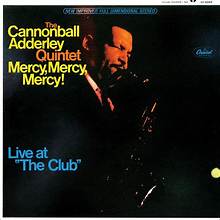
Not recorded at the “The Club”, but in front of a live studio audience in the Capitol studios. This recording is a key transitional moment in Cannonball’s career, adding a little Funk and Soul to the mix and some electric keyboard. There was a hit (as far as Jazz hits go) in “Mercy, Mercy, Mercy” often attributed to Cannonball, but penned by Joe Zawinul. However, when I moved to NOLA in 1996 I would hear it at every club. It is a great, soulful piece, and but the band would attribute authorship to everyone except Mr. Zawinul, Cannonball, randos and even a member of the band a few times. It is probably Mr. Zawinul’s most successful song, though not what he is most known for. It is interesting that here, there is no solo, just collective, restrained, grooving improvisation. On every other track the ensemble crackles through a variety of blowing tunes and Cannonball, and Nat too, shred their solos.
Overall = 7.6 (10) – It is a little strange being a canned, studio “live” and the songs are mostly short, not stretchy, but it does capture the particular sound of this band and added some longevity to Cannonball’s stardom. Get it!
Chris Connor – Free Spirits – Atlantic/Collectibles, 1961.
🗣️🎺🏌🏿♂️:
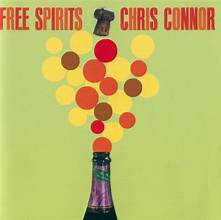
I have only a few Chris Connor recordings, but they are all solid, with good bands and interesting song choices. This recent pick up is similar to that description with a few exciting song choices and some solid Phil Woods solos. “Lonely Woman” by Ornette Coleman. I didn’t know this song had lyrics post-humously added to it,for me it becomes an entirely different tune when lyric-ed. Despite the attempts to recreate the original’s strange aura, it loses some of its rare mystery. This version is a dirge, the original has a shimmering, stratified drum part that evokes something very different. It is a great song, but I don’t think the lyrics really capture it, an interesting attempt though.
Overall = 5.8 (10) – Not every experiment needs to succeed. Props for trying and a solid vocals disc nonetheless. Get it!
& At The Village Gate: Early Show – Roulette, 1963.
🗣️🎺🎟️🏌🏿♂️:
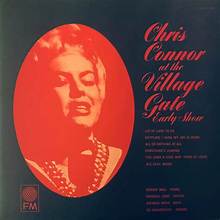
Same deal here, but live and minus the unusual song choices of the previously reviewed disc. Still a great band. Live vocalists/personalities recordings are noticeably different from their studio recordings, because the audience is more integral to the vibe. Singers, like comedians, need to bounce off the audience, check the temperature, banter and their personality blooms (in the best cases). This album would fill in well any time you desire a change of pace from your most worn out vocal recordings. “Old Devil Moon”
Overall = 5.1 (10) – Mostly a swinging affair, with a couple of torch songs. Get it!
Captain Beefheart & His Magic Band – The Mirror Man Sessions – Buddha, 1967.
🪨🫧 🪩 🧫🪄😵💫:
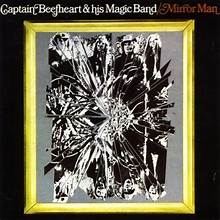
Eternally weird. Captain Beefheart’s sharp Wolfman Jack voice and the Magic Band’s channeling of a thousand Psychedelic variations on the Bo Diddley groove, often distract from how deep they groove and how rich the lyrics/poetry are. I find Beefheart’s lyrics often marry unusual ideas and often break “the rules” of how songs are supposed to be designed. Like how he will repeat a phrase, but subtly change a lyric to something that sounds alike, morphing them into something new, with distant meanings. I think the music is often forbidding and I expect it to be weird, but they usually have a primal groove that works as well as it does for more mainstream Pop. It’s jammy too dance, be free, be weird, embrace it. “Beetle Bones & Smoking Stones”
Overall = 6.3 (10) – Trip out babe. Get it!
James Carr – You Got My Mind Messed Up – Vivid, 1966-1969?.
🔈🗣️✊🏿💰:
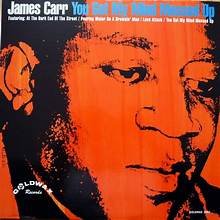
Mr. Carr was playing in Wilson Pickett’s and Otis Redding’s yards on these recordings. His voice has some similarities to both singers and even some of the arrangements seem borrowed or recycled from their hits. His voice is solid, the songs are pretty good if derivative and none of them crush me. There are, mostly, (lost) love songs that fit in sonically in that “is it Rock or R&B?” category, when it really is both. I picked the album up based on the title song – great title, ok song. I think if the song writing pushed the limits more these might be more exciting, as is, these songs sound like they fell out of the Stax records bag. “Love Attack”
Overall = 3.8 (10) – Once anointed “The World’s Greatest Soul Singer”. Get it!
Judith Berkson – Oylam – ECM, 2010.
🎺🌌🎑🗣️⎄🧫⌘:
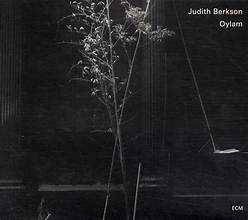
Weird and wonderful. A nicely paced collection of keyboard pieces, with some singing and lyrics, a few oddly interpreted standards (slightly Bob Dorough-ish?) and a few traditional, sacred (?) pieces in Hebrew. Mrs. Berkson has a sweet voice and enough technique on the keyboard to weird out and play some trippy little lines. The music feels, at turns, humorous then dark and more than a little alien. It is hard to find stability in this music, it changes frequently and though all the songs fit each other, each feels like a strange different nook in the house. Under one roof, but wildly different purposes. I’m interested in checking out her more recent recordings. “Fallen Innocent Wandering Thieves”
Overall = 5.9 (10) – Weird one… Get it!
Anouar Brahem – The Astounding Eyes of Rita – ECM, 2009.
🎺🇹🇳🌌🎑🔮:
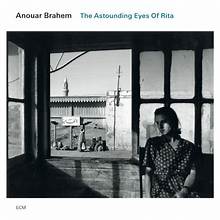
Similar to his other recordings, personal compositions that sound similar to the improvisations on them, and they feature the oud, but with an added Bass Clarinet. It is a nice timbral contrast and the mood is laid back, a little dreamy and the memoriesof each song fade quickly with the next tune. Of the 5, or so, Anouar Brahem albums I have, I recall thinking this was my favorite, but re-listening to it now I feel a lack of spark and will have to reconsider as I listen to the others. The sound is great, the instruments, musicianship, but the song writing and story telling aspects feel more lost in the background now. “Dances With Waves”
Overall = 5.2 (10) – Good, moody, could use a little more fire. Get it!


