Method to the Madness I (What was pulled from where): As always a mix of sleeves and cases. Mixed genres including Rock/Pop; American Roots/Blues/Gospel; Ambient/Electronica and a few International recordings with Africa and Asia/South East Asia as focuses. Also something from Smithsonian Folkways and a Non-Mosaic Box set.
Älgarnas Trädgård – Garden of Elks – (Framtiden är ett svävande skepp, förankrat i forntiden?) – Silence, 1972.
🪨 🪩🇸🇪 😵💫🎑🌌:
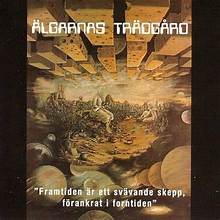
I asked the guy working the register, at the Book Trader, if he had any idea of what this was? He looked over the cover and said “No, but it’s from the 70’s.” which was exactly how I had assessed it when buying it. It was in the Classical music section, but clearly was not of that ilk – weird cover, band photo and then the band name + all the Swedish. And we were both right, music from the 70’s is absolutely a “buy now” quality. I have theorized that it appeals to me because I was born then, but from my Professor mind there is that unique moment during the 70’s with peak technological change (electronic instruments and recording studios), post- Beatles/Beach Boys artistic independence (self production, meaning the artist knows the audience better than the execs do), loads of genre/gender/culture bending and more International influences and the Social openness repercussions allowing candid, honest reflections on sexuality, mental health, drug and crime realities. It all informs the music of that time period and I think those qualities are lost pretty quickly when the Digital age arrives in 1979. In the 80’s the music industry re-established control and exploited artists in other ways. This music is very spacy, psychedelic music that sits well next to things like The Dirty Three and various Psychedelic rock – though I find this more Folk-noodly over heavy riffs or beats. “Möjligheternas Barn” & “Viriditas”
Overall = 6 (10) – Trippy Swedish Folk worlds. Get it!
Babes in Toyland – Fontanelle – Reprise, 1992.
🪨 🪩⚒️🤘:
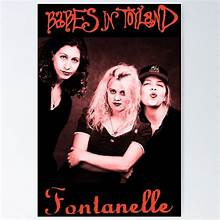
A heavy, grungy, metal leaning riot grrrl band. This disc was hidden inside a different disc’s sleeve and so we return to Babes in Toyland, but a bit out of order. This is better than the EP previously reviewed and I find myself remembering these songs fondly because of the band’s wild and weird approach to ranting about things that bothered them. They often sing with funny voices, or with visceral hatred, over fairy tale and child-like themes. The riffs are big, but well placed for contrast and variety. I think the humorous aspects result in a more effective delivery of the meaning because it’s less severe, it survives better than some so-called “political” music after 40+ years and still has relevance. “Bluebell”
Overall = 5.6 (10) – I think this holds up pretty well, if you want to break things. Get it!
Johnny Cash – American III: The Solitary Man – American, 2000.
🇺🇸📣🌾🗝️🗣️📔✪💰🕸️⚖️:
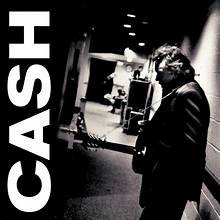
Johnny Cash’s American recordings are primarily cover songs, curated as a collection of modern Rock & Pop songs featuring his iconic voice and phrasing. Many of the songs struck some form of popularity in their own right and truly the gamut is an example of how he could transform any song into a vehicle for his persona. Making those songs his own. It is also a rarity of an artist at the end of their life being valued and given positive opportunities to create anew. “One” by U2.
Overall = 7.7 (10) – Listen to Johnny Cash transform other people’s songs into his own. Get it!
& American IV: The Man Comes Around – American, 2003.
🇺🇸📣🌾🗝️🗣️📔✪💰🕸️⚖️:
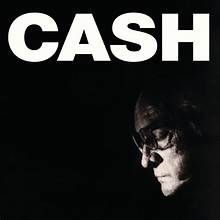
This album was probably considered the most successful of the American recordings, it had 3 (?) cover songs that achieved popular success: “Hurt”, “Bridge Over Troubled Waters” & “Desperado” were radio hits and used in commercials. The first comment on YouTube under my Play/Mix pick – “Personal Jesus”, written by Depeche Mode, as of 9/18/26 was “When Johnny Cash covers your song it isn’t yours anymore”. That is a pretty accurate statement and also what happens when a stylist achieves a half century of iconic success. There are very few examples of artists with that career longevity, and even less that are additionally popular in their twilight years. Many artists have put out albums of material outside of their wheelhouse and in some ways those are aimed at their audience, offering variety by putting them in an unfamiliar setting, or trying to attract the audience of the artists whose work is being covered to the performer. The results are not always received well by both sides of that coin, but even rarer for the recording to create new audiences – as the commercial using “Hurt” did. Mr. Cash’s cache and his persona drive audience interest significantly and make him pretty unique among the stature of icons.
Overall = 8.5 (10) – Despite the laudes given, I found this album less interesting to listen to now, than I did when it came out. That opinion does not diminish its accomplishments. I wonder if my lack of interest now is based on the lack of surprise in the song choices, back then they were dramatically surprising and fruitful results. Get it!
Al Broussard – Music of a Lifetime – Rabadash, 1984. (1996 purchase from artist)
🇺🇸📣🏙️🗣️🎺🎹🦐❤️🔥⚖️:
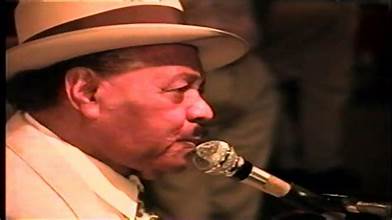
“The Human Trumpet” This is a very personal disc for me, of a local New Orleans musician who was playing at the Famous Door when I arrived in NOLA, during the Summer of 1995. I was running from life a little then, my attempt at a cheffing career had not gone as expected in Albuquerque and the study of music was suffering because of those challenges (erratic hours, scuffling for cash, growing pains etc.). When I arrived in NOLA, I set up in the Garden District Youth Hostel and proceeded to stay awake for several days, in love with the city, amazed that it was also always awake, meeting international travelers and exploring a place that had music wafting from every corner at all hours. I was sober at the time and would take in Bourbon st. from a distance. Wandering through, uninterested in the stripping or the getting hammered. Instead, I would linger at the entrance of the Famous Door and take in Mr. Broussard’s ebullient playing, New Orleans piano style, but focused on early Jazz Standards, occasionally unleashing his trumpet whistle, while simultaneously, and magnanimously, trying to greet and shake the hands of guests entering, and leaving, while still playing with his left hand. He was very sweet and really lifted my spirits from the cloud of failure I felt followed me. I eventually picked up this disc, with a generic, but hand signed, cover and sent it to my Mom. His playing is alright, but I think his personality is most evident and the critical element of this lovely person’s career.
Overall = 4.6 (10) (10 for sentiment!) – I’m not sure how easy it is to find this music and for me it is a celebration of memories. There are probably other similar artists with finer playing, but maybe not ones who can convey a finer sense of kindness. Get it!
David Darling & The Wulu Bunun – Mudanin Kata – Riverboat, 2004.
🌌⚡️✆⨻👣🇹🇼🫂:
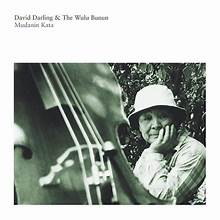
An unusual combination of cello with the traditional chants and music of the Bunun people. It also includes a few tracks of cello with the natural ambient sounds of insects and birds as well as some Ambient pieces. I had a rough morning at my district teaching job and listened to this en route to my Rowan University job. It was slow going through the traffic across the Walt Whitman bridge. I was carrying with me some agita and initially thought this recording felt a little dull, but quickly found peace and relaxation amidst the crowd of stressful cars. The chants remind me of many other cultures’ music I have heard: Polynesian, Pygmy and Native American. David Darling’s role seems to be more as an improviser and the natural sounds result in a gentle, restorative collaboration. “Pasibutbut”
Overall = 7.1 (10) – It helps you take it down a notch. Get it!
The Mighty Clouds of Joy – The Best Of – MCA, 1973/1991.
🇺🇸📣🌳🗣️⛪️:
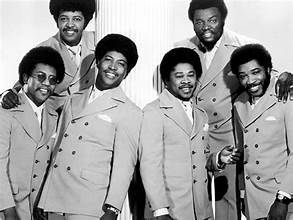
Beautiful, rousing, vocals with band accompaniment – which sets them apart from similar Gospel groups of their day. There is zero information on the disc about the particular recordings here and additionally there are several other versions of tMCoJ “best of” recordings. Based on the year it originally came out this L.A. based group had only released 5 albums and the following year released their album It’s Time which best demonstrated their crossover sound. The band created music reaching for Soul & Pop audiences, beyond their religious elements. You will also notice here a lot of featured lead singer over background harmonies, creating the Homophonic texture that Pop music almost entirely uses. “Ain’t Got Long Here”
Overall = 5.8 (10) – Great songs and singing, no info(!) and the music captures the mainstreaming of Gospel in the early to mid-Sixties. Get it!
Beach House – 7– SubPop, 2018.
🪨🫧 🪩 🗣️📔🎑👁️❤️🔥🦋♛:

Another subtle change in the band’s style, more synth Pop, darker and abstract. This album came out right when I discovered Beach House, right around the time my marriage separated. I have vivid memories of riding solo to my cousin’s home in Montauk for her annual shellfish extravaganza “The Mollusk-off” . I cooked Clam Chowder hand pies and got sad drunk on the beach thinking about the concerns of that transition in my life. Beach House really affirmed my aspirations for life and love and I continued to listen to them daily. I do think the later Beach House albums get away from Victoria LeGrand’s stunning voice. They shroud it in effects and have a more blurry style of production. These changes have their own virtues, but I miss hearing her more naturally presented. “Black Car” & “Girl of the Year”
Overall = 8.4 (10) – Bleary, beautiful, not quite as stunning as the earlier albums, but still offering rich pleasures. Get it!
Ella Jenkins and the Goodwill Spiritual Choir of Monumental Baptist Church – African American Folk Rhythms – Smithsonian Folkways, 1960.
🍏🌾🗝️🗣️📣⌛️👣:
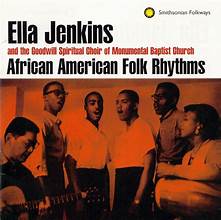
Every Smithsonian Folkways recording can be considered historically significant. Some prove to be more significant than others over time. It is hard to consider now how significant this recording was, because many of the songs being preserved have taken a place as iconic artifacts of American history. Perhaps when they were recorded it was more of a conservation of earlier traditions, but many of these songs are considered important examples of our collective past. This music arrived at the beginning of the Sixties and thus at the early stages of both Folk and Spiritual/Gospel music’s merging with the Civil Rights Movement.
Ella Jenkins is historically a legendary music educator and much of her living histories are preserved on the Smithsonian Folkways label. In this day and age, when our current administration harassed the leader of the Smithsonian out of his office, it makes these recordings even more valuable – particularly when they are under attack. “Who’s Gonna Be Your Man?”
* I had to do a “Cotton Eye Joe” song history for a school May Day event, because parents had concerns about the song’s meaning. Try this mini historic contrast of the Ella Jenkin’s and Rednex! versions. The parental concerns were racism, Rednex! (the version the students had chosen to dance to) is from Sweden and it resulted in a study of Urban/Rural prejudice rather than a racist one. As with any version there are changes, but wow is that version completely different?! In sound and in meaning (or lack of meaning). It is really two different songs at that point, but you can find the transformations in the hundreds of versions of that song, over many decades, before it became Bumpkin Disco.
Overall = 9 (10) – Legendary recording. Get it!
Toumani Diabate’s Symmetric Orchestra – Boulevard De L’Independance – World Circuit/Nonesuch, 2006.
🌍🇲🇱🫧🪮🗝️⚙︎🔮👣⨻:
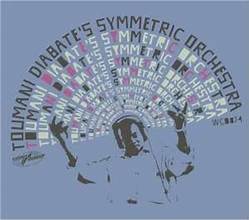
Kora led AfroPop. Mr. Diabate, a master of the Kora, created an orchestra of primarily African instruments mixed with modern Pop music instruments, as well as a mix of International musical influences and including a few International guest musicians. It’s pretty rangy, but my favorite songs are the large group, drone-like, pieces with beats. The Kora is definitely the lead, melodic instrument, though there are also several vocalists and some horns on a few songs. The blend of so many elements makes it fun to attempt to track everything, wondering what is coming from where. What instrument is that? Which Popular song does that remind me of? What style of music is this borrowing from.
“Mali Sadio”. This traditional song is about a hippopotamus that lived in the river near the village, peacefully coexisting with the people. A white hunter killed the animal regardless of that relationship and the song is about mourning that loss. Evolving over time the song became about the mourning of an absence generally, not specifically mourning that hippopotamus.
Overall = 8.7 (10) – I really enjoy this blend of sounds and find new things each time I listen to it. Get it!
The Son of P.M. – Hey Klong Yao! Essential Collection of Modernized Thai Music from the 1960’s – EM, 2010.
🇹🇭⚙︎🫧🔮❂ 👣⚒️😵💫🦴🥃:
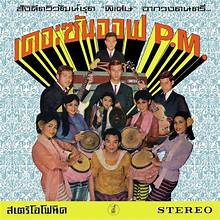
Some of these songs are probably duplicates of songs I have in other collections (like Shadowmusic of Thailand), but the vibe is a favorite. I hear music that is grown from Thai roots, using both traditional instruments and modern electronic keyboards and guitars, interpreting International Pop music elements. It is a fun ride and would be a great soundtrack for a hipster party. It never takes it down a notch and though it is dance music, it would also fit well in a night club or Rock and Roll bar easily. Maybe best in a dark, dingy place layered with ephemera and only a few choices of beverage. Sweaty hot, open flame with burning meats on a stick, perhaps Jungle surroundings and a few local fauna meandering through the space. “Manohraluifai (Talung)”
Overall = 8.2 (10) – Party jams. Get it!
El Camaron de la Isla/Paco de Lucia – Castillo de Arena – Universal, 1977/2005.
🌎🫧🗝️🇪🇸🗣️✪📣:
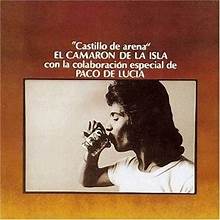
Interesting that these recorded collaborations between Camaron and de Lucia, I have been reviewing lately, span about a decade and this later one sounds pretty close to the earlier albums I initially reviewed. I consider them as 2 young, groundbreaking musicians of the style and maybe their personal styles were powerful enough to make this traditionally experimental, but I think Paco de Lucia’s recordings around this time seem to be drawing on Jazz Fusion, Pop music and other International styles of Latin music. Being a novice to Flamenco music (I haven’t really researched the music’s inner workings much) leaves me at a disadvantage, but there are definitely examples of albums that are highly traditional and yet considered to be also Modern perspectives on the traditions, homage with great respect, but also unavoidable current expressions (like the recordings themselves? or modernized instruments, language etc.) that are considered something classic, though also new. These albums might be those types of recordings, or maybe the artist’s techniques are so beyond that new doors were simply opened by that fact. I want to place these albums into a continuum that I understand, which is the spark of a new research idea to explore. The music is consistently beautiful and emotional. “Que He Dejao De Quererte (Granaína)”
Overall = 8 (10) – I wonder if these collaborations have ever been collected into one set? Get it!
& Camaron – La Leyenda Del Tiempo – Universal, 1979/2005.
🌎🫧🗝️🇪🇸🗣️✪📣🔮:
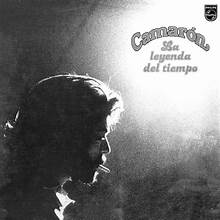
And there it is. This album, the latest of the 5 or so I have reviewed over the past few months, after acquiring them, flirts with some Pop/Rock ensemble, electric guitars, synthesizers and even a sitar. It is a solo album, but I have been asking if el Camaron, a legendary modernizer of Flamenco music, was less experimental than Paco de Lucia, because I heard none of those International influences in their collaborative recordings. I fathomed that perhaps their techniques were so groundbreaking that that was where the legend was built and then de Lucia explored the electric side of things, the Jazz fusion connections and brought the music to an International audience separately and more so than el Camaron. I still think de Lucia had more International fame, possibly because he wasn’t singing in a different language, but they both experimented with adding other musical, non-Flamenco, influences as well as new technology to their style. It brings up another question for me: Do Spanish speaking populations outside of Spain enjoy Flamenco music? This is a pretty fun album that still has a few traditional tracks balancing with more modern sounds. “Homenaje A Federico”
Overall = 7.1 (10) – Answered a few of my questions, spawned others. Get it!
Magnetic Fields – 69 Love Songs – MRG/Stephen Merritt, 1999.
⏺️🫧🗝️💰⨻🗣️⎄♛ 👣❤️🔥🦋🃁🤿🆑🦄⚒️:
An expansive masterpiece, full of miniatures, that offers many examples of great songwriting. A mirthful, tragic, absurd, heartbroken, love language masterpiece. I came to it late, in 2019, and got to hear half of it live in Washington D.C. (with my love) in 2024 (what a deep moment!) for the 25th anniversary performances. My only complaint was, why was that concert not a sing-along!
I’m stunned that I didn’t notice this Boston band (I was already in Philly in ‘99) before then – but I was pretty deep into my horn, Jazz and improvisation, so in a different bag entirely. In my heart I am first a song writer and I was taken by the song writing. Simple, crafty and all over the place in terms of style and structure. At the time of discovery it returned me to a place of reverence for song writing and I consider Stephin Merritt one of the great song writers of our age. I can never decide which of the 3 discs is my favorite and each has at least 7-8 favorite songs. I find the music creative too, full of weird electronics, goofy sounds and stylistic cliches. It is nearly as bi-genre and comedic as the music for cartoons can be.
Some of the qualities I value in the song writing: using multiple, contrasting lead voices; short, clear song forms with very little excess elements; crafty lyrics that surprise; sing-along ability, fresh perspectives on the ancient topic of love and supportive musical accompaniment.
Tom Waits says “I think all songs should have weather in them. Names of towns and streets, and they should have a couple of sailors. I think those are just song prerequisites.”. These songs have loads of names, locations and weather, maybe no sailors? Instead they have Cowboys, Punk Rockers, Snakes, cacti, rabbits, drinks, drugs and lots of sex. The lore was that Stephin Merritt was challenged to write 100 love songs, but 69 was funnier. “A Chicken With Its Head Cut Off”, “No One Will Ever Love You” & “Strange Eyes”
Additionally, it makes my heart hurt that there are more examples of open, inclusive ideas of love and lyrical perspectives from same sex lovers than in the 100 years of recording preceding it. Most examples of that were hidden or naturally vague so that any lovers can appreciate them. The gay love songs here stir my heart as much as the straight ones.
Overall = 10 (10) – These songs evoke both wonder and tender memories for me. Get it!

 Found Sounds