Overall = 2.7 (10)
Method to the Madness III (What was pulled from where): Always a mix of sleeves and cases. Some Rap, Reggae, a vocalist, Classical and a Soundtrack sleeves. A selection from South America; Spain/Central America or the Caribbean; Europe/Asia and African sleeves. And something from each of my three most recorded all-timer artists: Duke, Miles & Prince.
Common – One Day It’ll All Make Sense – Relativity, 1997.
🎤⚒️:
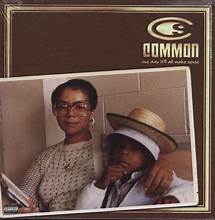
This was the first album that made me aware of Common, though it was his third release. I thought of him as a descendent of The Native Tongues and a conscious Rapper. Listening now I find it less interesting, the rhymes are a little plain, the beats feel less memorable, there are lots of guests (as was a frequent element in late 90’s Rap recordings) and too many skits. Though to be fair the skits probably reveal some of the acting skills that Common was to become more and more known for. I wonder about the changes of this music to my ears. Have I changed? Has music copied itself so frequently, a sonic ouroboros, that what sounded fresh then became common now (no pun)? It’s like a blind spot in my memory, as to what I enjoyed most about it before, but this is not an issue with many other albums that I have been listening to for 30 years, so maybe it is just not as good as I remembered. “Hungry”
Overall = 3.7 (10) – I liked it more then. Get it!
Linton Kwesi Johnson – In Concert – Shanachie, 1988.
🇯🇲🎟️⌘⚒️⌛️🏋🏽🕸️👣⚰️⚖️✆:
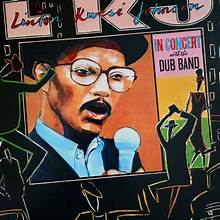
An excellent live example of the LKJ Dub Band. There are many great spoken word moments as well as vivid descriptions of the meanings behind the songs. What the songs are about, the context and historical elements. What a great band, particularly the horn section. They play in the way I look for in Pop music: supportive, tight, simple, yet creative lines that emphasize the rhythms – which are diverse, but cohesive. They never get in the way, but instead build on the melody. It is revolutionary music that sounds like a party, a vibrant contrast. “All Wi Doin Is Defendin’”
Overall = 8.7 (10) – This is a great live set that adds verve to the originals and has a “greatest hits” like feeling, but with fresh perspectives on the songs. Get it!
Chris Connor – Sings Gentle Bossa Nova – Justin Time, 1965/1995.
🗣️🎺🫧🧀💰📔👩🏼⚖️🪦🎨👩🏼⚖️:
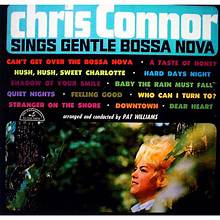
Masterful Pop vocal cheese with good arrangements and a handful of interesting song choices. There is no featured improvisation here and it also has no real Bossa Nova character despite the title – which is almost a line from the song “Downtown” (covered on this album). “Just listen to the rhythm of a gentle bossa nova”, but these songs only have the palate of a Bossa and are really orchestral Pop with an occasional Brazilian Jazz feeling. It is well done, but pretty superficial. The song choices seem to be based on contemporary hits and the music is far away from what we have heard that featured Mrs. Connor’s Jazz abilities. “Feeling Good”
Overall = 4.2 (10) – A well conceived meandering, that doesn’t get anywhere.. Get it!
Ludwig Van Beethoven – Alban Berg Quartett – Quatuors A Cordes Vol. 1-3, 6 & 7 – EMI, 1955.
🎼🗣️⏺️❂❤️🗝️🎗️👜🆑🃁:
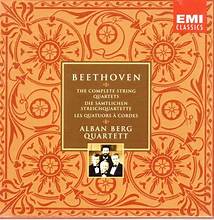
Another vast collection of music from the Classical horde I procured from the Disco-Go-Round 20 years ago. That CD booklet was clearly thieved from a private collection. No cases, which we would not purchase and then my co-worker offered $20 which they took. He figured if we received any police reports about that type of collection we could give it back (back in the day people would file police reports when their music collection was ganked!). No one ever came, my co-worker offered it to me for the $20 and I seized an opportunity to up my Classics collection. I’ve always wondered who it belonged to. I think it was a person who was a player with a strong interest in piano and lieder. I even debated if it was my Temple University Intellectual Heritage professor who initially got me into lieder. Whomever is long gone now.
I probably have these Beethoven String Quartets in duplicate, featuring other players. This collection is complete, though I am either missing or miss-filed the 4th & 5th discs. Though I am listening to those two regardless of YouTube, I may never listen to them all in order again, so might as well do it right.The Alban Berg Quartet is very precise and clean in this comprehensive collection of some of the most cherished string quartet music. “String Quartet No. 3 in D Major, Op. 18 No. 3: II. Andante con moto” & “String Quartet No. 7 in F Major, Op. 59 No. 1 “Razumovsky”: III. Adagio molto e mesto”
Overall = 10 (10) – More masterpieces from Beethoven, but also this extensive collection is probably for those whose bag it is. Get it!
O.S.R. – Bebe & Louis Barron – Forbidden Planet – MGM/Small Planet Music, 1956/1989.
🎥🎬🎞️🌌⚡️⌛️🎑:
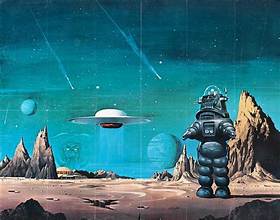
Early film score yes, but also early ambient industrial electronica. I think that film music often features the most abstract, dissonant and weird music because it accompanies a story and the listener accepts those unusualities when they are used as devices for storytelling. For example, few people are listening to the Psycho strings for entertainment, but it is deeply memorable as a storytelling device. My Mom hated that sound even when it was used comedically in spoof, because it was so tattooed on her psyche. The harsher, more alien sounds, the lack of melodies in “listening” music end up unsettling the average listener and though some extremes are embraced they rarely have universal Popular appeal. This soundtrack creates an ambient anxiety, a “what’s that banging on the outside the space ship” fear. Importantly, it is also the 1st fully electronic film score. Lot’s of beeps and boops, or scrapes and shudders might be more accurate. It isn’t the most listenable thing and I would consider it a pioneering work of Ambient music, aside from it actually being connected to the film (which makes the listening more active than Ambient music should be). “Main Titles/Overture”
Overall = 6 (10) – This grade is more for historical importance than listenability. Get it!
Modogo Gian Franco Ferre; Papa Wembe & L’Orchestre Viva La Musica – Place Vendome La Nouvelle Generation- Disque Esperance, 1989.
🌎🇨🇩🎟️🎸🪮🫧:
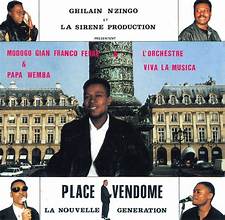
This Franco (see below for the other) seems to be more of a song writer, with a particular connection to Papa Wembe, rather than a featured performer. His popularity may be more based on his collaborations. I originally thought that this album was that Franco, but using his full name instead of just Franco. Both Franco albums are from the same year and feature Soukous and other Congolese musical styles. Papa Wembe is the most Internationally known musician in this group, but I don’t think this sounds like he is leading the album, just the featured singer. The music on this recording is ok, but I find it less interesting in comparing it to the other Franco album. I’m not certain why, but I think it is less exciting and less interesting. “Oyo Mbokate”
Overall = 5.2 (10) – I’m a bigger fan of other Papa Wembe albums than this one. Get it!
Franco – Volume 2: 20ème Anniversaire: 6 Juin 1956 – 6 Juin 1976 – African, 1989.
🌎🇨🇩❂🪮🫧🎸:
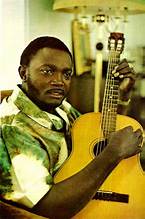
The other Franco, both from the Congo, both playing Soukous, and Congolese Rumba and I filed these albums together thinking they were from the same person. This Franco is also a guitarist and I think the more famous of the two, hence the singular name recognition and because of his political actions. The music has endless layers of riffs and arpeggios. Almost every song features a striking rhythmic transition in the middle, transforming into a vibrantly different feel, then usually returning to the initial form at the end. Bright, sunny music that takes the edge of an hour long, traffic riddled, truck fire, double lane blocked, drive through South Jersey on the way to work, vibe.“Seli-Ja”
Overall = 6.8 (10) – I want volume 1! Get it!
VA – The Discoteca Collection: Missão de Pesquisas Folclóricas – Ryko, 1997.
🌎🇧🇷📣⌘👣🦴:
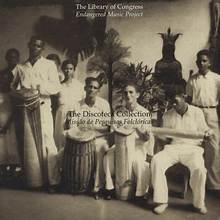
I was initially confused by the Discoteca collection, thinking it was early Brazilian dance music, but instead finding field recordings that focused on traditional chants and percussion from Sao Paolo. I hear similarities in this music to many other early cultures music. Definitely the phasing-like elements in some of the chants, which reminds me of traditional African And Aboriginal music. The collection is more of a folkloric preservation and not the most listenable group of songs, but it is great for research and it made me wonder about a variety of possibilities about how it came to be and how it led to modern Brazilian music. Praiá “Pancarus”
Overall = 5.3 (10) – More valuable than fun to listen to. Get it!
Pandit Shiv Kumar Sharma; Hariprasad Chaurasia & Brij Bhushan Kabra – Call of the Valley – The Gramophone Company of India, 1968/1997.
🌎🇮🇳🌎⌘📣🛁⚰️🔭👁️🗨️🦴♛ :
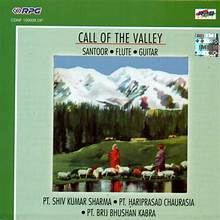
A lovely recording that was also a critical introduction of Indian music to the West in the late 60’s. There are a variety of “revisiting” and same title releases that are really references to this original recording, which makes it a little tricky to find, particularly because I have seen several different covers. I find it deeply relaxing, spiritual and meditative music. It also makes sense as an introduction to this region’s music, it has a diverse collection of medium length pieces with contrasting styles. But it features the Santoor, an unfamiliar to me, zither type, instrument that really drives the performances. I think the album has made some all-time lists, and has a celebrity fan club, which is deserved. It is really lovely, with short excursions into a variety of rhythmically contrasting pieces and pure, masterful performances. “Piloo”
Overall = 9.6 (10) – I recommend! Get it!
VA – Corridos & Tragedias de la Frontera – Arhoolie/Folklyric, 1928-1937/1994.
🌎🇲🇽🎸📣⌛️👜⚰️:
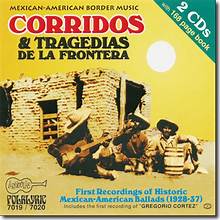
Early Mexican Americans ballads, storytelling style. Songs primarily from places which in the late 1920’s were probably recently considered Mexico. The songs are in Spanish, but they feel akin to Country & Western ballads and I think the lyrical content is telling similar stories. About the struggles of everyday people being romanticized in a similar way. “Corrido de Los Hermanos Hernández (Pts. 1 & 2”) · Los Madrugadores – The Dawn Risers
Overall = 5.4 (10) – It has a lot of songs, very similar sounding and all are in Spanish,it is probably aimed at the already interested listener, though there is some historic interest too. Get it!
Duke Ellington – Solitude: 1934 – 1936 – Membran, 2004.
Beyond Category ⏺️ ❂ 🎺🥁🏌🏿♂️ ⎄ 🎨 ✪ 🗝️ 🪄⌛️:
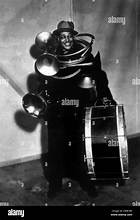
Almost two decades into his career Duke became more and more expansive. This stretch of recordings features large scale composition, like the 4 part “Reminiscing in Tempo”, more intricate arrangements and many songs that espouse the aspects of music that relate to memory and reflection – which feels modern and philosophical. The band has had some longevity and the soloist personalities begin to assert themselves more and more, playing with a confidence and trust in each other that propels the music towards perfection. In modern times bands don’t last multiple decades too frequently and definitely not also maintaining a continuous stream of popular success. Duke is one of a kind and I’m not sure we are even in his prime…. Yet. “Porto Rican Chaos” & “In A Sentimental Mood”
Overall = 8.3 (10) – These sides, in the 32 disc collection, have the best blend of classic Ellington tunes, Pop tunes, forays into Standards, so far. Being chronological these recordings don’t always feel cohesive when being consumed in order, this one does. Get it!
Miles Davis – At Carnegie Hall – Columbia, 1961.
Selim Sivad 🎺🗝️🎟️🪄✪ ⌛️🫂🫂🕸️📔 :
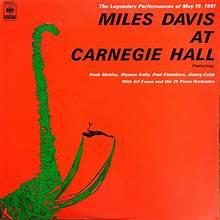
This would be the last “Live” recording Hank Mobley made with the Miles Davis Quintet (& Gil Evans Orchestra). And Hank lays some quality solos throughout the performance and it is interesting to hear him in the orchestral setting, if only on one song “So What”. Miles searched for that new tenor a few times in his career and George Coleman would follow Mobley before Miles found his next long time front line partner in Wayne Shorter. Coleman & Mobley, both briefly in the Quintet, left some important legacy recordings, overshadowed by the masterpieces before and after. It doesn’t diminish these accomplishments, but it does put them down the list on what albums people are searching for when they want to hear of Miles Davis.
*Apparently the Miles Davis silhouette logo first appeared on Sketches of Spain and then is clearly used across a variety of covers after that, then becoming a symbol of Columbia’s relationship with Miles. To me, it is as ubiquitous as the Jerry West NBA silhouette logo. “Teo” & “The Meaning of the Blues/Lament”
Overall = 8.7 (10) – The liveness of the performance evokes crackling solos and it has a nice balance of large and small ensemble. Get it!
Prince – The Black Album – Neutral Zone, 1989.
The Purple Patch Ƥ𖫪 🫧🦄🫦🗝️✪⚒️⌛️🏋🏽❤️🔥 :
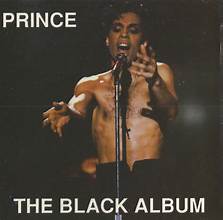
This controversial album was the transitional turning point, where Prince’s old bands were shed and he leaned into a different style of band leading. I think the Revolution were a voice of contrast to Prince’s inner creative voice and with that little restraint it honed his music to its peak in refinement. From here on out, and technically LoveSexy (reviewed about a month ago) was after this aborted release, though Prince still used his exceptional skills at identifying contemporary musical tastes and adding those components to his oeuvre (Rap, Digital Production etc.), that the music goes on a trip that I can’t identify with most of the time. Prince’s connection with average people is becoming more and more distant and the music reflects that, it’s less relatable and he is not the voice of the next era anymore. It still is musically amazing, but it starts to sound like the greatest Cover Band of all time to me, but they usually aren’t playing covers. Despite that there are still 3-5 songs that I am a fan of on every album, but it used to be every song. Some of the New Jack Funk and Rap elements on this recording sound unserious on many levels which weakens the vibe. And the strange vendettas being dealt with in the music seem to hint at why Prince called the album “evil” and stopped its release. The next few years featured the name change, transitions in his approach to his career and more steps in my less favorite directions. “Rock Hard In A Funky Place”
Overall = 4 (10) – There are 3 excellent songs on this (one is also on LoveSexy) the rest sounds like Prince funking about in his studio and I understand why it lacked a official release. Get it!


