Overall = 2.7 (10)
Method to the Madness II (What was pulled from where): Always a mix of sleeves and cases. Mixed genres including primarily Jazz, a Mosaic Box Set, Jazz label cases: Impulse, Verve, Blue Note & ECM; a Brazilian case, a Salsa case, a Rock/Pop case, a Singer/Vocalist case and an R&B album.
Jorge Ben – Sacundin Ben Samba – Universal/Philips, 1964.
🇧🇷🗝️🗣️⎄⚒️⚙︎🎨:
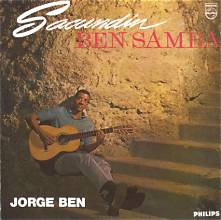
Jorge Ben’s second album offers many variations on his popular song writing, but with fresh twists, some interesting additions of horns and International Pop influences added to the palate. Many of these songs made me think I was about to hear one of those earlier hits, only to find him adding a familiar layer from his bag of tricks, to a new song. That is a tried and true songwriting method where when something is successful you repeat it, but change it up. This being so close to his first album makes it feel like he is exploring his own sound and adding some new elements to test the boundaries of its appeal and trying not to venture to far from his successful accomplishments “Nena Nana”
Overall = 7.1 (10) – Classic Samba and an artist revealing a little more of their vision after their initial success. Get it!
& Tropical – OA, 1977/2016.
🇧🇷🗝️🗣️⎄⚒️⚙︎🎨⨻:
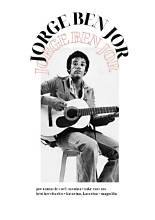
Later and trippier, with some actual new arrangements of older popular Jorge Ben tunes. I love when Brazilian music gets blended with the various popular and international musics of its time. I also love deciding what music they were refracting, reflecting or referencing and figuring how far it drifted from its target (because I do this as a composer and it usually drifts pretty far from the original theft). This is a sultry album that plays with the senses and can both Funk and linger. Brazilian music embraced this marriage of influences in its MPB stage, but I do wonder if the songs here, the ones considered classics, are equally adored when they get updated. Did they revive in popularity or was the well visited too many times? It is a little different that the original artist is producing the update, these are not covers, but that can still feel a bit contrived and an attempt to cash in on what was already successful. Usually I think those decisions are stemming from the producers and labels who have different goals than the artist, but many artists are on board with those decisions. “Georgia”
Overall = 7.3 (10) – Wild transformation of sound after a decade, but still drawing from that original content and re-envisioning it. Get it!
John Coltrane – Meditations – Impulse, 1966/1996.
🎺 ⏺I! 🪄🧫🗝️🎷⚰️🦋👁️🗨️🦴:
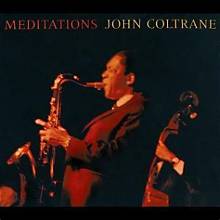
You might want to reconsider the meaning of the title? This album suggests a different planet entirely from how I would intuit the word “Meditations” to mean and I am here for it! Inner peace within a maelstrom of intensity. Kind of like a life lesson I’ve searched for within myself before. Very possibly a direction I followed because of this man and this music. John Coltrane’s intense journey of musical explorations and investigations into his own spirit are very compelling and influential. Yes, how he plays is critical to a world of saxophone lovers, Jazz and fans of either, but his pursuit of self completion, betterment and his desire to understand the World at its highest level is one of the aspects of his persona that transcends the boundaries of fandom. Many of his works are informed by his personal journey and devotionally inspiration. I do feel a release from my inner stresses when I listen to this music, I consider it an effective healing force. “Compassion”
Overall = 7.5 (10) – Challenging but important music. Get it!
Benny Carter – New Jazz Sounds: The Urbane Sessions – Verve, 1952-1955/1998.
🎺 🗝️⏺🪄🏌🏿♂️🎷🫂🎻📔🧀:
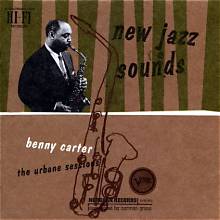
A collection of exquisite swing by a renaissance man Alto saxophonist which includes: with Strings & Brass and a collaboration with his contemporary, Roy Eldridge, one of the great Swing Trumpet players in a proto-small group Swing combo. Mr. Carter’s career spanned many decades and he wore many hats, Alto saxophone being his most primary instrument (and he was one of the big 3 Alto players of the Big Band era), but he also played trumpet, singing, composition, arranging and band leading. He was masterful and elegant in all contexts and was still releasing quality music in the early 90’s, 70 years after his hay days.
This collection is about half Strings and Brass with Mr. Carter as featured soloist and it is great to hear a recording highlighting his playing style in this context. The Strings, in this case, are fine, but not terribly swinging. They are really Pop strings on a bunch of Standards that showcase his melodic brilliance. Additionally, I sense a missed opportunity to have had Carter himself arrange the Strings; these arrangements are possibly more than “Stock” arrangements, but ultimately not very adventurous.
This “Round Midnight” is a really early example of the classic song, before its epic fame was revealed. Yes, the original version was recorded by a Big Band in 1944 and Thelonious Monk recorded his initial version in 1947, but there are only otherwise scattered versions by boppers before 1957. It was a featured piece for The Dizzy Gillespie Big Band and then Miles Davis’ critical small group version of Dizzy’s arrangement, plus a few by Monk himself, launched the song into Pop culture, but this is still a really unusual song choice for the early fifties.
“Close Your Eyes” is a banger from the second disc, where Roy Eldridge sometimes takes more charge in the session and Dizzy drops in on a few tunes. Everything here is hard swinging and the band seems to be enjoying themselves. The pairing of these two different recordings is not the most seamless of transitions. It is really a disc each for two entirely different moods, but it is great to hear Mr. Carter open up and show off his many sides.
Overall = 7.1 (10) – Somewhat of a Jekyll & Hyde recording, with both sides offering valuable vibes. Get it!
Donald Byrd – Byrd In Flight – Blue Note, 1960.
🎺 ⏺ ♫🪄𝍍🎶🎗️🫂🆑🎷🎹:
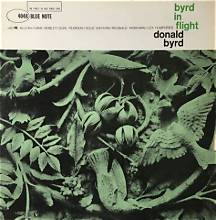
This might be my favorite of Donald Byrd’s 50’s/60’s leader albums from his Hard Bop era? There are over a dozen of those, ignoring his shared leadership credit albums or his high profile sideman albums. It was a prolific time and career for Mr. Byrd. You could choose your favorite album from a variety of criteria: the quality of sidemen, which has your favorite songs, solos or just the synergy of the particular performance. I think this recording holds up on every account and I would happily include it as a canonical Hard Bop album. There is great contrast to the song choices. Everything is played at a high level. There are several notable solos and the vibe created draws you in for the length of the recording. There are probably no “bad” choices among albums in this run of brilliance and Mr. Byrd deserved a little more credit than what he received. The competitive nature of Jazz criticism – always comparing artists to others, something I choose the opposite of when teaching students (they are compared to themselves only). Maybe this album is the best “him” album, perhaps that is what I look for in my favorites, which recording offers the clearest portrait of the artist in that moment. “Little Boy Blue”. What a stunning ballad, with a gorgeous, soulful solo from Duke Pearson!
Overall = 9.1 (10) – A classic. Get it!
Fania All Stars – “Live” At The Red Garter vol. 2 – Fania, 1974.
🌶️💃🏽🪘🎟️:
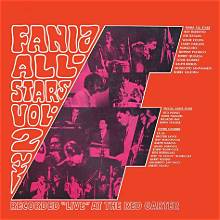
One of the, mostly Live, F.A.S. albums, many were released as double albums, but separately, I only have volume 2 of this set. The All Star format works well for live recordings, offering contrast and showcases for many of the featured artists. It feels more celebratory and the audience factors into it positively, exciting the performers. These features get around a lot of issues that plague live and all star recordings. The limited spotlight can be a detriment to the cohesion of musicians who don’t necessarily perform together that frequently. This recording has more of a blend of styles with one song leaning towards a Rock feel and one Latin Soul piece, neither of which hit home in the way that the Salsa tracks do. Though sold separately, I figure that the balance of stronger material might be better across the 2 albums, strange to have sold them in two parts. “Son Cuero Y Boogaloo”
Overall = 4.8 (10) – Maybe a higher score if paired with volume 1? Get it!
Byron Allen – The Byron Allen Trio – ESP, 1965.
🎺🪄🧫🎷:

Four longish, energy music, based free Jazz explorations for trio. My definition of Improvisation considers it just a different process of composition. This second wave alto saxophonist owes much to Ornette Coleman and he sounds pretty good, but it is a very noodly form of improvisations and also pretty typical use of the form: Melodic section, solos and the contrast is built from different instruments having solo features. It being three, the collective parts aren’t too dramatic, this music tends to hang out at one intensity level and that can make me a little less absorbed by it. I need to be feeling the tensions that the music displays for it to really find a place in my listening cycles and so if I am not feeling that intensity it isn’t palatable. I generally collect these types of recordings, but prefer to see it live. A lot of the energy of the music is lost in the recording process and not seeing the performer. “Decision for the Cole-Man”
Overall = 3.8 (10) – Sustained high energy playing, but somewhat one note. Get it!
Mosaic Select #35: John Handy – Mosaic, 1965-1968/2009. [Includes: Live At The Monterey Jazz Festival; The 2nd John Handy Album; The Spirituals To Swing 30th Anniversary & Projections]
🎺⏺️ ⏺ 🎟️🧫🎷:
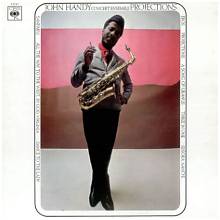
An underrated Alto saxophonist and progressive musical mind who seemed to home in on various musical avenues that recognized where the music was going, but didn’t necessarily receive the credit others received for offering similar sounds. These recordings are about a decade after his important recordings with Charles Mingus (he recorded some legendary solos on those recordings) and a half decade after beginning to record as a leader. Mr. Handy led some evocative groups with unique instrumentation. These recordings mostly feature his quintet with violin, Michael White (a severely underrated Jazz violinist). Later o n Mr. Handy would incorporate a variety of World Music influences and involving international collaborators. The first album on this collection, Live at the Monterey Jazz Festival, was the most well known album of this group (and maybe his career?). Monterey has been a catalyst for many performers and successful recorded concerts there have often become legendary, this recording is no exception. Mr. Handy’s type of soloing and experimentation are very accessible and so I often wonder if he received lesser recognition because his style is not so hard to listen to, at a time when challenging listening was perhaps the most Popular form of Jazz (Free Improv). Though born in Texas he was perceived as a West Coast guy, perhaps because of his collaborations with Mingus, and despite following his own distinctive path. “Theme X”
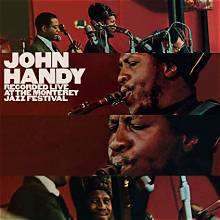
Overall = 7.3 (10) – These are some fine, underrecognized and very listenable 60’s/modal/avant garde recordings. Mr. Handy is an exciting performer who should be more known for his own recordings. Get it!
Cannonball Adderley – Sextet In New York – Riverside, 1962.
🎺🎟️🪄𝍍🎶🗝️🫂🎷:
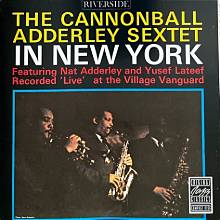
A crackling live set from Cannonball’s seminal sextet with his brother, but also featuring critical collaborators Sam Jones, Louis Hayes, Joe Zawinul and in my opinion a strange addition (but he fits in nicely!) Yusef Lateef. This was his working group for much of the early 60’s and they recorded several live performances. Their material is often designed to host the solos,and they are all quality soloists, who take those opportunities. Zawinul contributes a few memorable tunes along the way, but many of these seem more focused on riff based launching pads for the soloists, over the always swinging rhythm section. They never get too far out, though Mr. Lateef’s role is to bring that contrast to the party. “Scotch & Water”
Overall = 6.6 (10) – High level playing, a great document of a seminal working band, but nothing particularly striking to set it apart from several other similar recordings of this band from the time.
Overall = 7.4 (10) – These are some fine, listenable albums filled with great soloists. Get it!
& Nancy Wilson – Capitol, 1962.
🎺🗣️🪄🏌🏿♂️🗝️🫂🎷:
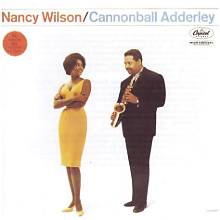
Though the album is collaborative, it heavily leans towards a vocalist album accompanied by Cannonball’s group. The songs and solos are short, but played with refined zeal and a few interesting song choices. Cannonball the star was placed in many recording contexts, here with vocals, but often with bigger groups, specialized instrumentation, lots of live settings and featured material (like show tunes) – everyone wanted his sleek, rhythmically crackling exuberance and he fit in exceptionally well in most contexts. I tend to prefer the best curated Cannonball albums over the “his band” recordings, they offer a more detailed focus which I appreciate. I think of this artistic marriage as being pretty perfect, even if Cannonball seems to defer to Mrs. Wilson most of the time. “Never Will I Marry”
Overall = 7.1 (10) – Maybe more a vocalist album than a Cannonball album. Get it!
Sam Fletcher – Sings “I Believe In You” & The Look Of Love, Sound Of Soul – Blue Moon, 1964/1967.
🗣️🎨🧀:
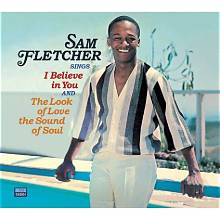
For every successful vocalist/singer/personality there were dozens of those voices who worked on the periphery, creating very similar music, chasing hit songs and cranking out recordings. Fresh Sound records even has a “lost voices” reissuing series. Sam Fletcher is one of those voices and these are his two recordings. The music contains a heavily orchestrated collection of well known songs. He has a great voice, and it isn’t the voice that struggles to achieve success in these situations, it sounds to me that if he veered into more R&B based material he could have possibly found greater fame. These songs were selected for him, I’m almost certain that is how this part of the music business worked (think of the song selection moments in American Idol, they always harp on finding the right vehicle for a voice). The repertoire reflects songs that were of the moment (or a moment). The lack of success is more likely that these forgotten singers didn’t land the right opportunity. That could be because they weren’t from a central area like Broadway, Nashville or Hollywood where those opportunities were common, but Sam Fletcher was on TV and mostly had a career in ascent. His opportunity was effectively killed when he was arrested for narcotics right after these recordings and it was probably a little too early, 1967, for that to be overlooked publically. Another thing is these vocalists rarely wrote their own material and I think that posthumous popularity is more likely when you have some published songs associated with you. These recordings are right on the cusp of where Popular acts became more expected to release original works and known for that Beatles, Beach Boys & Singer Songwriters of the 70’s. “Theme from “Hotel”” & “God Only Knows”
Overall = 5.3 (10) – Nice voice, mostly predictable songs, with a couple of surprises. Get it!
Jim Carroll – Pools Of Mercury – Mercury, 1998.
🪨🫧 🪩 📝🗝️🗣️⎄⾾ ✆:
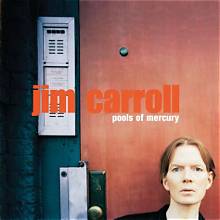
A Punk poet laureate and the writer of the Basketball Diaries. He also had a band and this recording splits the material between incredible Spoken Word pieces and a few Grungy originals. The songs hold up pretty well, but I like the Spoken Word a lot more. Mr. Carroll had a rich language. Though the songs have a little date on them I think the bigger issue is that the Grunge influences often equate with hard to distinguish lyrics and in this case I do want to understand, or at least contemplate, the meaning of his lyrics. I think earlier versions of this band leaned into a more Punk rock sound, this particular album includes an ode to Kurt Cobain so I think the Grunginess is reflective of new influences on his music. “Train Surfing” & “It Goes”
Overall = 5.3 (10) – It held up to my child’s ear and the decades since I first listened to it. Get it!
The Chambers Brothers – The Time Has Come – Sony, 1967.
🔈🪨 ✊🏿😵💫⨻🪦📔:
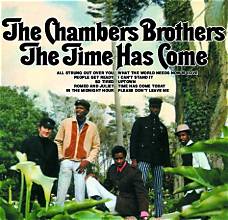
Classic Psychedelic Soul. The psychedelic influences on non-Rock music gets forgotten a bit. Particularly in comparison to how those influences appeared in the 70’s (Funkadelic and Stevie Wonder for example). The recording industry went hard for anything that clicked with the audience, including the social movements like Civil Rights and Psychedelic/Drugs/Hippie ideals, they would pair acts with those influences to try and catch an ear. The Chambers Brothers are bringing 80% Soul here, but there are some sonic choices with electric instruments being more prominent, a harder beat and some flowery imagery up against some pretty obvious cover song choices. It’s the same music with a new shirt, but it was a pretty successful, popular mix. Flirting with Rock audiences (or White audiences at this time) was commonplace for the time and the producers don’t really seem to conceal that aim. A youthful group, with an edgier sound and a couple contemporary keys to success worked effectively. “Please Don’t Leave Me” & “Time Has Come Today (Part 1)”
Overall = 5.8 (10) – A multi-genre mix of Black American music with the Pop of its era. Get it!
Anouar Brahem – Souvenance – ECM, 2014.
🇹🇳🎺🌌🎑🪄🎨🔮⎄📹📀🤿🛁:
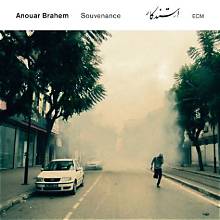
Sublime, beautifully orchestrated double album. The orchestration is handled with great restraint and the perfect use of natural timbral contrasts creates a gentle, spacious sound. I think this is my favorite of the group of recordings by Anouar Brahem that I have reviewed thus far and also the most ambitious. Pairing his quartet of Oud, Bass Clarinet, Piano and Bass with a String Orchestra has a wide range of tonal possibilities and Mr. Brahem rarely deploys any of the instruments in a dominant capacity. If anything I’m left wanting more prominence from each, but this is top shelf orchestration – it leaves you wanting more. “Deliverance”
Overall = 8.3 (10) – A beautiful sound to get lost in. Get it!


